Wednesday, 4 November 2020

Expecting: US election 2020


November 3, 2020. Election Night.

I loved being pregnant, especially the second trimester. Pregnant enough to feel confident, not so pregnant as to be uncomfortable. During my third pregnancy I joked that the ideal family size was 2.5 children. I reveled in the anticipation of the new child without having to endure the grind of sleepless nights and soggy nappies. "Expecting" is not at all a euphemism for pregnant, in my book. It's the essence.
I have had that same feeling during this election season. The campaign's the thing. A sense of anticipation and possibility leavening the deadweight of the current presidency. I am avoiding close scrutiny of results-in-progress, but the information seeping in via messages from friends and family suggests it's a gong show. No surprise. We've been to 2004 (do I mean 2000?) and 2016. 
I've done a lot of grassroots campaigning in various US elections, as a teenager, as a student, as an expatriate, and more recently in Toronto for local elections.  Two years ago for the US midterm election in 2018 a few of us from Toronto went door to door, getting out the vote in Oswego County, New York, helping eke a narrow victory for our Democratic candidate Anthony Brindisi. Mainly, though, I've "phone-banked" from the comfort of home, calling voters in targeted states and using a prepared script to Get Out The Vote. "Hi," I said, dialing Pennsylvanians from my house in Hove in 2008, "I'm with Barack Obama's Campaign for Change." 
This year things got digitally enhanced. No phones required, just computers. I called voters in Iowa and Florida; I texted voters in Florida, Michigan, and Arizona. I learned that to encourage individuals to vote, my key script messages included "identity labelling" (Being A Voter), "social pressure" (FOMO); and "make a plan" (When, Where, How and With Whom?). All of that sounds great as long as you can get a) the voter to answer their phone and b) the voter to listen beyond, "Hi, I'm Leslie, a volunteer with the Florida Democrats..."
Nonetheless, in spite of the vocal blank walls I kept encountering, the experience was fulfilling. The phone and text banking sessions happened en masse on Zoom; cleverly chosen hosts kept us all entertained and on task. A team of volunteers trained us and one even sang to us: before the Florida phone session this evening, a lovely older gentleman sang "God Bless America" -- in Yiddish (Gott Bensch America). "I have chills!" typed people in the chat bar.
The two text-banking sessions at the end of October with Jason Berlin's Field Team 6 were wildly enjoyable. Way more fun than I could have imagined or deserved. At the first one, while text-banking Florida, the Zoom hosts comprised "literary luminaries," including authors Rebecca Skloot (The Immortal Life of Henriette Lacks) and Ayelet Waldman and R.O.Kwon and others. They introduced themselves and answered some questions and carried on chatting, often profanely and hilariously, amongst themselves as we texted. Click, click, click, guffaw. 
I was slow that first time, only managing to reach about 500 voters, in part because our messages did not target Democrats only but included voters of all stripes. A lot of the responses just said "Stop" and we had a canned reply:"Okay, taking you off our list immediately. Have a great day!" --which I amended to "good evening" because it was evening. Some of the replies were nasty and vitriolic, some indicated more politely their support for our opposition. To those recipients, our programmed response was along the lines of 'thank you for that information'. At the joking suggestion of one of the chatting literary luminaries, I began adding "Bless you." 
But sometimes there were actual conversations. Because our first--uneditable--message said, "Hi, NAME, I'm Leslie, a volunteer with Field Team 6. We are on a mission to end covid-19 with science by signing up Democrats to vote from home," which to be fair was rather inane, we got some crisp responses. "Don't politicize covid," said one. "Are you a scientist?" demanded another. But my favorite came from Darren, who replied, "That's cute, Leslie. 6 months of your mask enforcement hasn't ended anything." He went on to accuse Democrats of increasing division in America. "Of course that's the goal isn't it? A house divided cannot stand." His bitterness came through clearly. That's odd, I thought; sowing division and dissent is what we 'good guys' see those others, those 'bad guys'--those Republicans--as doing. Not us. I wrote back to Darren and told him that I too wanted to see an end to division in the USA. To my great surprise, Darren responded to my note with kindness, hoping that one day soon America's divisions would heal and we would come together. "Keep up your work!" he concluded.
"Thanks, Darren," I wrote in my turn. "And bless you."

Shondaland: Jeff Perry and Shonda Rhimes with Field Team 6


The second text-banking session with Field Team 6 was hosted by Shonda Rhimes, created and writer of such TV shows as Grey's Anatomy and How To Get Away With Murder. She is a favourite of my daughter. While we volunteers sent texts (that evening it was to voters in Michigan) using specialized campaign software, Rhimes and an actor from some of her shows, Jeff Perry, chatted about Rhimes'  life and career, about creativity, the storylines in her various shows, etc.. We texters could ask questions in the chat bar between our batches of messages. At the earlier behest of my sister-in-law, I asked Shonda Rhimes what she was currently reading; she said she doesn't read when she is writing, so, at the moment, nothing (disappointing). Then my daughter took a turn at the laptop while I had a break, and Jeff Perry, who my daughter had recognized from some favourite TV shows, spotted her young face and pointed her out. "Leslie Carlin!" he called to the remote crowd (we were logged in under my account). Perry focused on her and spoke of the hope we must give this generation and the hope we get from it, from people like her. "Are you, what, about 23?" he asked. She gestured downward  (we were all muted). She is 17. Perry continued to address her through his brief impassioned speech. Her eyes glowed as she said, "Mommy, he's speaking to *me*!" She looked at the screen and nodded and smiled and nodded some more. I think a political junkie may have just been born.  On top of it all, we sent GOTV messages to over 1000 voters. She's a fast clicker, my teen. She got pretty good at responding to the feedback. "Oh," she said, showing me one of the more profane ones, but she handled it.

Phoning Democrats in Iowa a few days later was much more grueling. I was shocked at the amount of information available to me: names, phone numbers, home addresses, locations of polling places, ages, genders. Of course a lot of the numbers were wrong, so the other information may not have been all that trustworthy. Still. I kept at it for 2.5 difficult hours before it closed down (the session, not Iowa). I called over a hundred numbers, did not get cussed at, and spoke to a few nice people. Another phone-banker couldn't hack it. "My stress levels are just too high," she wrote in the chat. "Sorry, I'm going to leave and go do some texting." My thinking is that it's like a dentist appointment. You don't enjoy it but you do it anyway. (Which reminds me...)

Today, election day, I texted 1100 Arizonans and then had to log off in order to join the phone bank to Florida, the one with the Yiddish serenade. The SwingLeft folks running this phone bank encouraged us-- about 200 souls, all told--to keep sharing our stories and successes in the chat. Some stories were good ones. 

For example, Sarah wrote: "OMG this guy answered with 'I’m taking a poop.' It was not a prank. He realized I wasn’t his girlfriend, cracked up, then hung up. I called him back, he apologized profusely, said 'I thought you were someone else,' then I gave him his polling place and told him he had an hour and a half. Best voter connection EVER."  We applauded her in the chat bar. Nick spoke to a woman who did not think she was registered, but he was able to inform her that she was. Off she went to the polls to vote. Rachel successfully organized a ride for one wannabe voter to her polling place. Her next voter asked Rachel whether she worked for the CIA. I too spoke to a few strange folks, a few nice folks, a lot of hang-ups, and one man who assured me he had voted for Biden first thing in the morning and since then had driven 12 people to their polling places (he was an Uber driver, but still). People are voting. The turn out is amazing. Victory for democracy, as people are saying. Democracy: the least worst system of government.

So, it's been a good campaign. Expectant, like the middle of a pregnancy. And now the painful birth of a new presidential term. I'm still avoiding the results. I'll wait for that plus-sized lady to sing, and hope it's a song about freedom, a song about justice, a song about the love between my brothers and my sisters, all over this land. We may have a long wait. 

Friday, 2 October 2020

Zoomerang: a small world, a New Year, and Ruth Bader Ginsburg


It is still 2020, this long year of the apocalypse, but it is no longer 5780. In September, Rosh HaShana, the Jewish new year, ushered in 5781. 

Which means that the crushing blow of losing Ruth Bader Ginsburg happened last year.

Normally during the High Holidays, a thousand or more people converge on the Jewish Community Center in Toronto for the prayer services offered by my synagogue. This year of course no such sizeable gathering is legal or prudent, so while a very few congregants attended in-person the rest of us watched a live-stream of the services.  

Live-streaming is a big deal. According to Jewish law you’re not supposed to fiddle around with electronics on high holidays, no connecting or disconnecting circuitry, etc.  (it says so in the four-thousand-year-old Torah, in a manner of speaking; it’s considered “work”). However, as the synagogue's president said during her speech, "We are adapting tradition to current practicalities." Connecting community takes precedence over obedience to ancient law. That’s the kind of religious sensibility I can get behind.

So I logged on Friday evening from the comfort of my home, wearing cozy sweats and bedroom slippers. I watched as the rabbi spoke and the cantor sang. (True confession: I folded some laundry at the same time. Also forbidden on a holiday—it is work--but, I thought, in for a penny, in for a pound.) A few minutes later, my screen went blank. I tried re-connecting. "Waiting for host to start this meeting," Zoom informed me. Again, again. Uh-oh. No luck.

I remembered the email I had received with a list of publicly-accessible Zoomed New Year services. At the top, starting with "A", I found Adas Shalom in Washington DC, which reminded me of "Adat Shalom"-- “Community of Peace”-- the first synagogue my family joined back when I was very young. Leonard Nimoy was a member of the shul, too--pretty much my one Hollywood name-check from growing up in LA. I clicked on their link and Adas Shalom's services flooded from Washington into my home. That synagogue had managed an elaborate electronic set-up, with four rabbis plus a cantor in separate boxes on the screen, along with a choir of remote singers. One rabbi was a very young woman who I thought must be a student; she delivered a beautiful meditation on prayer as an avenue of imagination, drawing on her own life experiences and as well on cognitive science research. So impressive! I thought that I must look up her name later. 


The thing about attending services on one's laptop is that the world comes through the screen. Anguished text messages began appearing: "RBG has died! What will become of us?" Moments after that, one of the more senior rabbis leading prayers said, "I'm so sorry. We've just heard that Ruth Bader Ginsburg has died." (Even the rabbis were tuned in to the outside world.)  "I knew her,"continued this woman.  I could hear tears catching in her throat. "And I'd like to talk about her a little."

I found myself making notes and forwarding them to the people who had texted me, including my sisters and parents: "The service I’m attending is in DC and the rabbi has just announced Ginsburg’s death. Apparently the rabbi’s husband clerked for RBG so she is now sharing her personal memories of meeting and conversing with the justice—one time while visiting her with their small children. Oh my goodness--- so lovely, this story, about her patience and engagement with a tantrumming child. ‘She was kind, she was loving.’ Also, this same rabbi co-authored a commentary with RBG, about women and oppression. Now she is telling a story of how when Ginsburg received an award, she credited her two office assistants and her housekeeper--all women--with helping her serve our country. Now they are displaying a photo of Ginsburg on the live-stream. We are reciting the Mourner’s Kaddish..."  

When the tears cleared, I mentioned my admiration for the other rabbi, the young one who gave the impressive, insightful sermon about imagination. The next day, my sister Rachel wrote to me: "Leslie, I shared your text with some friends. One of them was Suzie." Suzie and Rachel had been best friends since third grade at Platt Ranch Elementary School in Woodland Hills, California and continue to be close today, across years and miles. “Suzie says that your amazing young rabbi is in fact Miriam's older daughter, Sarah!" 

Miriam and I were good friends in sixth grade at that same school, Platt Ranch Elementary. 

So how did Suzie, who now lives in Ohio, know about my childhood friend’s daughter’s career? Because her own daughter, Alison, had developed a close friendship with Sarah at university.  Alison and my niece, Dana, had also serendipitously become dear friends at a university far from both of their homes. (And less coincidentally Dana and Sarah had attended the same same elementary school.)

Thanks to a broken internet connection, I had cast my Zoom net far from home, only to find myself back in the midst of ‘home’. A Zoomerang.

A small world. A wonderful world. Also a calamitous one. 

The following day, the link to my own synagogue was restored, so I joined services here (there?). I emptied the dishwasher (penny, pound) and listened to my rabbi speak about the times we're in, about how difficult they are, about how they expose the raging inequities in our world. These times, he said, are bad. But they also offer both an opportunity and an obligation to make our world a better place. "Let's not let a good calamity go to waste," he urged. 

I finished putting away the cutlery and thought, "Amen." 


For Ruth, and for our small world:

VOTE VOTE VOTE #USA

Saturday, 1 August 2020

Taste the Difference


 It's true. I can taste the difference. Sainsbury's is right.

EGT

I used to laugh at the British on holiday in Spain or France or Greece or Italy. They toted along their own teabags from home."Honestly," I tutted. Now we do it, or at least we did it. We became tea smugglers: every trip to England involved stuffing ziplock bags full of tea. Our poison is Sainsbury's own brand "Taste the Difference" fair-trade Earl Grey. In bags, not loose. We're not that crazy.

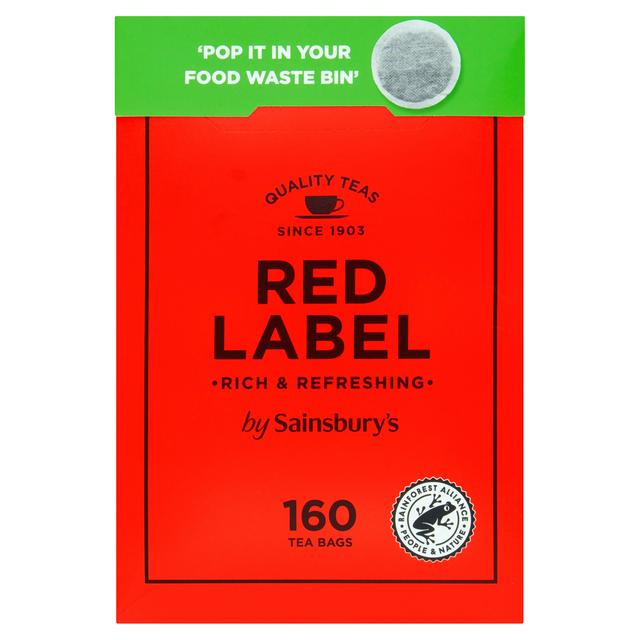
We're also partial to Sainsbury's own brand Red Label orange pekoe, or 'naff tea' as we call it. But our true love is EGT. We even discovered that we had--inadvertently or at least unconsciously--given our children names that matched those initials. Maybe we are that crazy.

Naff tea


Between our own visits back to the UK and visitors coming to us, we have been able to keep ourselves in fairly constant supply this past decade. (We arrived in Toronto ten years ago today. Happy anniversary to us, eh?) But Coronavirus has kept us from the motherlode, from traveling at all. We ran through our not-inconsiderable stockpile some months back and turned to local versions: various supermarket own-brands, Tetley's, a few specialist tea shops. I thought I had adjusted; perhaps I had only imagined there was any real difference.

Yesterday morning my dear husband rose earliest and brought me a cup of tea in bed. We always start off with Earl Grey, and this particular brew was superlative. I knew he had opened a new packet just the night before and emptied the bags into our tea caddy. "This is so good!" I said. "Do you remember which brand it was? Longo's? President's Choice?" 

He looked slightly stricken. "It was Sainsbury's," he said. "I found one more box in the pantry." Damn it. There is a difference, and I had tasted it.

Red Label, we discovered, can be purchased in Canada through Amazon, at the cost of C$36 for 160 bags (500g). The same product at Sainsbury's sells for GBP 2-00, about 1/10th the price. Not for our pocketbooks, sadly. Sainsbury's own-brand Earl Grey cannot be had at all. Looks like we'll be slumming it, tea-wise, for the foreseeable future. 

Damn this virus.


Friday, 17 July 2020

The Suitcase Closet

I really don't like packing. I dislike flying. Unpacking is anathema. Travel is stressful. Moving is traumatic. But with all that said and acknowledged, my goodness do I miss being elsewhere and elsewith. I want to see my parents, my sisters, my in-laws, my niephews. My distant friends. I miss else-land. My kingdom for the seashore! For mountains and deserts and downs. Eldest son, still in Vancouver, sends me photos of views--and of himself--that make my heart melt.

I started this blog as a means of communicating with friends I was leaving behind in England--nearly a decade ago!-- and as therapy for myself moving to Toronto. I wrote a lot in the beginning, weekly or even more. I needed that therapy. As I settled into life in Canada, and as different social media flourished, the blog became more of an opportunity to comment on, fulminate about, or laugh at the oddities that differ amongst the UK, Canada, and the US. These points of difference strike me less often the longer I am here. The posts have become less frequent.

Then came CoViD19. Everything struck me, sometimes with the force of a fist, at other times more like the lash of a wet noodle. I began writing frequently again. I also started living on Zoom and its ilk which has had the weird silver lining of bringing me closer together with friends and family who live far away. Yes they are flat and confined to a square digital cage but so are my colleagues and neighbors. We are not all in the same boat, but everyone I know is on the same screen. I meet with them, I sing with them, I learn Hebrew with them, I discuss books with them, I consume cocktails with them.

It's been more than 90 days in captivity now and it no longer feels like a hardship. In some ways it is freedom: freedom from caring about clothing, freedom from being late for appointments, freedom from packing suitcases. I have gotten to know my house better than I ever have, its nooks and crannies and hiding places. All the rooms at all different times of day.  I am even more grateful to the bizarre circumstances that allowed us to buy this house at all (thank you Kate Watson!). With warm weather and quiet streets I feel as though I could just stay here. Stay put. Forever. In a neighborhood with a mixed and diverse population, a place where cultures blend, where black lives mattering is a daily reality rather than a bumper sticker.

I'm going to check the suitcase closet just to reassure myself they are still there, intact, ready to travel. As will I be, soon. Meanwhile I appreciate being locked in a house that has a suitcase closet.

NB (whatever that means): I meant to post this blog some time back but as seems common at the moment, time slid past. We're now on day 127 of lockdown. Daughter is keeping track: daily she does one sit-up for every day of lockdown. Elder son arrived in Toronto over 2 weeks ago. More on that.

Saturday, 13 June 2020

Social Circles


It's been more than 90 days in captivity and I'm pretty used to it. So of course now is when Ontario decides we are ready for freedom. A few weeks ago the Ontario weather released us from the strictest confinement, allowing us to conduct porch visits or garden chats with friends and neighbors "in the round". It's been great. Yes we have to speak a little louder from six feet away, but that's good vocal exercise. No one could come inside our house, so no need to tidy up for visitors. Win win.

Then this week the Ontario government announced that everyone is allowed to mingle freely (hugs! kisses! indoors!) within a "social circle" of 10 people. Officials shared this news with panache, as thought expecting us all to start cheering like children at a party. As with so much governmental management of the pandemic, however, this is a plan that looks good on a surface that does not bear scratching. To wit:


This graphic has at its center a lovely young line-drawn couple in a big circle while surrounding them like orbiting planets are seven smaller circles (one containing another couple, the others all singles) to reach that magic number ten. All fine and good from the perspective of the lucky pair in the middle, the sun so to speak, but tough bananas for their satellites who are now confined (legally) to this one star system. Can the government not see that everyone wants to be the sun and have their own nearest and dearest orbiting them? To ourselves we are all "ego," as anthropologists call the person at the heart of a kinship diagram.

If everyone creates their own bespoke solar system, of course, the whole idea of confining viral transmission to these ten individuals topples under the weight of an ever-expanding galaxy of Venn diagrams. My first thought upon seeing the plan was "Oy! Has anyone on this committee completed high school math? With a passing grade?" Secondly I wondered whether the Committee, whatever and wherever it is, included psychologists or other social scientists. Elementary school politics are all set to play out here. "You  can be in my circle. You are not in my circle. Nyah, nyah, nyah." State-sanctioned bullying. State-*mandated* bullying. My friendship-deficient childhood flashes before my eyes.

Isolation and captivity feel like much less of a hardship in comparison (and I know that I write from the privileged position of having a comfortable haven in which to isolate. I am endlessly grateful for it.) Isolation has come to seem paradoxically like a form of freedom (Lockdown and Stockholm Syndrome). If I don't join a social circle will I have to tidy the house?

Nah.

So there.

Nyah, nyah, nyah.


Isolation = peace.


Tuesday, 28 April 2020

Lockdown and Stockholm Syndrome

When I heard some news source speculate about the lockdown ending in a few weeks I felt panic. No! Don't make me go back out there again with PEOPLE! It's as though I have developed a mix of phobias: claustrophobia and agoraphobia, resulting in a weird sort of Stockholm Syndrome. I am not  alone, it seems. What I don't know is whether our anxiety counts as 'phobia': an unfounded terror. 

This one might make sense.  

Since those reports we have gotten word that schools in Toronto will stay closed at least until the end of May and my first reaction was one of relief. I can’t imagine being happy to let my kids sit in classrooms or lecture halls or ride public transit. How will I feel, myself, about walking into a  seminar room or cinema or a theatre or an airplane? To wander a supermarket’s aisles, to be less than that hockey stick's distance?  Shudder. I have adapted to staying home.

I still enjoy strolls around the block and physically-distanced chats with neighbors. These are now pretty exciting events. Elder son played frisbee in a park in Vancouver. That sounds safe with gloves, or with hand sanitizer nearby. I take some nice solo bikes ride to the lakeshore, avoiding the busy bike paths and taking advantage of the nearly-empty streets and car parks, or over the Don River viaduct, a route I would not attempt in the full flow of usual traffic.

The dog and I explored campus a few days ago: hardly any people around, but some very contented Canada geese sunning themselves in front of New College.  Not quite as exotic as the penguins currently waddling through Capetown but we'll take what wildlife we can get.


Our household has developed a sort of captivity ecology, with each of us occupying not only different parts of the house but occupying them at different times. Younger son is nearly nocturnal, with a side of crepuscularity. I have watched him eat breakfast at five o'clock p.m. Daughter attends her high-school classes from under her duvet, sometimes requiring a wake up call not just before school but during: math at ten o'clock ("I'm up!") and then a further nudge to wake her for physics at noon because she has drifted off, cozy in bed.

We are cleaning house for ourselves again, a hardship that befalls us every few years, not only during pandemics. We divide the chores and tackle the wreckage twice a month. This past weekend younger son practiced the fine art of dusting (emphasis on the practice); daughter mastered hoovering. (I re-mastered it myself 2 weeks previous.)

But the end will come. It must, I suppose. It seems to me unlikely that we will emerge, blinking, into a rainbow-filled post-CoViD world, but rather will step tentatively into a new, CoViDious environment, one shared with the hideous virus, to which, somehow, we will adapt. Masks will figure. We'll have wardrobes of them dangling from specially-made hangers purchased on Etsy or Amazon. We'll be posturing before mirrors and asking in muffled tones, "Does this one go with my outfit?" 

What must be, will be. Such a shame, though. I only recently found my perfect shade of lipstick.  


Monday, 20 April 2020

Zeder: Passover 2020


The Carlin Clan's Transcontinental Zeder

We had a transcontinental (but not transatlantic) family seder via Zoom: a zeder. It was short and sweet. A best-of version. About half the time ended up dedicated to getting my parents' connection sorted out. First they could hear the rest of us but not see us, then we could hear but not see them, and so forth. We chiseled away at it, occasionally tempted to accept a partial solution, but no-- we wanted it all and finally we got it. The wisdom of the generations prevailed. Daughters and grandchildren offered advice. Sons-in-law wisely sat back and sipped wine. (They know the drill.) My mother, who has a close but tempestuous relationship with her phone and refuses to touch a computer, pressed the final button that made the whole thing work. 

I had found an online Haggadah that we could all share; my middle sister abridged it; and Simon led the ceremonies. In sum, it captured the spirit of Passover very well, and the spirit of these pandemic times surprisingly well too. We had the four questions and the four kinds of children and we dipped and dipped again; we tasted bitter and salt. The intoning of the ten plagues resonated more than it usually does. Would anyone believe me if I said I had smeared a bit of lamb's blood on mine doorpost? (Beware, angel of death.) We washed hands (of course). When we reached the 'Shulchan Aroch', the 'long table',  we signed off and scattered to our own time zones and small tables and enjoyed our festive but quiet meals.

Afterward, those of us in Toronto proceeded with a hunt for the 'afikomen'- a half-piece of ceremonial matzo essential for completing the ritual--and succeeded in finding it before the dog did. In exchange for its safe return by its captors--aka our children--we promised them an Easter egg hunt on the following Sunday. 

As Father Ted would say, it's an ecumenical matter.


I  


can’t imagine being happy to let the kids outside to play with friends. I can’t imagine choosing to be in a crowd of people, to sit in a cinema or a theatre or an airplane or to wander a supermarket’s aisles. Okay maybe the kids can go to a park and play frisbee standing far far apart. Eli did that the other day in Vancouver.I can’t imagine being happy to let the kids outside to play with friends. I can’t imagine choosing to be in a crowd of people, to sit in a cinema or a theatre or an airplane or to wander a supermarket’s aisles. Okay maybe the kids can go to a park and play frisbee standing far far apart. Eli did that the other day in Vancouver.

Sunday, 29 March 2020

Your Internet Connection Is Unstable: Life on Zoom

Who knew that, come the apocalypse, one of the main survival skills would be how to use Zoom? Good thing it's easily learned. Everyone's at it and the worldwide web is struggling to cope. "Your internet connection is unstable," my laptop tells me periodically. From Toronto I taught my 90-year-old father in Los Angeles to host Zoom meetings so he could continue to treat his psychotherapy patients.

I seem to spend half my life on Zoom (or one of its cousins; other brands are available). Take last Monday, for instance.  In normal times Mondays are tough: launching into a weekday routine, up early, dress nicely, pack a lunch or two. Long ago when our oldest child was about six years old, Mondays were further complicated by his after-school swimming lessons in Spennymoor, a village five miles away (and home to now-famous folk artist Norman Cornish). The complications involved school pick-up plus toting a small baby and a toddler, or negotiating complex child-swapping arrangements to enable carpooling. No matter how I sliced it, the Monday struggle was real. Our good friends across the street who also had swimming lessons in Spennymoor, but at a different time, simplified their evening: every Monday, they had frozen pizza for dinner. "We should do that too," eldest child suggested.

"Good idea. What kind of pizza?"

"No!" he said, horrified. "Not pizza. Not the same dinner. Something that we have every Monday."

We settled on pasta. Pasta with pesto or Bolognese or with tuna and peas and cream. Cook some broccoli or a toss a salad, and voilà. Manageable Monday mealtimes and a child who could swim. (That child is now at university across Canada, thousands of miles away, in a different time zone. He is a triathlete. Those swimming lessons came in handy.)

So, Mondays. This past Monday, two weeks after the Crack in the World--aka covid19--usurped our lives, we stayed home isolating as instructed, spending much of the day in pajamas. But thanks to Zoom and its ilk, Monday felt nearly as busy as in those days of yore.  First thing: roll out of bed, unroll a quilted mat, join a Pilates class on Zoom ("feel your core"). Next, don a wrap cardigan for respectability above the waist and attend a research team meeting on Zoom. Then a phone call with a friend who has just moved to Canada and now finds herself stuck at home with two preteen boys also new to this country. (She sounds amazingly cheerful in a situation that would have me curled up in a ball sobbing and drumming my heels.) While catching up with email correspondence I attend an arts talk on Zoom (of course) run by the Brooklyn Rail arts collective; this one features Paul D. Miller, aka DJ Spooky, a polymath with panache. (I want to read his The Book of Ice.) As a lunch break I sing in a Zoom choir led by klezmer musician Polina Shepherd, my friend and former choir teacher in Brighton. I had been missing singing with Polina; a silver lining of the enforced isolation is reconnecting with her and others. Then another Zoom meeting with colleagues from a different project and some more work.

Finally I scoot out for a speed dog walk and back home for some speed grooming. I tart myself up by donning a necklace and some red lipstick. I have been invited to a Zoom cocktail party! BYOB. I mix myself a very tasty Cosmo, my first drink in yonks, and arrive fashionably late by five minutes. The cocktail party works brilliantly, as does the cocktail. Six of us natter and laugh and catch up and commiserate. We're doing it again next week.

A side effect of Zoom Life is spending a LOT of time looking at myself. I feel like a film star. There I always am, on screen, up in the top left corner.

From my perspective, The Pause has spawned an explosion in online activity. Social isolation it is not. Physical distancing yes, but with a whole heck of a lot of social connectedness. I almost feel I am wearing out. Or Zooming out, perhaps.

In real life--Zoomlessly--I go outside at 7:30 pm to play Chopsticks on our porch (doesn't everyone keep an upright piano on their front porch? Why not?), making noise in support of the frontline workers who are doing their level best to save our damned lives. My plinking is paltry, though: these heroes get a far better show performed by Gus, our neighborhood bag-piper, around the corner.


So even without swimming lessons and small fry, Monday was busy. And after all that, there was still dinner to prepare. Luckily I did not have to think hard. It was Monday. I made pasta.


Sunday, 15 March 2020

TMI: coronavirus, CoViD19, and corporations

In this time of crisis, information is useful. Social media and other electronic communications can help. For instance, I recently learned the difference between coronavirus and CoViD19* on Twitter.

Also in the "welcome" category are updates on policies and plans from my employer, from my daughter's school, from my synagogue. These are organizations to which I or my family belong and I appreciate knowing what is going on with them (although, Cirque-ability, notice of cancellation arriving more than 3 minutes before the start of daughter's 'aerial and acro' class would have been appreciated). 

Other messages that drop into my inbox, however, are decidedly not useful, desirable, or even, really, polite. These include numerous "updates" on their handling of coronavirus concerns from any business with which I have ever had a transaction. Chiltern Railways, from whom I once bought a five-pound ticket from Paddington to Oxford--which I then didn't even use-- a year or two ago seems to be sending me twice-daily emails. Ditto the Gap, Hyatt Hotels, Thrifty Rental Cars, and the UofT Bookstore. To these corporate entities, let me say that I do wish your employees and customers well, but I can't help seeing these communiqués as over-sharing, over-the-top, unnecessary and -- the cynic in me suspects-- as opportunistic advertising disguised as concern. 

How would they like it if I decided to write to them with my own twice-daily updates? 

Dear Chiltern Railways, 

Please let me inform you that, due to the current situation with CoViD19, today I bought more hand cream because my skin is chapped from frequent washing. The dog and I had a lovely, socially-distanced walk in High Park yesterday.  My book group is considering postponing the next meeting or holding a discussion online. I hope you find this news helpful and reassuring. 

Yours truly, 

Mrs. Trellis**  

Who knows? Maybe they'll be so grateful they will thank me with a five quid ticket to replace the one I never used. 


*Coronavirus refers to a family of viruses; the specific microorganism that causes CoViD19, or "COrona VIrus Disease 2019" is one called SARS-CoV2.

**I'm sorry, I haven't a clue. 


Saturday, 7 March 2020

Love in the Time of Coronavirus and Jalapeños

A recent tweet making the rounds reads, "Here's how to get a message across" and shows a photo of an official-looking sign from Round Rock, Texas: "Texas Coronavirus Protection. Wash your hands like you just got done slicing jalapeños for a batch of nachos and you need to take your contacts out. (That's 20 seconds of scrubbing, y'all.)"  I laughed, as they say, out loud (how else?).  

I have been washing my hands a lot. There's no hand sanitizer to be found in stores and when I look online, the stuff costs more than printer ink, that formerly most expensive fluid on the planet. I looked up how to make your own because I remember reading an article in the New Yorker years ago about the invention of Purell, and I thought, gee, that seems pretty basic.  I've yet to get the craft project underway however and am just carrying on washing my hands very often while singing Happy Birthday twice, once to each cat, and using the gel dispensers at work and in banks and shops and wherever else I can find them, and nagging my family to do the same. Thanks to the still-chilly weather along with all the alcohol and soap, I now have dishpan hands, a dire fate for a woman according to the Palmolive advert of my childhood.

Another childhood memory came to me as I washed my hands this morning (happy birthday, dear Chica...) while twisting my wrists to avoid getting my sleeves wet: this was a maneuver I practiced only in winter in southern California. For a few months, December to February, my mother insisted we children wear long-sleeved tops (...but Mo-o-om) and soon after Thanksgiving, we would re-learn the extra step of pushing the sleeves up our arms before grabbing the soap. February to November is a long time for a child so each year, we struggled anew to remember, suffering a string of soggy cuffs until it became habit. I'm learning again, not because I can go 10 months without warm clothing, but because it seems I have gotten sloppier in my hand-washing. A digital swipe of lather did me fine. Now I have to keep those jalapeño hands front of mind. Advice to avoid travel is becoming more prominent. I have plans to head west this week. To go or not to go? What constitutes travel? My first stop is home--Los Angeles. Another stop to see my sister, and then my son. The only part of the trip I consider travel is Tucson to attend a literary festival and a writing workshop that I am honored to be invited to.  


After 9/11, when planes were downed and getting across the Atlantic near-impossible, I felt a species of panic knowing that even if something terrible happened at 'home' in California, I could not get there.  My (semi-humorous) tag-line is that I can be homesick wherever I am; there is always somewhere I am not and miss. Occasionally I indulge in imagining how I would feel if I still lived where my roots were, where I grew up. The fantasy falls apart because in that scenario I would be without my husband and my children and want to cry. I do though compare myself and my family to some of our friends here, born and bred here or near. "Are you from Toronto?" I sometimes ask a new acquaintance. "Oh no," they'll say. "I'm from Burlington." Mentally I re-phrase their answer: "Yes."


Journalist Jacqui Banaszynski writes in the most recent Nieman Storyboard: "Coronavirus is as big as it gets...We find ourselves in the oft-talked-about but rarely realized same boat. That's not just about the potential for illness, but about the economy, how we're being served — or not — by our public institutions, civil and lifestyle disruption, and even about who gets to own the truth of this story."


It's fucking scary. And it is even scarier for those of us--those many of us--whose lives and life histories and families are scattered across the globe, whose boats are always afloat. Do I go to LA to see my parents? Vancouver to see my son? Seattle to my sister's? Take my daughter with me? Does husband go to London in a few weeks for work and to see his parents?  


Be careful out there.

It's a new world, one in which the best we can do is aim to stay safe, stay strong, stay sensible, and not worry about stockpiling toilet paper (there are other solutions). 


Wash our hands and think of jalapeños. 


Saturday, 1 February 2020

Segregation and the UK


Last night at 11:00 pm, GMT, the UK left the EU to go it alone.

It's not just Brexit that betrays a British bent toward separation. It's also the taps.

I cannot recall the last time I saw separate hot and cold faucets in a sink in the US or Canada. Maybe, just maybe, decades ago in my grandparents' apartment on Eastern Parkway in Brooklyn. In England though I see this segregated plumbing all the time. Last summer; last week; in friends' homes, in public loos.


They're not necessarily from days of yore. You can buy a brand-new one today at Homebase:


...while in the US and Canadian equivalent, Home Depot, there are none such for sale.

British people don't seem to mind facing the options of freezing or burning in order to wash their hands. "If you want it warm, just put in the plug and fill the basin," says one friend, with asperity. What? Crawl around to find the little rubber plug that's probably dropped behind the toilet? Scour the sink first? Please, no. Once, in a house I rented in Durham, I grew desperate and purchased a weird rubber Y-shaped contraption meant for washing one's hair in the sink.


I gave up after a while, though, frustrated by the frequency with which it sprang off one tap or the other and sprayed the opposite temperature everywhere.

Whatever deals Britain is able to negotiate with Europe in this post-Brexit era I suspect will be a little like that Y(why?)-shaped contraption: wobbly and unfit for purpose.

So mind the hot water.


Thursday, 16 January 2020

Hot seats

At European beach resorts, say Brits, it's the Germans you have to watch out for. They commandeer the best sun-loungers, guarding them with vigilance. "They get up at dawn," a friend said darkly after a holiday several years ago, "Drape them with towels, and won't let them go."

On our recent family reunion/ vacation to celebrate my father's NINETIETH (90th!) birthday at a Mexican beach resort I discovered that it's not just the Germans who are beach chair warriors. There were sixteen of us on the trip so finding adjacent chaise longues for everyone was something akin to annexing a small territory. We aimed for batches of four or six. The flurry of text messages each morning conveyed the tension:

"Just did chairs but they were few and far between. I managed five but couldn't find any help to add or move more into the config"

"We got six chairs. In the middle off to the right a little"

Life in the chairs is pleasant for their occupants and not just because of the sun and sea. Men (always men) in uniform tread the narrow boardwalk behind us and offer drinks, help open or close or shift the huge umbrellas to increase or decrease the quantity of shade, and assist in the positioning or provisioning of chairs. They offer other services, too. "Glasses cleaning?" asks José. I knew he was José by his name-tag. Names are important. You want to tip the right person.

He brandishes a cloth and a spray bottle toward my sunglasses and I understand, though I decline. Next to me a middle-aged, Middle Eastern man says "Yes, please," and his glasses are duly polished. "No cucumbers any more?" he asks. 

"No more cucumbers. Just glasses," José agrees. "New management."

Later Daniel comes along and offers us miniature popsicles in plastic wrappers. Lime, pineapple, cantaloupe. He helps find a spare chair when one of my children joins me.


Our chairs, the cabanas, the fire pits, the volleyball court, and the beach bar all occupy one side of a low woven white rope strung along a line of square wooden stakes in the sand. On the other side stand itinerant sellers: of jewelry, sunglasses, shawls, bags. They gradually approach and sometimes breach the silken perimeter. Then Daniel's and José's supervisor remonstrates with them in Spanish and they nod, step back, move their wares, retreat. Slowly, though. I like that.

In our hotel room, Ana forms whimsical towel sculptures that perch on a corner of the tight bedspread. Each room gets one. Daily, we snap photos of them and circulate: "Look at this!"


I enjoyed the luxury. I admit it. We were celebrating and luxury was what we were after. We and our tourist dollars felt very welcome.

That ever-present first-world colonial guilt, though. I've been lucky to have enjoyed beaches and beach chairs in many places. Laps of luxury are always softly formed of other people's labour; there is no getting around it, but in some parts of the world the exchange feels fairer than in others. José, Daniel, Humberto, Ana, Maria-- they supported us with their labour; we supported them with our money. We work; they work. It sounds fair; I hope it is fair; it doesn't feel fair. Even if the hotel employees are well-paid and justly treated, I'm pretty sure the name-tag-less hawkers have it rough.


They do however get to stay in sunny Mexico, spotting whales, all year long.

Prospero año nuevo from icy Toronto.

Halls of Justice, Toronto.


Saturday, 7 December 2019

File Under: Heartwarming

The taxi driver at the Moncton airport hailed from outside Canada--like me.

I flew to Moncton for work-- to attend the AGE-WELL annual conference--and his was the cab that took several of us from airport to hotel. He drove a minivan, perfect for the four of us plus luggage. Then it turned out there was woman on her own also queuing for a taxi, also attending the same conference and heading for the same hotel. A brief muddled conversation ensued and she joined us, or vice versa; in any case, we all climbed in the car for the ten-minute journey. (Moncton is small: population 85,198 in 2017. A one-horse town.) "It is here," the driver informed us as he turned into the hotel's circular drive, pulling up behind another taxi disgorging some of our colleagues also traveling from the airport.

I proffered plastic. "How much?"

The driver turned to hand me his machine. "You pay for all?" He sounded surprised.

"Sure," I said, surprised too. It was a taxi, not a train. What difference did it make to the driver who paid and how we divided our costs? I would be reimbursed; it all ultimately came from the same governmental pot of funds for our project, a multi-year endeavor around training new professionals and developing technology to improve the experience of aging.

The total came to forty-two dollars which seemed rather a lot for such a short journey, but then what did I know about the Maritimes? Apparently in Canada's northern reaches a banana could cost five bucks. The money machine requested my email address to which it promised to send a receipt. I added a tip, got out, and noted the number of the car, a habit in case of forgotten objects.

"How much was your ride from the airport?" I asked a colleague from the other taxi.

"Twenty-two, about."

"Darn. We've been taken for a ride. Ah, well." Our fault really, I thought; in a new city, we should have checked the cost. Lesson learned.

Roy, one of my co-passengers, overheard and responded with outrage and energy rather than my own philosophy and sloth. "No way! Can you send me the receipt?"

I did, and Roy launched a small campaign. He provided periodic updates during the conference. The taxi company could not identify the driver based on the receipt. "Oh, well," I said again.

"If only we knew the number of the car," Roy said.

I shared it. Roy called the company. "They say they'll get back to me," he reported as he and I and a few others walked along the main street in search of dinner one evening. Roy paused briefly to snap a picture of a 'help wanted' sign in a shop window. This puzzled me.

"Tired of AGE-WELL? Job-hunting?"

He laughed. "No. But there's a site where if you post job ads, they pay you a few dollars. It accumulates." I gained some insight into Roy and his zealous pursuit of the $20. I felt a niggle of worry for the taxi driver.

The three days of the conference were full and busy. At the end, several of us shared a ten-minute, twenty-dollar, uneventful ride to the airport where our flight was delayed only an hour or two. (We used the time to work.) I returned home to a late dinner, enjoyed a relaxing weekend, and on Monday totted up my expenses to submit the form for reimbursement. I did mention the overcharge for the taxi ride, offering to pay out of pocket, but my supervisor said, "Don't worry about it. These things happen."

They do. But then something else happened: I got an email under the taxi company's name whose message read, "I'm sorry for what happened I quoted two different groups each group 20$ 2 groups 40$ but if you are together trip is 24 $ and I'm very very sorry I didn't steal anyone please send to me your bank informations I send the money now your trip 24$+ you give me tips 5$ you need 11$ I'm so sorry I didn't steal you send to me your bank information bay my Email please."

[Sic.]

He signed his name, a lovely biblical one, like Adam.

It smote my heart, that note. In spite of the smite, though, I hesitated to share my bank details. Roy and my supervisor concurred: don't send any financial information. (In truth it would have been difficult as I am a financial Luddite.) But how to balance the taxi driver's dignity with the loss of taxpayers' dollars--dollars intended for the betterment of older adults' lives? I walked around with the question for a day or two before figuring out a course of action. I mentioned my solution to a few people, who shook their heads. "Yeah, right. No." I could simply make a donation myself, but that would not address the driver's injured honor. Maybe it was a put on, but maybe not. I would give it a try.

"Dear Adam," I wrote. "Thank you for your apology. I can see there might have been a misunderstanding. It is too complicated for me to send you my bank information and my employer has already reimbursed me for what I spent. But I want to let you know that the money is to help older people in Canada. If you would like to, you could make a donation to a charity for the elderly." I mentioned one in Moncton.

A week later came this message, verbatim other than the name:

"Hi Leslie,
I am Linda B---, office manager for the New Brunswick Senior Citizens' Federation. The driver came to the Office and made a donation to us of 20$. He gave me his phone to send you this message, you can call me anytime to confirm this. Thank you!"

In my own office in Toronto I laughed aloud. I did not call Linda to confirm. I simply enjoyed the cockles of my heart growing toasty, and wrote to Adam: "Thank you."

File under: heartwarming.


Monday, 28 October 2019

Canada, naturally

Massey Creek
A truth I've confessed before is that Toronto and environs do not float my aesthetic boat. "A city within a park," proclaim signs at the entrances to Toronto's city parks. H'mmm. Unconvincing. But lately my harsh opinions are softening as I explore cycling routes along the Pam Am Path, leading from the lakeshore up the Don River and beyond. True, getting there can be harrowing, and the noise of cars on Lakeshore Drive, the Gardiner Expressway, and the Don Valley Parkway follows me for a time, but eventually I reach flowing rivers and a waving lake and wildflowers, and recently, bright-colored leaves. Eventually the roads vanish and only cyclists and walkers remain.

Husband had been wanting to visit Canada's first 'urban national park', established a couple of years ago on the eastern fringes of the city, so over Canadian Thanksgiving weekend we took a family walk  to check it out. "Not as...wild as I was expecting," mused husband. I guess the clue was in the adjective. We did see colorful leaves and a huge fish zip through mere inches of water--quite a sight.

Thanksgiving in Rouge National Urban Park 

Rouge National Urban Park
           

A fisherman friend informed me later that it was a Chinook salmon, swimming up the Rouge River to breed and die. I was very impressed to think it had managed the journey all the way to Lake Ontario from the north Pacific, but the friend gently informed me that the species had been transplanted to the Great Lakes. Still, it put me in mind of the book and film Paddle to the Sea which the kids loved back when they were small. After our mini-hike we visited Fool's Paradise, the former home of the late local artist Doris McCarthy. It perches dramatically on the Scarborough Bluffs overlooking Lake Ontario, and serves as an artist's residence. The current artist-in-residence had kindly invited us for post-Thanksgiving tea and cake.

Recently I visited Moncton. It is in New Brunswick, the province sandwiched between Maine and Nova Scotia, home to wonders that Raffi, the Canadian children's singer, enumerated in his song  C-A-N-A-D-A. One of these, the 'tidal bore'--not to be confused with the 'reversing falls'--can be seen right in the middle of Moncton. I did not make the trip with the specific aim of witnessing this phenomenon, but when work sent me thence and the conference hotel proved to be five hundred meters from Bore View Park, I knew my chance had come.

As I could have predicted from the name, the tidal bore is linked to tides, in particular the incoming tide, which happens but twice a day. I looked up a tide table and discovered that for the days of the conference, these times occurred in the late afternoon or the unspeakably early morning. At a meeting scheduled for 2:30 the first day I checked my watch obsessively and prayed that we would finish by 4:30 so I could slip away in time for the 4:54 event. But we had much to discuss, consider, debate, and plan. At 4:30 I could stand it no longer. "Hey," I said brightly, "How about we walk and talk? There's this thing called the tidal bore..." After some doubtful glances, my lovely colleagues indulged me and off we trotted.


It was I'm afraid a bit of a dud. Monctonians we met along the riverside path assured us that when the moon is full and the sun is high, the phenomenon truly is something to behold. "People surf it for 29 kilometers!" said one enthusiastic woman. "Here, I'll show you the video on my phone." I politely declined, as it was then a choice between watching her recording or the real--though underwhelming- thing. But I did find YouTube evidence of actual people surfing the bore.

Moncton offered good food, insane taxi drivers, cars that screeched to a halt at the mere sight of a pedestrian on a curb, and most excellent coffee at Café Cognito. I'd go back just for that. I missed visiting Magnetic Hill, another possible reason to return (or not; opinions vary).

The lesson I learn again and again, through trips to cities like Thunder Bay, Winnipeg, Halifax, and now Moncton (as well as through national elections) is that Toronto is not Canada, in the same way that London is not the UK. In England, I lived in Durham and Brighton, i.e. in Not-London; I railed against articles in The Garudian travel section informing readers that Bath is only a two hour drive away (from LONDON, maybe. NOT from Durham). It is easy, however, to forget that similarly Toronto is its own bubble. I have lived here for nine years (gasp) and feel I know it fairly well. But I remain pretty ignorant of Canada. Perhaps I need to listen to Raffi more.  

Wednesday, 11 September 2019

The 22nd Anniversary: A Marriage Story

In July Simon and I celebrated our 22nd wedding anniversary. It's not a big one on the calendar of grand events; the traditional gift for it is copper, "a soft and malleable metal that holds a special significance for a long-married couple". When we hit twenty years I had felt some amazement. Me, married for twenty years? I spent much of my life imagining myself as single forever. I did not seem to have the knack of commitment to one person. And yet, I thought to myself back then, I would be such a good wife. 
Time has proven me both right and wrong. I do have the knack of commitment and I'm not too shabby at the wife thing (I have confirmed this assessment with husband). We celebrated with an afternoon and evening at a nearby day spa, and then took ourselves out to dinner at a newish, French-ish restaurant in our neighbourhood, Café Cancan on Harbord Street, scoring a coveted table on the lovely patio. At first glance the menu items did not spark joy: too outré, or bijou, or some other French word suggesting we would go home hungry. The burger tempted me but seemed like chickening out, and the price for it ridiculous (twenty-six dollars!). So we ordered the Moroccan-style chicken instead (ironically). Also smoked trout, and intriguing sides, including pea and fava fricassee with ‘house cheese’, and Dimitri’s garlic mushrooms. Everything was utterly delicious. I would go back again for Dimitri’s mushrooms alone. I ordered a cocktail called C’est La Vie with a little bough of mint in it and thought of my old brown Honda Civic which had gold racing stripes and the license plate SAYLVEE (later SAI LA V; long story) and Simon debated between something chartreuse and something red, eventually selecting the gin-based 'Cyd Cherise'. Primary colors abounded: Simon's scarlet drink; the green of mint, pea, and fava; and for dessert, a vivid yellow lemon posset (yes, same word that describes baby spit-up in England, or at least in the northeast of England) with tonka-bean meringues and fresh mint leaves. (We consumed a lot of mint.) 
The dinner proved eventful, as we had to abandon the patio and dart indoors between starter and main because the heavens opened in a dramatic summer thunderstorm, foretold only by a single flash of lightning. Our new table by the window offered us a front-row view of the antics at the disputed cannabis café across the road. We finished the meal dry and comfortable and walked home after coffee, when the rain had shrunk to sprinkles. There the two younger children greeted us and brought us hot tea in bed. They, the dog, and the two cats curled up at our feet. I drifted off.
In that state of semi-retirement I had a dream. We, Simon and I, were back at the restaurant where we had ordered a dish described to us by our waiter as enclosing something green. He brought us a plate with a rolled-up crepe and put it between us on the table, to be shared. When we gently tugged it open with the tines of a fork, it released a small swarm of creatures, maybe eight or ten of them, like bright green sand crabs. Unlike the burrowing crustaceans, though, these beings hovered in the air in the manner of winged beetles and emitted a series of high-pitched tones, a sort of chant, before suddenly dropped to the plate still and silent. We were expected to eat them. Simon and I looked at each other. I prodded one with my fork but I don’t recall a crunch or a taste. I hope we didn’t eat them. It would be uncharacteristic of me to be so daring, but Simon might have sampled a bite.
I awoke in the small hours to find the children vanished, the pets nesting in the folds of duvet, the tea cold, and Simon asleep. We had to wait until the next day to exchange gifts. 
No problem. We're malleable that way.  

Wednesday, 14 August 2019

Cycling: Ups and Downs

Toronto is flat, flat, flat. Flat as a pancake, said my friend Heather's husband Mike before we moved to the place, giving me a little shiver of doubt about our plans. I like hills. I love mountains.

Lower Don River, PanAm Path
Turns out that Mike was mostly but not entirely right. Toronto is flat with just a gentle slope northward from the lake, the residue of retreating glaciers. But there are the ravines--crevices in the earth with running streams or rivers, paths of greenery, wildflowers, parks.  To shift gears, I've learned to seek out Cedarvale, the Lower Don Valley, Moore Park, Rosedale. Downs and ups. Contour lines,  but negative ones.


Cycling in Copenhagen
with eldest and youngest. Amagerstrand. 
The advantage of general flatness is for the cycling commuter. My favourite way to get to and from work, or around town on errands, is by bike. I think of cycling as the closest thing to human-powered flying, how birds feel, air rushing past, feet not touching the ground, mobile and lithe. It is a privilege to be able to live where I can ride to work with relative ease. When we lived in hilly Durham and I worked in Newcastle and dropped children at school and nursery it never seemed possible; in Brighton, again, the distance and children posed problems. In both places, lack of safe cycling infrastructure mitigated against the effort.  (It is better there now, at least in Brighton.)  Last month I visited elder son in Copenhagen and again loved the feeling of cycling in that city. So bike-friendly, so easy, so normal. I read recently that Copenhagen is the safest cycling city on the globe. "You'd have to ride 40x around the world before you'd have a serious crash,  in terms of statistical odds," tweeted @barbchamberlain.

Toronto's urban geography is in many ways like Copenhagen: flat, northern, downtown-focused. But Toronto missed the boat with respect to cycling ease and safety. Cars remain king, emperor, deity. We have some bike lanes, though very few protected and separated from cars. My most direct route to the office takes requires using bike lanes designated only by paint and running alongside both car lanes and streetcar tracks. They get very little respect by thoughtless drivers. I call them out when I can. The other day, a blue and sunny summer morning that made cycling to work a true treat, I tapped on the window of an Uber driver dropping passengers in front of a university student residence. "You're blocking the bike lane." Other cyclists wobbled past, dangerously in lanes of traffic, struggling not to fall into the treacherous streetcar tracks. "You could just pull into that driveway." I pointed.

He ignored me, so I moved in front of him, pulled out my phone and snapped a picture of his license plate. He leaned out his window. "Get out of my way! You are just envious of me." He shook his fist. "You will stay poor. You will die and go to hell!"

It took me a second to collect his meaning, that he thought I was riding my bike out of poverty and despair. That I envied him-- a man stuck inside a random black car on this sunny summer day! I started to laugh; I couldn't help it.

Such a revelation about how people live in the same world, occupy the same streets, and see things so very differently. As an anthropologist I should not be so surprised, but there you go. I was. I rode away, still marveling. Different strokes for different folks, of course, but I cannot help thinking that Mr. Die-And-Go-To-Hell would be a happier man if he got out of his shiny car and rode a bike once in a while. Perhaps not along College Street dodging Uber drivers, but certainly down a ravine, alongside a running stream, with wildflowers brushing his ankles. If only the world were such that he and I could have talked about it.