Monday, 27 June 2022

Guns N' Roe


I woke my daughter up the other day because she slept through her alarm. I meant to give her a gentle shake and a little kiss but instead I found myself tearful as I leaned over her. The New York Times had circulated a headline: "In a 6-to-3 Ruling, Supreme Court Ends Nearly 50 Years of Abortion Rights".

"What?" murmured my daughter, blinking at me. "Why are you crying?"

"They overturned Roe."

"Just now?"

"Yes. Sweetie, get up. You and your brothers and all your friends have to fix the world. Come on. Up."

My Grandma Ruth had abortions back in the 1930s, in Brooklyn. They were illegal, but a progressive doctor named Sarah Greenberg saw the procedure as essential healthcare and offered it to her community. She gave public talks in schools and community centers and conducted research on birth control. On Wednesday, June 11, 1919, for instance, the New York Evening Call reported that Dr. Greenberg would speak about "sex hygiene...All women welcome." She continued giving talks for more than a decade. In 1934, according to the Brooklyn Daily Eagle (Monday, March 19, 1934), Dr. Greenberg spoke about sex to parents at PS 230, Albemarle Road and McDonald Ave. (In addition, says the item, Mrs. Lucy McDonald, chairman of the school board, presented a Bible to the school in a special assembly that morning.) I do not know exactly how my grandmother came to know Dr. Greenberg--maybe through attending her talks--but my mother remembers the doctor well. 

Abortion happens. It always has. It always will. It happens in spite of the Supreme Court 'decision' that it won't. What the court struck down was the nation's right--its mandate--to ensure access to legal abortion. In the same session the court struck down New York State's right to control laws about handguns. 

Forced to carry-- or to break the law

So hard to believe Roe vs Wade is no longer the law of the land. Jane Roe, I recall, was the pseudonym for Norma McCorvey, whose 1970 fight for the right to a legal abortion in Texas spawned  the court ruling that has just been overturned. (Who was Wade, though? Must check.) McCorvey spawned not just the ruling but a child, since by the time of the decision in 1973, she had lost her personal battle to abort the pregnancy. She gave the resulting child up for adoption, and later adopted an anti-abortion stance. Still later she changed her mind again, reasserting her belief in a woman's right to choose.

Fine. It's a woman's prerogative to change her mind. A man's too. It's also a woman's right to make up her mind. A woman, the court needs reminding, is a person, not chattel. Her body, womb, brain, and all, is her own. The overtly partisan jurists responsible for the overthrow also seem to have changed their minds, clearly reneging on their statements, made under oath to Congress, that they regarded 'Roe v Wade' as 'settled law' when they were confirmed. The Supreme Court may need renaming in light of such shameful, possibly illicit behavior. I've looked for antonyms to 'supreme' and can't find much. "Inferior" or "subordinate".  The Subordinate Court of the United States? Perhaps even the Suborned Court. 

I am very glad I never found myself in want or need of an abortion. I had a scare once in my twenties, and knew instantly what my choice would be. The anxiety I experienced for those few days of uncertainty, while unpleasant, remained tamped down because of Roe. Because there existed healthcare intervention to avoid continuing a pregnancy I absolutely would not want. Many of my friends have sought--and gotten--safe and compassionate terminations. Some of these friends were young and unready to carry a pregnancy to term, while others were married and unwilling to do so. Not my business. Not the court's business. A woman's business. 

Abortion was not legal when Grandma Ruth had her abortions. She and her family--my family--had the good fortune to be acquainted with Dr. Greenberg. Abortions have always, will always, occur. The demand will not disappear because Roe v Wade did. Safe abortions will diminish across much of the US. 

I hope and fear for today's Sarah Greenbergs.

People are talking and writing about a "post-Roe world", one in which not only the right to this aspect of healthcare has been abrogated but as well other rights to choice and privacy. At risk, broadly, is individual decision-making around who gets to have sex with whom and why. The "American obsession" is what Marlene Dietrich called sex, way back in the middle of the the 20th century. Now add guns.

I find myself grateful that my husband, children, and I can call Canada home. It feels like a safe or at least safer haven, although I know that there are some places here in the True North where abortions cannot be easily obtained. I know there are guns around. There are, worst of all, extreme conservatives, some of them in high office. We have to remain, as the national anthem exhorts us, on guard. Thanks for the lesson, USA. 

How to fix this sinking world? What weapons have we got for the fight? How to contain the American obsessions? How can the next generation get back what we had, what Sarah Greenberg and my grandmother paved the way for us to have?

And who the heck was Wade?


Wednesday, 18 May 2022

Bedside Manner


Creature comforts


It can be a little dodgy writing about beds. Racy, even. But I'm going to do it. I don't mean to brag or anything, but our beds keep breaking. In the past two weeks we have acquired two beds and returned two beds. 

It started, as so much in our lives does, in England. The nice sturdy double bed with the gracefully curved headboard that husband and I acquired at John Lewis after our elder son was born served us well for a few years. It held the three of us comfortably; he was a tiny mite. But he grew. Also the second baby came along, and things got snugger. Still manageable, though. With the arrival of the third child, we gave up. A double would not do.

Mind you, each child did have a bed of his or her own. Most nights they spent at least a few hours on their own there. But at some point, in darkness or creeping dawn, for many years, our offspring opted for a change of locale. They headed for the master bedroom and clambered under our duvet. Waking up in the morning, with my eyes still closed, I used to reach out both hands and count heads. 

So we bought a bigger bed. A European Super-King it was called. Back then, in Durham, we had a massive bedroom and plenty of space, and it never occurred to us that in future the size of the bed might be a constraint. We loved that bed. Everyone fit, even the pets when they came along. There was a children's book we used to read to the kids called The Biggest Bed in the World by Lindsay Camp which could could almost have been modeled on ours (in the first few pages, anyway). While we hoped not to find ourselves floating out to sea one rainy night, as happens in the story, we felt confident that if such a thing did occur, this bed would see us through. 

The bed survived moving from Durham to Brighton and from the first to the second house in Brighton. On the way to Canada, however, it hit a snag. The mattress made it over the Atlantic, and the pieces of the bed-frame arrived, but the hardware to hold them together did not. We learned that bed hardware is very location-specific. I visited specialist stores in every part of the city and across the internet. No luck. Always some reason. "These are metric measurements. Ours are imperial." But... this is Canada, right? Isn't metric the standard? Well, yes and no, it turns out. Or I would be told the exact piece, with a diameter of 3.14/8 inches, had been out of stock since Einstein died. For months after our arrival in Toronto we slept on a mattress on the floor with the pieces of the frame stacked in one corner. Finally, some new (and now good old) friends took pity on us; he is a master woodworker and maker of fine furniture. Bring me the bed, he said, shaking his head. I'll see what I can do. We dragged its poor battered carcass to Gabhan's eye-poppingly wondrous workshop (Gibson Greenwood) and submitted it to his tender mercies.

He examined the corners and crannies as a neurosurgeon might a brain scan; then he pored through catalogues and found, finally, in an Austrian collection, screws and bolts and nuts that very very nearly matched. "I can make it work," he declared, and he did. A week or two later, he brought it to us and supervised the final assembly. Hallelujah! We began sleeping above ground level.  

The bed, alas, suffered again in our next move, from the university's rental accommodation to our current house 700 meters down the road. The movers bodged it and we made do, but eventually going to sleep every evening took on overtones of an extreme sport. The gaps between frame and headboard widened. The structure shook even when our tiny cat leaped onto it. The creaks and groans reverberated. The mattress wobbled. That first pandemic summer we were lucky enough to be able to rent from a friend her charming cottage on Red Horse Lake in eastern Ontario. The bed we occupied there was solid, sturdy, and stable, and the mattress so thick that actual climbing was required to attain it. I was stricken with bed envy.

When we returned home the deficiencies of our own bed taunted us. It groaned and complained and so did I. In addition to the depredations on the frame, the mattress had valiantly withstood almost two decades of occupancy including somersaults and bouncing and wrestling matches-- the kids' I hasten to add--and had shrunk into a pancake of its former self. I could hear it pleading for retirement. 

So I started shopping for beds and mattresses. Online only, at that point, mid-pandemic. "Let's get the kind of mattress they have in fancy hotels," I suggested to husband, on the theory that if Mohammed could not go to the mountain, his mattress could come to us. It turns out you can buy that kind even if you are not a Hilton or a Fairmont or a Sofitel. Eventually pandemic restrictions lifted enough for us to be able to visit a shop and test out various possibilities, while masking of course (no handcuffs though). Slightly weird, but it worked. 

Then we chose a frame. We finally settled on one that looked beautiful and solid and, while costing more than any other bed we had ever bought, would not break the bank. It came from what seemed like a slightly edgy, funky but solid Montreal-based furniture chain called Structube.

Such a mistake. I advise anyone reading my words never to engage with this company. The only exception is for people who enjoy hearing apologies, because that is what Structube staff do profusely, almost joyously. For your added pleasure, they do it in French accents. They have been well-coached in Apology 101. 

When I ordered the bed they apologized because our choice was currently out of stock. Supply chain, pandemic, etc. I was gracious. Fine, I said; we could wait a while for this bed of our dreams. And wait we did, for many months. Seasons passed (though not the covid pandemic, sadly). Winter ended, spring arrived, summer approached, and so, finally, did the bed. With tremendous effort were the 300 pounds of sustainably-sourced acacia wood (heavier apparently than the environmentally-destructive sort) hoisted upstairs and assembled, at some cost, by a specialist recommended by Structube. While dismantling the knackered old bed, our hired hand asked me where my husband and I had been sleeping until now. 

"Here," I said. 

"That's not possible." He shook his head. "This frame is completely broken." 

I blame the dog and the children. The cats assure me they had nothing to do with it.

At last we enjoyed the splendor of safe sleep in the environmentally-friendly, beautifully finished, solidly-constructed new bed. We reveled (not a euphemism) in our new acquisition. I even bought a lap-desk large enough for my computer and a cup-holder, thus making the bed into a new workspace. 

Then one day, some months later, while smoothing the duvet and plumping the pillows, my fingers snagged on something. A crack. The solid-wood headboard had a long narrow crevice running through and through, from east to west. I contacted Structube and complained. 

The young man on the other end apologized charmingly. "I am so sorry for your inconvenience. I will send you a form to complete." The other thing at which Structube excels is sending forms to complete. 

They agreed to exchange the bed, but they refused to compensate us for the cost of hiring more help for disassembly, removal, and reconstruction of old and new beds. "I am very sorry for your experience. We do apologize," one young French-accented young man after another assured me. "Mais...non. It is not our policy. Tant pis pour vous." 

The replacement bed was, unsurprisingly, not in stock. They were sorry. I received periodic emails reminding me how sorry they were. Eventually, the new bed reached Structube's warehouse and then finally our front door (no further). More hired helpers hoisted it up the stairs and unboxed it. Et...quoi? The new headboard was damaged! 

I called Structube. They were, predictably, apologetic. Also predictably, a replacement bed would take some months to arrive. Again, they were sorry. Very, very sorry. 

"I can't wait that long for a new bed," I told the nice man at the other end, breaking into his apology. At that point I probably could have complained about anything, not just furniture-related matters--perhaps the existence of mosquitos in the world, or Vladimir Putin--and received the same response. They would be very sorry for my experience.

No more, I told him. This time I'm sorry. Assez. We are done with Structube. Take back your bed. Give us our money. Stop apologizing.

He said he would send me a form. 

Postscript:we have a bed! It's from Ikea. Recommended by our friends Pamela and John (their advice on putting it together: don't make mistakes). Generally I avoid Ikea like the plague but for our current purposes, it serves. As an added bonus constructing the thing provided a sweet father-son bonding experience. At least the quick snapshots I grabbed looked sweet. I high-tailed it out of there in order to make another bed, in the garden, for my new rosebushes. 

So far so good, says the cat

Spot the rosebushes


Tuesday, 29 March 2022

The zones of time

Saturday 26 March 2021


On Sunday at 2:00 a.m., Britain switches to daylight saving time. What a relief.

I remember reading Dava Sobel's excellent slim book, Longitude, many years ago, and being struck by the part of the story that describes how time zones even came to be necessary when travel-- specifically, train travel--got speedy. Communication too; the telegraph, I think made it possible and sometimes necessary to know what time it was somewhere else.

I sometimes feel I live in three separate time zones: Eastern, Pacific, and Greenwich (or Universal, as it has come, somewhat pompously, to be known).

Toronto is on Eastern time, though not by much. Toronto really does have delusions of east-coastness, while in fact being much more both by geography and character a midwestern city. For part of February and much of March, I was on the west coast, in British Columbia and in California. 


Whistler while you ski...
Cold and sonny, UBC

Berkeley bounty

Point Reyes
Campanile, UCB


Add three hours to figure when to chat with husband and the offspring residing in Toronto. For two of my western weeks I was working, and trying, if not to keep to then at least to overlap with office hours. I became an early riser. Now that I am back east--in what passes for springtime in southern Ontario (just add snow)--I subtract three hours for conversations with son in Vancouver or parents in Los Angeles, or for some work meetings with lucky colleagues based in the west (which I maintain IS best).

While I have not visited the UK for more than two years, since (just) before the pandemic, I surround myself with it in other ways. I study Hebrew "there" and for much of the pandemic, I have attended a choir "there": Polina Shepherd's Sing With Me. I chat with family and friends there, carefully calculating time differences to avoid waking anyone up. I depend for much of my entertainment and news on the BBC. I like to listen to The Archers in real time, when possible, in order to join in with the 'tweetalong', a group of folks who possibly take this long-running radio soap opera a tad too much to heart. "Eccentric but not dangerous" is how one of our number described us. So, I add five hours from Toronto; eight from the west coast.

Mother-daughter outing
Victory Trailhead

There comes a twist in the tale though. A week into my western travels, daylight saving time took hold. I love this weekend every year, especially since moving to Canada (and even more since clocks became connected and change themselves automatically). Losing that hour is a small price for the harbinger of winter's close, even though experience has taught me that the end of a Toronto winter brings at least two months of an English-style winter before actual spring bursts forth. Here in Toronto, March brings us tentative snowdrops and struggling crocuses, species that emerged, bloomed, and faded in England months ago. Not until mid-April and May will we see here the bright heads of daffs and tulips. 

Crocus coming up


Snowdroplets


The trouble is that the UK, perhaps happy enough with its early floral bounty, holds out for several more weeks before bothering to switch its clocks. In the autumn, it's the reverse. The two continents do not align on switching back to standard time. Thus suddenly the difference is four hours between London and Toronto and nine hours if you're in LA. No, wait. Seven hours. It's so confusing. I resort to counting on my fingers (or checking the 'world clock' app on my phone). I like to think that I am fairly decent at arithmetic-- I was in an honors maths program and took both calculus and statistics at university--but I find that as soon as numbers are attached either to time or money, my brain shuts down.

So, it has been a struggle, this time zone business. There are many things I would change in the world if I could. Most of them are a lot bigger and more important than my puny struggles to add and subtract hours. The war in Ukraine and the anathema of Putin. The ongoing uncertain landscape of the covid pandemic. The inability of the Academy Awards to run smoothly and peacefully. Even so, if I could humbly request that the UK and North America agree to change their clocks on the same days, twice a year, I would be very grateful for a positive reply.  

And Putin, begone. To a place beyond timezones.


Wednesday, 26 January 2022

Higher Resolution

My usual New Year's resolution is to make no New Year's resolutions, or at least none that require me to do make an effort. In the distant past I would resolve to make drastic changes in my character; for instance, to always be on time. (Given that today is January 26 and I am only just considering New Year's resolutions, it is safe to call that one a failure.) I learned to reach for lower-hanging fruit. I'm happy to resolve, say, to read more books. Piece of cake. My sister once resolved to drink more water. We were at a family New Year's Eve dinner in Santa Barbara, going round the table sharing our resolutions, and that was hers. I took note and used it the following year. It must have worked, because not long afterward my mother complimented my husband and me. "I really admire how much water you drink," she told us. We thanked her. Another piece of cake, so to speak. (Coffee with that?)

But this year, I'm tempted to try again, and try harder (even if later). It is not exactly an attempt at a character overhaul; it is more a matter of changing work habits. I am still thinking back to my wonderful writing residency at the Wassaic Project in November [https://transatlantictravails.blogspot.com/2021/11/from-window-number-3-to-studio-number-6.html] and comprehending how special was the ability--the mandate--to focus on just one thing, the writing project I've titled Asking After Alice. Sticking to one thing is very much not my normal life. It is not the normal life of any adult that I know. Normal life for me involves constant switching between work, household management, chores, parenting, pet-owning, writing, and leisure, with multiple items under each of those headings. I may be forgetting something. Self-care? Yes, that's it. Or maybe self-care is filed under 'leisure'. 

I don't want to give up any of it (well, maybe cleaning the cat litter). Even doing the washing up is kind of fun, since we all do it together, minus the person whose night it was to cook the meal. (It turns out, by the way, that I have been doing the dishes wrong, all wrong, according to my children. They are the experts. I don't argue.) 

But I yearn toward time management solutions. I no more than start one task than my phone alarm tells me it is time to begin another. I scribbled down little lists and schedules every day. By the time I've written one out, I am already off-course, although I will nonetheless do it again tomorrow a true expression of hope triumphing over experience. Sticking to a schedule is not one of my skills. I feel swamped by time and its passage, am surprised at the end of each and every day how little of it I have captured. And, too, I am surprised at how surprised I am. 

I have studied various time-management tricks and try to perform them, like our dog learning to roll over to earn treats. But I get endlessly distracted. Just now, in the midst of a sentence, I found myself peering out the window to watch a truck deposit a dumpster across the street (a complicated maneuver with all the snow).


My latest effort is inspired by author Karma Brown's The 4% Fix. Ms. Brown points out that one hour is 4% of a day. This feat of calculation is not the main thrust of Brown's book, which instead is about what can be accomplished by putting that hour to work (writing a book, for instance). But the bigger takeaway for me was something else to do with 'four': the focused four. Choose 4 tasks a day to accomplish, Brown advises. Focus. She echoes Susan, my supervisor and friend, whose mantra to her students is 'Focus and Finish'. 

I can do that, I thought. Four tasks. How difficult can it be to get four things done in a day? I found a tiny notepad in which to pen my four daily tasks. But, like time, I find it difficult to manage. Maybe I needed more space. A bigger notepad. A longer day. 

And there is the rub. Or as my high-school French teacher used to say: voilà  le hic. You just get those 24 hours. No more.

How to cultivate a shorter focal length? A higher resolution? To focus and finish. To bring the lessons of the residency back here to my residence. But first, I think, a quick game of Wordle. And then a fresh cup of tea, if the cat allows me access to the water jug.


What was I saying? Oh, right. Right. Yes. Focus and fi


Wordle 220 4/6

🟩⬜🟨🟨⬜

🟩⬜🟨🟩⬜

🟩⬜⬜🟩🟩

🟩🟩🟩🟩🟩


PS Favorite Twitter catch from last week: @alexhanna writes "I have a feeling the next variant will be transmissible via Zoom."  Response from @Barmijo: "Well Teams will still be safe. Nothing transmits well via Teams." That is my experience too--apologies to friends and family who work for Microsoft! :) 

Thursday, 6 January 2022

I Come in Peace

I have been saying for the past few years that once I achieved Canadian citizenship, I would no longer need to post in this blog. (Also, I hoped someone would come up with a better word than 'blog'.) The point of starting it had been efficiently to update friends and family on my transition to this new world, and the motivation for maintaining it included both the fun of writing about what I noticed in this long-drawn-out transition period, and the mental health benefits to myself of carping about what I noticed in this long-drawn-out transition period.

But here I am, a bona-fide card-carrying Canadian citizen, and still writing.

Perhaps the mental health benefits accruing to me now are those necessary to counter the ongoing impact of the pandemic. Omicronitis, we can call it. Here in what Theo Moudakis, my favourite of the Toronto Star editorial cartoonists, labelled OmicrOntario, we are again locked down this month: gyms, indoor dining, theatre, cinema, all closed. Limits on gatherings and customer capacity. Schools and university courses (most of them) are online. It's like 2021 all over again, with added vaccinations. By a combination of luck (husband's and mine) and intrepidity (daughter's) all five of us are now triple-vaxxed. We are grateful, but still wary,  trying to live defensively. Socializing occurs online or outdoors--in below-freezing weather: locked down by winter and by pandemic.

Crossing the border from the US to Canada in early December, just ahead of the omicron 'tsunami', I used my new Canadian passport. It was, I have to say, an unanticipated thrill. I drove over the Peace Bridge from Buffalo, NY to Fort Erie, Ontario, after a long day's drive from Manhattan. My PCR covid test results had reached me in the nick of time--negative, although I had been living fast and loose in those post-vaccinated, pre-omicron, halcyon days--eating with friends! Going to museums!--and I had the screenshot ready to show on my phone. It was early evening on a Thursday, and there was no queue. I rolled down my window and greeted the Canadian immigration agent with enthusiasm, which seemed to surprise him.  I brandished my passport. "This is my first time entering Canada as a citizen," I told him. "Would you give me a stamp?"

"We don't usually do that with Canadian or US passports," he said, and asked me the usual questions. Where had I been, why had I gone, where did I live.

"But it's my first time," I reminded him, boldly.

"Do you have a PCR test to show me?" 

I did. He examined the screenshot and perused my passport. Then he looked at his own computer. "Did you complete the ArriveCan information?"

Uh-oh. I had not. Although we had managed the procedure only a couple of months earlier, in August, to return to Toronto from Los Angeles, I had entirely forgotten to fill out this electronic paperwork now necessary to enter Canada (possibly because the 'we' who had done all the work in August had been my husband and my younger son). "Whoops. No," I told him, now meek. "I'm sorry."

"Oh well," he said generously. "It's fine. I'll let it slide this time. Why don't you give me your phone number?" I wasn't going to argue even if it seemed a little odd. 

So I did. When he gave me back my passport, it had been stamped. A fair trade.

To misquote Fay Wray, though, he hasn't called, he hasn't written...


My first time


Embracing the winter


Niagara Glen

Toronto

Niagara River, Whirlpool Beach

Puzzling


Tuesday, 9 November 2021

From Window Number 3 to Studio Number 6: Passport to Creativity


Wassaic Project HQ: Maxon Mill

I am spending November in Wassaic, New York ("Home of the First Borden Condensed Milk Factory"). Wassaic is a self-proclaimed hamlet nestled at the foot of the Taconics, a stretch of low mountains that stitch eastern New York to western Connecticut and Massachusetts. New England, effectively. I am a Winter Resident at the Wassaic Project. The place is beautiful; the whole idea is beautiful. I have 3.5 weeks to spend writing. Almost a whole month! I have a studio, a shared house, and no responsibilities to anyone other than myself. Well, I did make a plan with my housemate to cook some stir-fry veggies with rice. But otherwise, it's just me and my laptop and some index cards, the odd happy hour gathering, a  yoga class, a brief presentation, studio visits...a dream come true. 

I don't fully believe I got here. My original plan--to attend in October 2020--was covid-cancelled. This year, too, there were obstacles: getting the right travel documents, a negative covid test, updated car registration, leaving home. The travel documentation was a close-run thing. I knew I could cross into the US with no problem--I may be a new Canadian, but I am still an old American, with a valid passport to prove it--but getting back home to Toronto might prove problematic. Ironically, becoming a Canadian citizen last month made me a captive in the country. Part of being sworn in required that we chop up, on screen, our permanent residency cards, which had for 8 years allowed us legally to re-enter Canada. In fact one of the instructions about preparing for the event read, "Bring a strong pair of scissors." We did. Red-handled ones. 

"You don't need to travel anytime soon?" asked Christine, our citizenship doula, when we joined her on-screen, nervous and eager. "It will take two to four weeks to received your citizenship certificate. Then you can apply for a passport."

"I do," I said, and explained about the residency, less than three weeks hence.

"You can postpone the ceremony, if you prefer," she offered. 

No, I said. No. We had waited too long, and I could not bear the thought of standing on the sidelines watching the rest of the family become Canadian without me. Well then, said Christine, write a note along with your signed form explaining why you need to receive your certificate quickly.

I did that. I described the Wassaic Project and my heartfelt desire to be here. I could see that it did not exactly come under the heading of hardship: please, let me go away for a month to write without the distraction of home and hearth. But miraculously, my note did the trick. Perhaps that's something special about Canada, accepting that the urge to creativity can in fact be urgent. Within four days I had my certificate, with which I could request a speedy in-person passport appointment. First I had to request a phone call.

"Oh, dear, there are none available until the middle of next month," said the woman on the end of phone, worry in her voice. It was Tuesday. "Not even in Kitchener." I have been to Kitchener and had no desire to go back, but I would if it meant getting a passport quickly.

I explained to her about the writing residency. "You see, I will have almost a month to work on my project," I told her. "It's really important to me."

"Oh yes, I do see, my dear." We had achieved a 'my dear' relationship; I relaxed. "Let me send them a special request. Let's hope they will see you." I was not sure who They were, but I had confidence in my interlocutor now. 

Within five minutes of hanging up, Someone More Official called and told me to bring my application to the downtown Toronto office on Thursday at 2:45. I was not being sent to Kitchener.

I rode my bike to the appointment and stood at Window Number 3. The man on the other side of the plexiglass (in the U.S. consulate it is bullet-proof glass) complimented my hummingbird backpack. He took my application and my money. "Can you come pick up your passport on Monday?" he enquired.

I told him it would be a pleasure. And it was. 

Passport in hand, negative covid test achieved, car serviced and its lapsed registration updated, I headed to New York. To the Wassaic Project.

I have never 'done' a residency before, unlike most or perhaps all of my seven co-residents. I'm the oldest by far and yet the newest at this artist business. At the Wassaic Project there are no demands, plenty of space, lots of opportunities. Social intercourse without social pressure. Yesterday I toured the woodworking and metalworking shop in a big old unheated barn, full of loud scary machines. I have no intention of touching any of them, but you never know; I might write about them (especially if I take up the horror genre). 

View from the barn

A friend messaged asking if I were allowed to read during the retreat. I am. I am allowed to read, write, roam, run, ride, tack index cards right onto the walls of my studio. I have a studio. It is Number 6. The other residents here are all visual artists: painters, sculptors, workers in miscellaneous materials; I am the lone writer. I notice them wandering around the barn and the converted mill which houses the heart of the operation, fingering bits of wood and twisted wire with a strange gleam in their eyes. They seem much more at home occupying space and taking advantage of resources.

Studio Number 6

I am learning from them. Yesterday I commandeered a spare table on which to lay out index cards. I checked with Will, the project director, about it.

"Of course!" he replied.

He's the one who told me to stick push-pins into the walls. And I will. I just need a day or two to really get into the spirit of the thing. I had better hurry, though. There are only 20 days left. 


The library
Today's writing station: insanely warm. Have swapped sweater for sunhat. 

Saturday, 6 November 2021

Give her a centimeter: turning Canadian

Eli and the flag, turning Canadian, May.
The Toronto crew and the judge, turning Canadian, October.


So, we are all Canadians. All five of us. Eldest child got there first, turning Canadian in May of this year, in Vancouver. The western Canada immigration office works more quickly than the eastern one, it seems.

But on Monday, the other four of us caught up. We received emails telling us we had been approved for citizenship and that we needed to turn up remotely, via Zoom, to attend our ceremony and take our oaths. I have now sworn fealty to Elizabeth the Second, Queen of Canada. There is no comma in the text version of the oath we received, but we are fairly sure that one belongs. Although, as middle child points out, it is correct with or without the punctuation. Elizabeth II is in fact the second queen of Canada, Victoria being the first. 

I jest; but I was moved. I even shed a few tears. We were encouraged to decorate our Zoom tiles with red and white Canadiana; I wore a red sweater (from local clothing maker Terra Cotta) and white camisole peeping out (très chic). Off-screen, I wore my Good American jeans. Son wore a smart red button-down shirt and daughter a white blouse. She also painted her nails red and white. I grabbed the tiny Canadian flag that lives in our kitchen pencil holder. We were completely outdone, however, by the occupants of many other Zoom tiles, who had tacked enormous flags to their walls. A little girl wore a red-and-white bow in her hair. This accoutrement sailed a bit close to the wind, as we had been informed that we could wear religious headgear, but not 'casual hats'. No specific mention of bows, however.

We recited the oath in unison, unmuted, right hands raised. "Number 25, is that your right hand?" The judge inquired. "Number 31, please move your hand away from your face." They checked to see that we repeated the words aloud and correctly. Husband maintains however that Number 31, an older gentleman, did not speak at all. Or perhaps it was 25. 

After saying the oath in English, repeating each phrase after the judge, we recited it in French. "I know it's an unfamiliar language to many of you, but let's give it a try," he said. I don't know about everyone else, but the judge did a fine job of pronouncing the words.

And then we sang the national anthem, O Canada. I know all the words (in English) from the many days of standing stock-still in the corridor of the elementary school, Huron Street, after arriving late with daughter and needing to get her a late slip from the office. But no one in the office would help us until the strains of the national anthem, cast over the PA system, had faded away. So I began to sing along. Daughter cringed. She was very happy when, in Grade 5, her father took over the task of walking her to school. He never learned the song. The two of them arrived on time.

I like the melody, and I even like most of the words. It's oddly constructed, though, this song; like The Star-Spangled Banner, it is exhortatory and in the second-person, addressing the nation itself. (Perhaps all anthems are thus?) A few phrases in particular grated: "True patriot love/ in all thy sons command." Sons? Sons? What about daughters? Or the un-gendered? Also, "O Canada, our home and native land." I hoped that someday I would be a citizen (someday sooner than this) but it would never be my native land, nor my children's or husband's. In fact that is true for about half the Canadians in Toronto. Also, 'native'. Really? The connotation makes me cringe. Surely there's a better adjective. And finally, there's the line "God keep our land/ glorious and free..." Again. God? Canada, unlike the UK, does not have a state religion--though it does publicly fund Catholic schools in the eastern provinces, which annoys me no end. I queried it once, all unknowing, at a school trustee's meeting and generated vitriolic responses. 

Fortunately, enough other people found the 'sons' line problematic, and the anthem was officially changed to "True patriot love/in all of us command." Still a little mushy for my test, but at least equal-opportunity mushiness. 

So now what remains to be altered are 'native' and 'God'. I shall argue for 'our home and treasured land'. It conjures chests of gold and X marks the spot, perhaps, but what's wrong with that? Finally, I wonder if we can get rid of God and replace it with 'We shall keep our land/ glorious and free'. I think 'we shall' has a nice declarative ring to it, far better than a whiny plea to a dubious deity.

Yes, give me an inch, or a centimeter, and I'll certainly go for the whole kilometer. I hesitated to speak up on this issue when I was not even a citizen of the country. Now I am. Next maybe I'll take on the state funding of Catholic schools. What could possibly go wrong?


Poutine!


Sunday, 22 August 2021

A Pandemic Proposal: International Travel as a New Olympic Sport

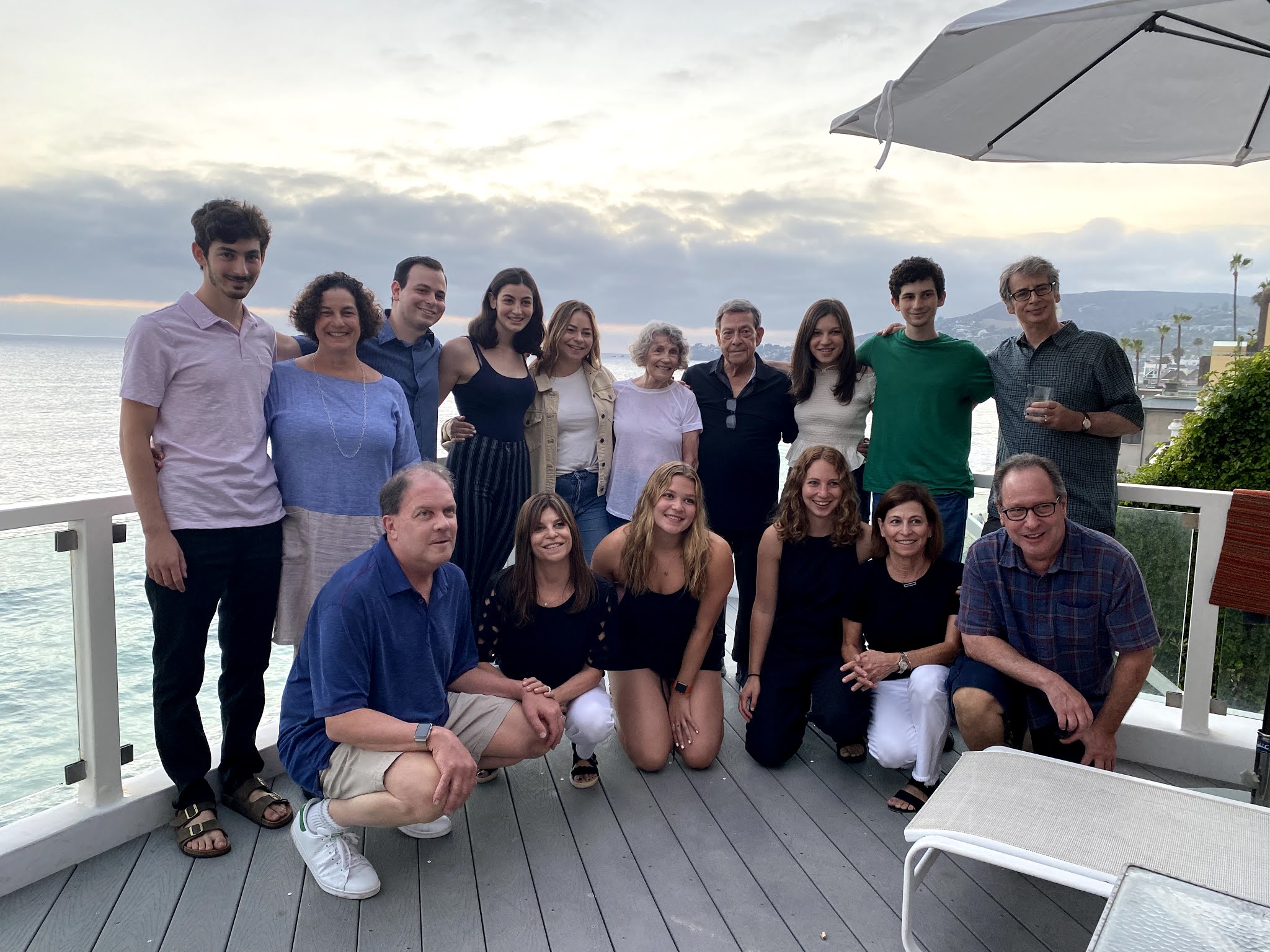
In December of 2019 our extended family--my parents, my sisters, our husbands and our children--gathered in Mexico to celebrate my father's 90th birthday. It was a gala occasion, a week of being together and enjoying sea, sand, and sunshine. When I hugged my parents goodbye it was with the promise that I would return to see them in a few month. March 12th. 

I did not. Essential travel only. We had some of that in our family and managed it as safely as possible, and stayed well. Seeing my parents could wait, or so I hoped.

Nearly nineteen viral months after that farewell, I returned. There had been several 'almosts' but each time something--family issues, climbing case counts, imminence of vaccination, confused government edicts, my previously-untapped ability to not travel--served to postpone the making of plans. How to measure the essence of 'essential'? I watched others travel, by car, by plane, within countries, across borders. They managed it. 

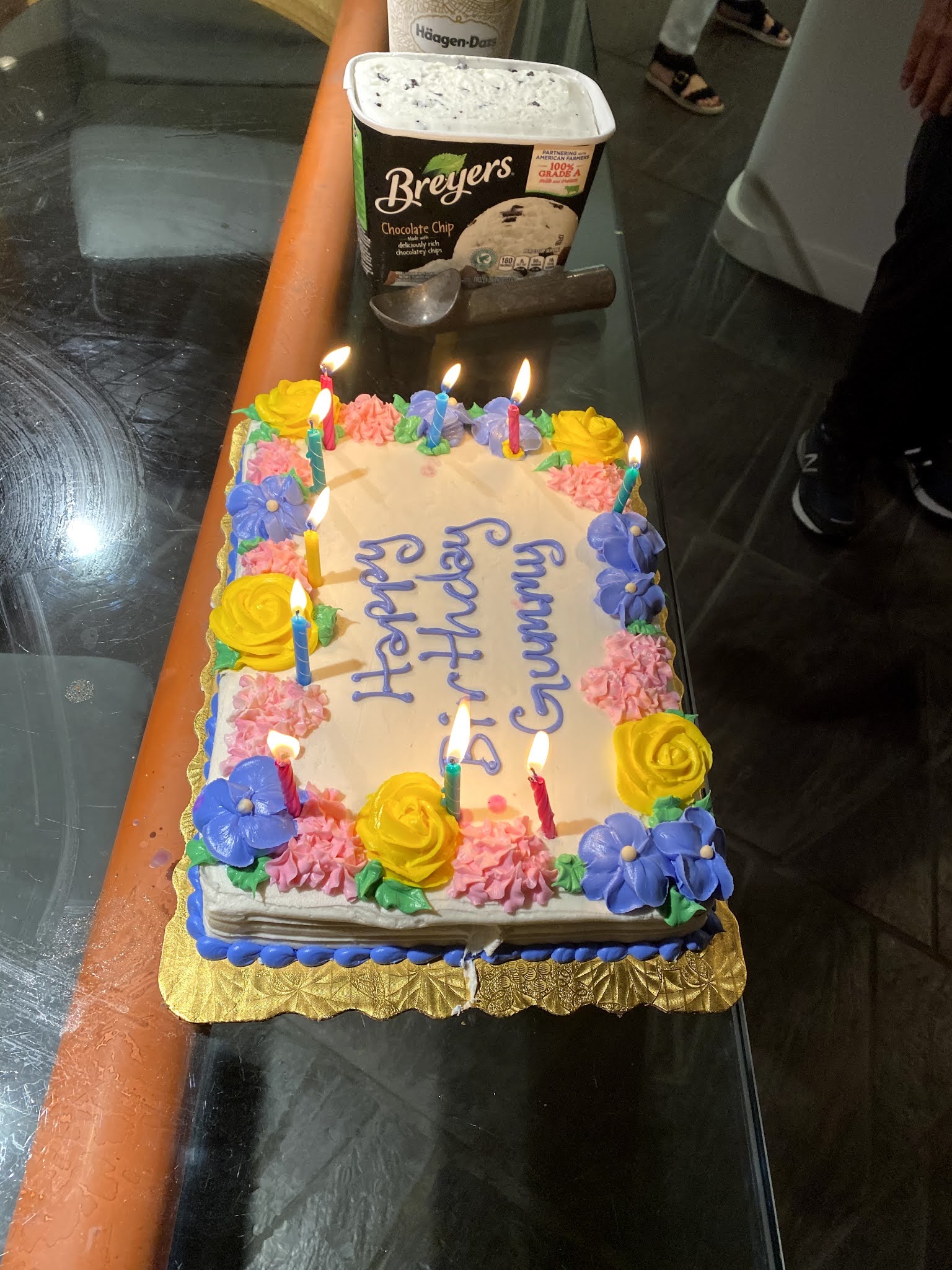
Then came my mother's 90th birthday, earlier this month. It felt essential to be there. Essential, and possible to manage safely.

And lo, it was possible. We did manage it. We jumped through numerous hoops and surmounted a variety of hurdles. In fact, as we sneaked peaks at the 2020 Tokyo Olympics, it occurred to me that international air travel could almost be entered as a new Olympic event. 

We all got there, my whole family along with elder son's plus-one. We arrived in Woodland Hills, California two by two: my daughter and I went first. In the ever-changing landscape of government rules and edicts about crossing borders, information was as difficult to pin down as liquid mercury. 

The Air Canada website said we had to have a PCR test (that's the expensive one). The US immigration website said "PCR or antigen". Essential travel only, said a newspaper article. "US/Canada Border Re-Opening," Twitter chirped. "No one even asked me why I was going," reported someone who had recently driven across the Peace Bridge into Buffalo. Could my husband join me (non-American, holder of a British passport and Canadian permanent resident card)? Good question. Fully vaccinated--but with Astra Zeneca? Multiple types of vaccine? Shrug. I called Air Canada. No one at home to answer the phone. 

I turned to friends--mostly Americans--for their experiences. "How was it for you?" I asked several who had made the experiment at various points. Fine, they all said, but I could find no one doing what we were trying: flying rather than driving, a mixed bag of Americans and non-Americans, in a month without an R in it. So many variables. So many sources of data. So much disagreement.  A lot of shrugging.

So, full of trepidation, armed with certificates of vaccination and negative test results (antigen; the pharmacy said that's what everyone else was having, whoever and wherever those everyones were now), daughter and I, in the vanguard of our family expedition, trekked to the airport. My jittering nerves could have powered a small country. 

We sailed through security and approached Passport Control at Toronto's Pearson Airport, where US Immigration and Customs do their thing. The uniformed agent smiled at us--at least, his eyes did, above his mask. He waved us through. Welcome home, he seemed to say. We boarded the plane and found our seats, near the back where not many people had to pass by. For a long while the aisle seat in our row remained empty and I allowed myself to hope but then a young man, a perfectly decent and clean one, sat next to us. I was glad my mask (KN95, fitting snugly, thank you very much) covered my inadvertent glare. I was not glad, however, to see that his mask rested below his nose.

"Please, can you put your mask on fully?" I asked.

"Of course. Sorry." He complied. "Are you vaccinated?"

"I am, but we still need masks on."

"Of course," he nodded. "What vaccine?"

I wanted not to be facing this nice young man, not be chatting with him, not, of all things, to be discussing vaccination. "Astra Zeneca." It felt like a confession and I kicked myself for getting drawn in this way. I took the offensive. "What about you? Are you fully vaccinated?"

"Getting there," he said vaguely and alarmingly, his mask slipping down a little. What? I thought, drawing as far away from him as I possibly could. "What do you think about this mixing of vaccines?" he asked me.

"I think it's fine," I stuttered. "Whatever vaccine you can get, you should take."

He shook his head, murmured something in a tone of doubt, and took a phone call, pulling his mask up over his nose again. Daughter and I exchanged glances. The man disconnected and waved his phone in front of me. "And what do you think of this?" he asked me. I saw a screen full of brightly colored stiletto-heeled shoes.

"Uh. Shoes," I replied, stupidly.

"Not the shoes," he said with a touch of impatience. "Look. It's a shoe organizer." Indeed it was. "It's my product," he added. I saw a transparent acrylic board with narrow holes along its width and length; a pencil-thin high heel had been inserted into each one. It was in a way beautiful, like a Mondrian painting, and also the most useless object I could imagine. I surrendered to the inevitable. I would have to speak truth to Y-chromosome.

"Look," I said. "I'm pretty nervous about this trip. I don't think I can have this conversation any more. Sorry." 

"I'm making you uncomfortable," he said. "I'll move to another seat." 

Instant guilt. "Oh, no, you don't have to do that. I just can't make small talk right now." The guilt was compounded by the fact that the man and I belonged to different visible ethnicities. "Please don't move because of me."

But he did move. As I saw a little later he had found a seat with no neighbor where he could sprawl his not-fully-vaccinated self in comfort. Meanwhile, daughter and I had our row to ourselves now and watched Gilmore Girls in masked semi-privacy. Win-win (except for the guilt). 

Time passes quickly when you are watching trashy sitcoms with your teenage daughter, and we landed without incident--and after a car-service ride across the Santa Monica Mountains, I was reunited at last with my parents. Calloo, callay! 

More hurdles however remained. We were reunited, true, and under the same roof--but still physically distanced and masked for three awkward days. We stayed outdoors as much as possible. Antigen self-testing kits were procured from the drugstore and after 72 hours we hooked up our phones to our nasal passages by means of swabs and an app, and got the all-clear. At last: hugs! Touch! Dinner indoors! 

The other two pairs in our party arrived: first, elder son and girlfriend coming from Vancouver, followed two days later by husband and younger son; there was some truck with US immigration in one case, successfully surmounted, and a flight delay for the other pair. More masking, more separating, more testing, and then, blissfully, reunion. Hugging.

The visit was amazing. I am not sure I have ever appreciated a trip 'home' as much as this one. Maybe  my first return to LA after leaving for university decades (and decades) ago had a similar emotional impact. I marveled that everything was still the same--road signs, stores, office buildings--as my mother drove me home from Hollywood-Burbank airport. "You really should have achieved object permanence by now," I recall my mother saying with a slight frown. 

This visit, it was people, rather than things, that I marveled to see again. I woke up every morning with an urge to pinch myself just so as to believe I was really truly there, in my childhood bedroom, my parents next door, my family around me. Over the course of almost 4 weeks, I saw my sisters and nieces and nephews and brothers-in-law and some cousins and friends. I met in real life a new 'pandemic pal' who to me had only ever been the size of a tiny Zoom tile. 

With my family I swam and hiked and beachcombed and went running and rode bikes and clambered in caves and visited Hollywood's Walk of Fame for the first time in decades. We went to Muscle Beach. Some of us rambled around the Getty Center. We took silly photos. We swam in the sea and in swimming pools. Daughter took a Red Cross lifesaving course and made her own new friends. Son's girlfriend and niece's boyfriend joined in the family events and seem to have survived unscathed--kudos to them! Younger son had some driving lessons with his grandfather. 

I feasted my eyes on the landscape of the southwest, the jagged coastal range, the crumbly inland one, the ocean, the canyons, the cactus and the palms. The dry scents of sage and pine and eucalyptus and juniper and sandstone dust. The stunning western sunsets over ocean and chaparral. 

Our homeward travel involved more paperwork, more testing (and more expensive testing), and of course more packing. But it all worked in the end. And now we are back in our home(s), getting ready for our next chapters.  

Glut of miscellaneous photos: