Monday, 25 May 2015

O perfect day

Many thanks to those who have sponsored me for the upcoming Ride for Heart. Your donations are truly appreciated. The ride will take place this Sunday (May 31). Unfortunately, the current forecast is for rain, my least favourite weather. But as I've learned to say in Canada, "It is what it is." Rain or shine, we ride!

If anyone else would like to sponsor me, or perform a sun dance, please please do. Link (for sponsorship): 

http://support.heartandstroke.ca/site/TR/Events/RFH2015?px=1090641&pg=personal&fr_id=1070&_ga=1.139210225.338951223.1428368156

For sunshine, not a link but a poem, one that mentions heart as well as sun. Seems apt.

A Day of Sunshine
by Henry Wadsworth Longfellow

O gift of God!  O perfect day:
Whereon shall no man work, but play;
Whereon it is enough for me,
Not to be doing, but to be! 
Through every fibre of my brain,
Through every nerve, through every vein,
I feel the electric thrill, the touch
Of life, that seems almost too much. 
I hear the wind among the trees
Playing celestial symphonies;
I see the branches downward bent,
Like keys of some great instrument. 
And over me unrolls on high
The splendid scenery of the sky,
Where through a sapphire sea the sun
Sails like a golden galleon, 
Towards yonder cloud-land in the West,
Towards yonder Islands of the Blest,
Whose steep sierra far uplifts
Its craggy summits white with drifts. 
Blow, winds! and waft through all the rooms
The snow-flakes of the cherry-blooms!
Blow, winds! and bend within my reach
The fiery blossoms of the peach! 
O Life and Love! O happy throng
Of thoughts, whose only speech is song!
O heart of man! canst thou not be
Blithe as the air is, and as free? 


Sunday, 26 April 2015

Fuel to the feu

Under the heading of #onlyincanada : our new cable television package includes 'The Fireplace Channel (English)' and 'The Fireplace Channel (French)'.


Loyalty

In the beginning, we had a telephone. In the nineties in the north of England, this was not a given; people in shops or offices would inquire 'Are you on the 'phone?' if they needed contact information. We had broadcast television, just the four terrestrial channels, eventually joined with much fanfare by a fifth. Later, we got internet. Dial-up at first-- eeeeyaw-eee-kkkk-eee-- then broadband. In our household, the silence of broadband was its most notable advantage; the squawking dial-up connection inevitably woke the sleeping baby.

With the arrival of children we also acquired a library of video entertainment: Teletubbies, Bob the Builder, Fireman Sam, Postman Pat (and his black-and-white cat), and our family favourite, Eddie Stobart's Steady Eddie series. Our VCR ranneth over. We were sated, and costs were reasonable. I do just vaguely remember wanting to pull my hair out at the tenth repetition of 'Can we build it? Yes we can!'

In Canada the ante got upped when we had to register anew for all services, all at once. As with so much else in Toronto, the price of the total package shocked us. But the kids were thrilled because we had cable. Hundreds and thousands of channels! And we got a PVR, which soon filled with recordings of 'I Carly' and Premier League football matches.

We moved house and lost the television service; something to do with the wiring. After a few months we noticed that we were still paying for it, and had firm words with the provider, Bell Canada, and felt grown-up and competent; we were keeping an eagle eye, or at least an eye, on our finances. And yet somehow the bill for telecoms services seemed to grow. Or had it always been thus? We thought it might be like those distorted memories of early parenthood, when babies chortled and cooed and never cried or pooed.

At last, with eldest son's gentle but firm guidance, we Took Steps. We contacted a new upstart start-up internet provider and asked what they could do for us. Quite a lot, it turned out, and, pleased with ourselves, we prepared a Dear John call to Bell. Sayonara, swindlers!

Not so fast, alas. We delivered our stern words.  'Oh, dear, you have an expired package,' said a friendly woman in the Loyalty Department, in New Brunswick, clucking sympathetically. She sounded so kind, and worked out such a shiny new deal, that she persuaded us to stay with Bell rather than switch to the new company, which could not match the offer.

But the plain truth is that we've overpaid Bell by hundreds if not thousands of dollars for the last two years, and they've happily allowed us to do so. In other words, we've gone right back to the abuser.


Monday, 20 April 2015

Riding for Heart

I have registered to do a 25K bike ride next month, to benefit Heart & Stroke Canada. My ride is dedicated to the memory of Joe Cassidy (see my previous post). Please sponsor me if you can.

http://support.heartandstroke.ca/site/TR/Events/RFH2015?px=1090641&pg=personal&fr_id=1070&_ga=1.105459009.338951223.1428368156

Thank you.


What He Said: Requiem for Joe Cassidy


On Friday, April 17, Emmeline Skinner Cassidy, age 20, shared a quote from her father, Joe Cassidy, on the meaning of life: ‘If it’s not about love,’ Joe had said, ‘well, it’s not about anything at all.’


Sadly, Emmeline was reading these words at Joe’s funeral, in Durham Cathedral.  


I wasn’t there; I was here, in Toronto, feeling that day particularly remote from England. Until he died on March 28, Joe had been principal of St. Chad’s College at Durham University and a Reverend and a Canon of the Cathedral, and the funeral was attended by many mourners in the majestic setting. I tried to follow proceedings on social media. One person tweeted ‘I’d guess about half the people who just got off my train at Durham are @ChadsAlumni, here for Joe Cassidy’s funeral.’ Later, the same man, @wallaceme , added that the funeral was ‘Sad but also a beautiful and fitting tribute.’ Later, Facebook posts appeared, agreeing with that description. A friend of mine in Durham who attended sent me a link to Emmeline’s eulogy and pictures of pages in the Order of Service. From such nuggets, and from my memories of many hours spent inside the Cathedral, I was able to imagine being there, sitting perhaps at the back, on the right, at the far end of a pew. I see the rows of fossil-studded marble columns, trilobites embedded permanently in the polished stone.

But in fact I am far away, really far away. In miles: 3,404; in kilometres, 5,478. From the great distance, I have been feeling Joe’s loss. Our families have been friends for 17 years. I met Gillian, Joe's wife -- now, I suppose, his widow-- at a mother-and-baby group in Durham.  It turned out that Gillian and Joe and their two small daughters had recently moved to town and into the same house where my friend Kate and I first lived in Durham, in 1994;  a house intended as the dwelling for the principal of St. Chad’s College, which Joe was, and Kate and I were not. It was an amazing old warren of a building with endless rooms and multiple staircases and, we decided, a haunted cellar. Kate and I got it cheap because the college wanted it occupied until they found a new principal. Gillian gave birth to their third child in that house, a boy who became my younger son’s best friend for a time. Even after my family and I left Durham to move to Brighton, 300 miles south, our families visited each other, and Gillian and I saw each other in between, in London and Bruges and Harrogate and Edinburgh.

And most wondrous of all, when we moved to Toronto, Joe and Gillian and children were here waiting for us. Well, not exactly in Toronto, and not precisely waiting for us, but nonetheless, they cushioned our arrival in Canada immeasurably. Joe, who was born in Quebec, and used to live in Toronto, enjoyed spending summers in the town of Crystal Beach, on Lake Erie, a 90-minute drive from Toronto, where they had bought a house which we visited soon after our arrival. I believe we fell on them like long-lost family.  First, though, they came to Toronto to see us in our new university rental house, still empty, waiting for the arrival of furniture. ‘Warm in here,’ Joe commented, when they'd decanted themselves from their car.

‘Yes,’ we said. ‘We put the air conditioner on but it doesn't seem to be helping.’ I pointed at the thermostat. Joe nodded, then wandered outside to look at the air conditioner. The actual machine. That had not occurred to us. We didn't realise it was kept outside.

‘It’s not switched on,’ he reported. He turned a dial or flipped a lever, or something, and suddenly the house became cool. Afterward, we all went to dinner at a Hungarian restaurant on Bloor Street that Joe remembered from his student days. As we walked along, he pointed up one side street and said ‘I used to live there.’ Another block; he pointed down the road to the left. ‘I used to live there, too.’ And so on. Whenever we met up in Toronto, over the four summers we've been here, wherever we went, it was the same story. Joe, it seemed, had lived on every block in the university area. I asked whether he had had the habit of moving once a month. He laughed.

The thing about Joe that we learned from getting to know him in Canada is that he had done and been so many different things. I teased him about it last summer, joking that he had lived numerous lives, somehow telescoping time. Casual chats over dinner or during walks with the kids along the Lake Erie shore led to throwaway comments like ‘When I was teaching physics in St. John’s, Newfoundland…’ or ‘Yes, I remember living in Detroit…’ Joe had been a Jesuit, a philosopher, an ethicist, a teacher, a guidance counsellor, a volunteer working with street people, an economic modeller in Nicaragua, a college principal, a husband, a father, a Christian. A friend to so many. 

I’ve read a lot about Joe’s accomplishments since his death, many of which I didn’t know (for instance, the economic modelling in Nicaragua). He could operate air conditioners and cook chili; he took my son kayaking with his own. All my children have been shocked and saddened by his death. The youngest betrayed her creeping Canadian-ness by asking, ‘But now who will do the barbecuing?’ Joe could grill burgers and ponder ethics, discuss God and install new kitchen cabinets. He died way too soon, and at 60 years old, way too young. His loss is just so damn sad. I continue to see his shadow around the corners of our neighbourhood, in front of houses where he lived, once, in Toronto. I may be far away from Durham, but Joe’s memory seems nearby.


I am confident that Gillian and their children will continue to feel Joe's presence, to find the imprint of his love, around every corner in their lives, in all the recesses of their hearts, everywhere they go. Forever. Because as Joe said, it's all about love.

Tuesday, 14 April 2015

KD: Canada's soul food

Not that I gave it too much thought, but if you had asked me to name Canada's soul food, I probably would have said poutine, the Quebecois combination of fried potatoes, gravy, and cheese curds. I've seen the squishy curds in cellophane bags for sale in supermarkets, so I suppose you could prepare the dish at home, but I have only eaten it at restaurants or street stalls. Sometimes it is really good. My favourite version is at our local gastropub, The Harbord House, where they use a mix of sweet and regular potatoes, and make the gravy from a veal jus. Yum. In fact poutine goes some way toward helping me understand why anglo Canada is so keen to keep francophone Quebec in the federation. (Delightful though it is to visit Montreal, keeping a pet French-speaking province seems an awful lot of trouble: all that double-labelling and signage, having publicly to fund not just French programs in schools but a whole parallel Catholic school board... )

In any case, I found out recently that I'm entirely wrong about poutine being Canada's soul food. That accolade goes to Kraft Macaroni and Cheese, or as it is known here, Kraft Dinner. It's so well-loved it has a nickname: KD (http://en.wikipedia.org/wiki/Kraft_Dinner). Heart-and-soul food.

The inventor of Kraft's powdery mac-and-cheese in a box, James Lewis Kraft, was born in Fort Erie, Ontario. This fascinating or at least mildly interesting bit of history came to my notice recently due to the kerfuffle over giant food multi-nationals Kraft and Heinz merging, generating concern for Canada's KD factories. (Will they call the new corporation HeinzKraft or does that sound too much like a German architecture movement?) Feature writer Jim Coyle  in the Toronto Star abjures his readers: 'But, brothers and sisters, only from our frostbitten, orange-stained fingers will they pry the manufacturing plant that makes Canada's national soul food' (Insight, Sun Mar 29 2015, p IN3).

See?

I grew up with boxes of Kraft Macaroni and Cheese stacked in the pantry; their contents often appeared as dinner during my childhood. I had no idea  mac and cheese existed without cardboard casing. I hated the stuff. Not until I moved to England the first time, as an undergraduate on a study-abroad program, did I discover the homemade version. A charming pamphlet of vegetarian recipes from a now-defunct Brighton health food store, 'Simple Supplies', provided one of my life's eureka moments: I adore mac and cheese.

And yet, today, I have a stash of (21st century) KD on my own pantry shelves. My daughter loves both to prepare and eat it.  Perhaps the preference skips a generation. Or, maybe, my children have become real Canadians.


Not sure how I feel about that. 

POSTSCRIPT: I recently came across this YouTube video, from a series called 'Box Mac', which compares and contrasts America's and Canada's versions of Kraft Mac'n'cheese. All you ever wanted to know about macaroni and cheese, and more. Much more.


Wednesday, 8 April 2015

East v West: the highlights


When I was a child I subscribed to Highlights magazine, and waited with excitement for each month's delivery. It billed itself as 'fun with a purpose', which has an ominously earnest, almost Soviet tenor, but back then I didn't mind earnestness. The stories and even more so the jokes, letters, and drawings sent in by readers seemed like license to spy on the lives of other children (maybe kickstarting my career as an anthropologist). From Highlights, I learned that growing up in Los Angeles was different from growing up in Iowa, or Pennsylvania, or New Hampshire, places that to me constituted the 'real' America. For one thing, in Los Angeles, we didn't have snow. Highlights stories were full of children building snowmen and sledding and spotting the first red-breasted robin against a pure white drift. Outside my house, meanwhile, the leaves might turn urine-yellow and fall off the poplar trees in November, but in December the oranges and lemons ripened, and the palms and the pines and the eucalyptus stayed green all year round, so the scenery did not notably change. In the pages of Highlights, children picked apples and made their own cider. We had no apple trees.

"You poor things don't know about the changing seasons!" my Brooklyn-born mother lamented to her three daughters.How silly. I argued that of course we knew about seasons. In summer we wore shorts and sandals; in winter, long-sleeved blouses and sometimes a sweater or even a coat.  Occasionally in winter, on one of those chilly days in the 60s, rain came along with fanfare suited to an apocalypse: we would be driven to and from school rather than having to walk the half-mile and get wet, and any extra-curricular activities might well be cancelled.  The next day's newspaper likely featured on the front page a picture of a VW Bug up to its windows in water. In Highlights, I saw drawings of children wearing rainboots, carrying cheerful umbrellas, and splashing in puddles, and wondered what was wrong with their parents' cars. We kept a few umbrellas in our house but used them to run down the hill while trying to fly like Mary Poppins. My mother would tell us stories of her childhood, in which fell summer rains warm enough to play outside wearing only a bathing suit. Rain in summer! This seemed as miraculous and unlikely as a Martian landing.

Highlights never featured tales of children putting their treasured objects in boxes by the front door, ready to evacuate in case a brush fire came too close, nor of children cowering in doorways during an earthquake.

I moved to Northern California for university, just as a drought ended in the state. In early November of my freshman year I awoke to see water beating on the dorm window. "Oh well," I said to my room-mate, Linda, "I guess we'll have to miss today's classes." Luckily, I had only one lecture scheduled.

"Why?" Linda asked, puzzled.

I gestured. "It's raining. Who would give us a ride?"

She  laughed and of course shared my idiocy with the other girls on the floor. I was pretty wet when I got to my lecture, but learned quickly about raincoats and hats and umbrellas. And I sure have put that knowledge to good use over the subsequent, California diaspora years.

Recently, during my children's March Break, we made a family trip to the US Northwest (Washington), then northward to the Canadian West (British Columbia). (I am advised that Canada is unidimensional and has only 'east' and 'west'; without the attenuation of a northern or southern trope. The North is a category of its own.)

I loved re-visiting Vancouver, loved Victoria. It's Canada, Jim, but not as we know it. The Pacific Ocean! Mountains! Greenery and flowers  in winter. Just like California (except for the rain, of course).

Wreck Beach, Vancouver, at sunset. A naked man stands behind me.

Why do we not all live there? I asked my Toronto friends when I got home to temperatures hovering at 0C, and melting dirty piles of slush at the curb, and bare trees. Several of these women had lived in Vancouver for a number of years. They looked at me in horror. "I wouldn't go back. It was like exile," said one.

"If you're not involved in sports, you're no one. You have no friends and nothing to do," said another.

"All they want to talk about is their latest hike and where to find the best local organic mushrooms," scoffed the third. "And it rains five months of the year!" Someone else said that Vancouver is a great city for being outdoors, while Toronto is a great city to be in.

"In my book group in Vancouver," said one woman in my current book group, "none of the other members actually came from Vancouver." Implication: those durn Westerners don't read.  It reminded me of hearing, many decades ago, that serious thought couldn't occur in California, that real American intellectualism happened strictly east of the Rockies, where Best Foods mayonnaise was called Hellmann's. I didn't believe it then, as I earned my degree in Berkeley, but perhaps that contention, coupled with my memories of  the 'true America' as delineated in Highlights,  contributed to my desire to get out of California and experience the Great Elsewhere. (As they say, be careful what you wish for.)

And I don't believe it now. Folks in B.C. spoke warmly of Toronto. "Oh, it's a wonderful city! I love visiting." They had no desire actually to live here, though. "Couldn't do it. Too cold." I call that thinking.

A few years ago I got my own children a subscription to Highlights, but they never expressed much interest in reading it. Perhaps because they have the internet, or because they have already travelled so much, or because they are not growing up in America. To them the magazine opened no doors on wonders of life in the great elsewhere. We let the subscription lapse. I do wonder if these days, Highlights depicts children playing at the beach as well as on snowy hills in January.


Tuesday, 3 March 2015

Forcing the issue

We've been in Canada for four and a half years. This is our fifth winter. Long enough, one would think, that we'd have got the hang of it all now.

Not so.

In the midst of what turned out to be the coldest February on record in Toronto, our house was freezing. We would set the thermostat to 22C, then 23C, then even 24C. But the thermometer persistently stuck at 17C or 18C. Tsk, tsk, we said to ourselves. It's that cold outside. The poor furnace can't keep up. We donned layers of clothing, multiple sweaters, and set electric space heaters out. I huddled in the kitchen, one ring of the gas stove burning and the oven on. I cooked a lot.

Finally, our tenant, who is a Canadian, suggested that perhaps there was something actually wrong with the furnace. At first we said no, it must be fine, or we'd have no heat at all (like last year at this time, in fact, when the thing broke down). But then we began to wonder. She is Canadian, after all. So we dug out the name of the guy who solved the problem of the broken furnace last year (NOT the one who told us the only solution was to buy a new furnace) and he sent someone over. The very first thing he checked was the filter. 'This is filthy!' he exclaimed, showing me a fuzzy rectangle the same color as our tabby cat (a coincidence? I think not). 'When's the last time you changed it?'

Changed it? We're supposed to change the filter? How do people know these things? We had never changed it. It turns out that you are meant to examine filters every two months! For heaven's sake. If that's the rule, then put a sticker on the front door with instructions.

Over the weekend our friend Sue came  from Indianapolis to visit  our now delightfully toasty home. Sue grew up in the northeast of the US, and lived in the northeast of England, which is where we met her. We told her our furnace story and particularly addressed the question of how we could have owned three homes and never confronted the issue of furnace filters. 'Simple,' Sue told us. 'In England, it's all radiators. No filters needed. Here, you have forced air.'  Ah! It was true. We'd always had radiators, and the plumber looked after the heating as well as the taps.

In retrospect, it seems so obvious. We smote our foreheads. I still think houses should come with instructions, though, stuck somewhere sensible. Perhaps the fridge. Which, it turns out, is leaking.

The house: a never-ending story.


Sunday, 15 February 2015

Degrees of Dissonance

How can outdoors look so bright, clear, sunny, and inviting through the window, when opening the front door feels like a punch in the face? I ask again (and again and again) what possessed Homo sapiens sapiens to settle here. Answers on a postcard please. Tickets to Tahiti also welcome.

View from my study window: 'witches claws,' say husband and daughter

The Long Weekend

It’s Family Day weekend here in Ontario; no school or work on Monday. Almost everything will be closed tomorrow: shops, recreation centres, provincial offices, and of course schools. It’s almost more sacrosanct than Christmas Day, I think. Across the border, the U.S. is celebrating President’s Day. In Manitoba, a friend there tells me, Monday is Louis Riel Day (raise your hand if you have heard of the 1885 Rebellion: http://library.usask.ca/northwest/background/riel.htm)In Nova Scotia, it’s Heritage Day, and in the province of Prince Edward Island, what else but Islanders’ Day. I thus conclude that by the third weekend in February, most North Americans seem to be ready for a break. (This particular North American is ready by the first weekend of the month, so my artist friend and I have evolved a tradition of celebrating SuperBowl Sunday and Groundhog Day. Give it up for Punxatawney Pete and the NFL. Well, for Pete, anyway.)

This year’s long weekend corresponds with Valentine’s Day, which is awesome, as it means that there is no school, which means no last-minute rush to the shops to buy boxes of tacky little cards to stuff in minuscule envelopes which need to be labelled with the names of all the girls in the classroom, but not the boys, forgetting no one, and deciding whether to include the teacher, and if the teacher, then also the student teacher? The French teacher? The librarian? And so forth.  Check the list once more to ensure no one is forgotten, then dig up the remnants of last year’s box of pink hearts because there is always one more name than there are cards in the box.

Valentine’s Day also corresponded this year with a night when all three children happened to have invitations to be other than home, while husband and I had none. I cannot remember the last time the stars aligned so fortuitously and romantically. We cooked exactly what we liked for dinner (slivers of smoked trout with peppercorns and horseradish cream on cucumber slices--thank you, Irma Rombauer, grilled lamb chops, and Mediterranean vegetable stew, olive ciabatta, and for dessert, squares of dark chocolate with toasted quinoa). We got our very own choice of movie, though we did have to ring the middle child at his friend’s house before we figured out how to make it play. Youngest child attended a slumber party, and eldest child is at a yurt with half a dozen friends.

A yurt. In February. A February in which we are experiencing record cold temperatures. It is currently minus 22C in Toronto, and even colder out in yurt-land. In Fahrenheit that’s the less scary-sounding 1 degree but damn, it is so cold. I fear for the kids’ fingers, toes, and noses, to list just a few of the body parts I value in my son. The yurt is said to be winterized, but even our house is having a hard time keeping the outside temperatures at bay. How can the yurt manage it? I ask again, whose bright idea was it to settle in this arctic plain? Something has gone horribly wrong in human history, I tell you.

Son texted me that he is still alive and not frozen and please could I stop texting him? And by the way, he has learned to snowboard!


Oh good. Another way to freeze.

Thursday, 29 January 2015

Take a frying puck

We have a lot of cookbooks in our house. Shelves and shelves of them. It is sort of a hobby; we pick them up on our travels though often end up cooking just one thing from each, over and over. Icelandic cookies; chicken casserole the Martha's Vineyard way; New Orleans gumbo. Then there are the cookbooks to which I turn all the time, again and again, familiar, reliable friends: Nigel Slater's Real Fast Food,  Pastability by Lizzie Spender, the San Francisco Chronicle Cookbook, and of course, Joy of Cooking (its first edition would be my Desert Island book). Another favourite is one called Sugar and Spice by 'Durham Expatriots [sic] and Friends', assembled from recipes chosen or created by a group of us about 15 years ago, most with small children, and almost all ex-pat(riate)s living in the north of England.


In fact, I made Irena's mushroom-and-pea risotto only tonight. In her recipe notes, Irena mentions her sneaky addition of peas to the dish because her little girl is 'going through a picky-eating phase'. That little girl is now at university. It's a book is full of recipes and memories.

Sometimes our cookbook choices misfire, as when we bought a book of Jewish Greek cookery in the only synagogue in Crete (Etz Hayyim, in Chania: http://www.etz-hayyim-hania.org/) and walked away with a copy written in German. My husband is particularly fond of cookbooks from days of yore (I note that we have, but never cook from, Mrs. Charles Darwin's Recipe Book), or from cuisines now dead and gone (Roman, for instance).Mainly, the recipes don't matter all that much; the books themselves are fun to read qua books. The best are both, like the new one I bought in Asheville, North Carolina last summer, produced by the local Junior League-- there are still Junior Leagues!-- called Mountain Elegance. Most of its dishes require some type of canned soup (which is good; I have canned soup), but the best part is looking at the names and affiliations. For instance, 'Dorothy Jane Schafly Brown (Mrs. Elbert S.)' contributed 'Crunchy Broccoli Rice Casserole', requiring a tin of condensed cream of chicken soup. My margin note reads 'add garlic'.

All of which is to say that I'm happy to contemplate almost any cookbook although, sadly, cost and space prevent us from acquiring all of the ones that catch our eye. We don't as yet have many (any?) Canadian examples.The cookbook advertised in yesterday's newspaper caught my eye, and could be a candidate, though I think on balance it is unlikely to find space on our shelves:


Being a 'hockey mom' is well-known here as a demanding and self-sacrificing role, and anything that relieves stress in that situation must be welcomed. I have to admit though to a dubious curiosity as to what recipes those pro players contributed. Puck in a pan? Or... I know! Frozen food! In any case, I'm filing it under 'completely Canadian'. 

Sunday, 18 January 2015

My Life in Pictures

I like words. I write. I am writing. I have written. See what a dab hand I am at conjugating verbs. It turns out, though, that I do an awful lot of pictorial recording, too.

My laptop contains 21,076 photographs.

This fact came to my notice because I recently uploaded all of these photos to The Cloud  (funny terminology, isn't it; makes me think that if it builds up too much, cumulus-style, we could have a storm, coloured pixel-drops raining down and making puzzle-puddles on the pavement. Disaster.). A friend had mentioned a new app that safely, securely, and, critically, limitlessly, stores photos, cost-free if accessed prior to a rapidly-approaching deadline. 'Great,' I said. 'Please send me the link. I'll get right on it.' She did, and I did: I began uploading. And kept uploading. And kept uploading.

At first I thought there was some mistake, some glitch, and I emailed the company. 'I must have pressed a wrong button,' I told them  (using words, not pictures). 'Your program has been running for over 24 hours and shows no sign of finishing. And for some reason it reports that I have more than twenty thousand pictures. That can't be right. What to do?' Reassurance came from their helpful customer-service person, or perhaps persona.

'There, there,' Ariel replied (approximately). 'In fact, you do have more than twenty thousand pictures. It takes a long time. Sit back and wait.'

Three days later, program still running, the purple pop-out window cheerfully reported that 18,072 of the 21,076 photographs had reached their heavenly destination. I sat back and continued waiting. And wondering. This laptop is only about five years old. Downstairs, buried in the basement, is my old desktop hard-drive, which stores photographs from the days when prints came back from Boots or Costco or Walgreen's along with a CD of electronic duplicates. And there were another two thousand-odd pics stored on my iPhone (four years old).  Plus of course the endless boxes of antique, solely-paper-printed pictures.

Why, I ask myself? Really, why on earth do I take and insist on keeping so many pictures? Is this urge to preserve images to do with human nature, an imperative that has been with us since we adopted and adapted to the practice of using tools? I wonder just how many cave paintings actually existed. Or does my photo-mania reflect a modern culture-bound syndrome? I know I'm not alone, though perhaps I am on the extreme end. Surely some anthropologist-- not me, obviously-- has given these questions some serious thought.

Lascaux ...or iPhone? 

I told the friend who first pointed me toward this wonder-app about my horror in confronting the results of my snapping habit. 'Ha!' she retorted. 'I've uploaded 82,000 images.' I'm not so extreme, then. Is this cause for relief, or for greater concern?

Really, we're all nuts. And that's my professional anthropological opinion.

Sunday, 28 December 2014

Listening to The Archers in Costa Rica

On Monday, as I sat looking over the wine-dark Pacific Ocean, and listening to the day's episode of the BBC Radio 4 soap opera, The Archers, I thought 'what a brave new world that hath such technology in it.' I really can't do without my Archers fix.

When I first moved to England, I could not understand the national obsessions with Radio 4 and with gardening. Gradually friends (including one who later became my husband) lured me in, explaining the joys of Radio 4 generally, and in particular of knowing and caring about the Archer family and its neighbours in the fictional village of Ambridge, the ongoing saga of the 'everyday lives of country folk'. It takes some concentration to catch on. How well I remember the first time I listened to one of the thirteen-minute episodes and was able to say with confidence, 'Ah, that's Eddie Grundy.' We have in our home in Toronto a tea towel depicting the Archer family tree; it is tacked to our kitchen door. It puzzles many a guest.

(I did also learned to appreciate the planting of bulbs and the pruning of roses, but that's another show--GQT, to be precise.)

Thanks to internet radio, The Archers were able to follow us to Canada. Luckily! And now they are with us in Costa Rica. My wonderful parents have brought our extended family, the whole mishpucha, 'The Sixteen', on holiday in celebration of my father's 85th birthday. Here we are on the west coast of Costa Rica, in Guanacaste province. It's a dream come true.

Now, on Saturday, I think 'what an amazing world that hath such wacky creatures in it'. And such beautiful landscapes. It has been quite a week-- replete with sun and beaches and pools and monkeys and snakes and crocodiles and waterfalls and iguanas and toucans and parakeets and hot springs and thrills like boating down the Tempisque River amid crocodiles, zip-lining through a canyon, riding horses beneath a volcano, and drinking pure sugar cane juice (really hope my dentist does not read this post).

But after all the wild rides and wild animals, the memories that seem likely to stay with us longest are after all of the tame and the domestic.  The tame: Mischka the kitten, who enchanted my children and became bosom companion to the youngest, years younger than her cousins and brothers and as such without a constant human playmate. We are endlessly grateful to Luis and Carol, the kitten's owners, who brought Mischka daily to the shaded beach, and let our not-quite-12-year-old look after her while they did business with tourists. Today, our last, they were so busy that they even gave her the keys to their car so she could retrieve Mischka herself. The parting this evening was sad and sweet;  Carol took photos and said she would post them on her Facebook page (CarolsanchezBustos) -- I must remember to check!


The domestic: my family, nuclear and extended, 'The Sixteen'. Here's to all of us, for getting the best from the week, for not going nuclear (touch wood--- there are still a few hours to go), and for enjoying one another's company throughout.  We're not The Archers (thank goodness; as Ambridge seems constantly in the midst of disaster-- for example, poor Tony Archer may not recover from his run-in with Otto the bull), but I am beginning to think we really ought to design our own family tea towel.

Meanwhile, happy birthday, Dad! Y muchas gracias!


Sunday, 14 December 2014

Short Years


A week ago I was in Washington DC for the AAA conference, the American Anthropological Association, during which 6000 or so of us anthropologists inflicted ourselves on the nation’s capital. I believe it has survived worse.  

The last time I attended one of these meetings in Washington, my two eldest children were about 18 months and three-and-a-half years old, and we still lived in Durham. The third child existed only as a twinkle in our eyes (what we’ve always told our kids when they asked their whereabouts in a story set before their conception). I recall that we flew from Manchester airport, in a misguided belief that the journey would be shorter and easier than via Heathrow or Schiphol, our usual routes, but really, travelling with such small children meant nothing made the journey easy. On the homeward leg, we nearly ended up on a flight to Manchester, New Hampshire because the airport staff at Dulles had not heard of the new route to Manchester, UK. Only when no one asked for our passports did we get suspicious.

For that long ago trip, my parents joined us from Los Angeles to help look after their grandchildren while husband and I busied ourselves attending panels and papers and business meetings.  We did take some time off to spend with all of them, and made plans one afternoon to go to the National Zoo a couple of blocks away. But before we even left the hotel lobby our chortling toddler reached up and grabbed his father`s glasses, snapping the frames in two-- a complete disaster, as without them, giving his paper the next day was beyond my husband`s visual capacity. So off he went with my father as guide, in search of an understanding optometrist, while my mother and I took the boys, along with a third toddler belonging to a friend who was giving her paper, in a small procession of baby buggies to the Washington Zoo. We oohed and aahed over a newborn giraffe. The three-year-old was entranced and had to be bribed away from the exhibit.

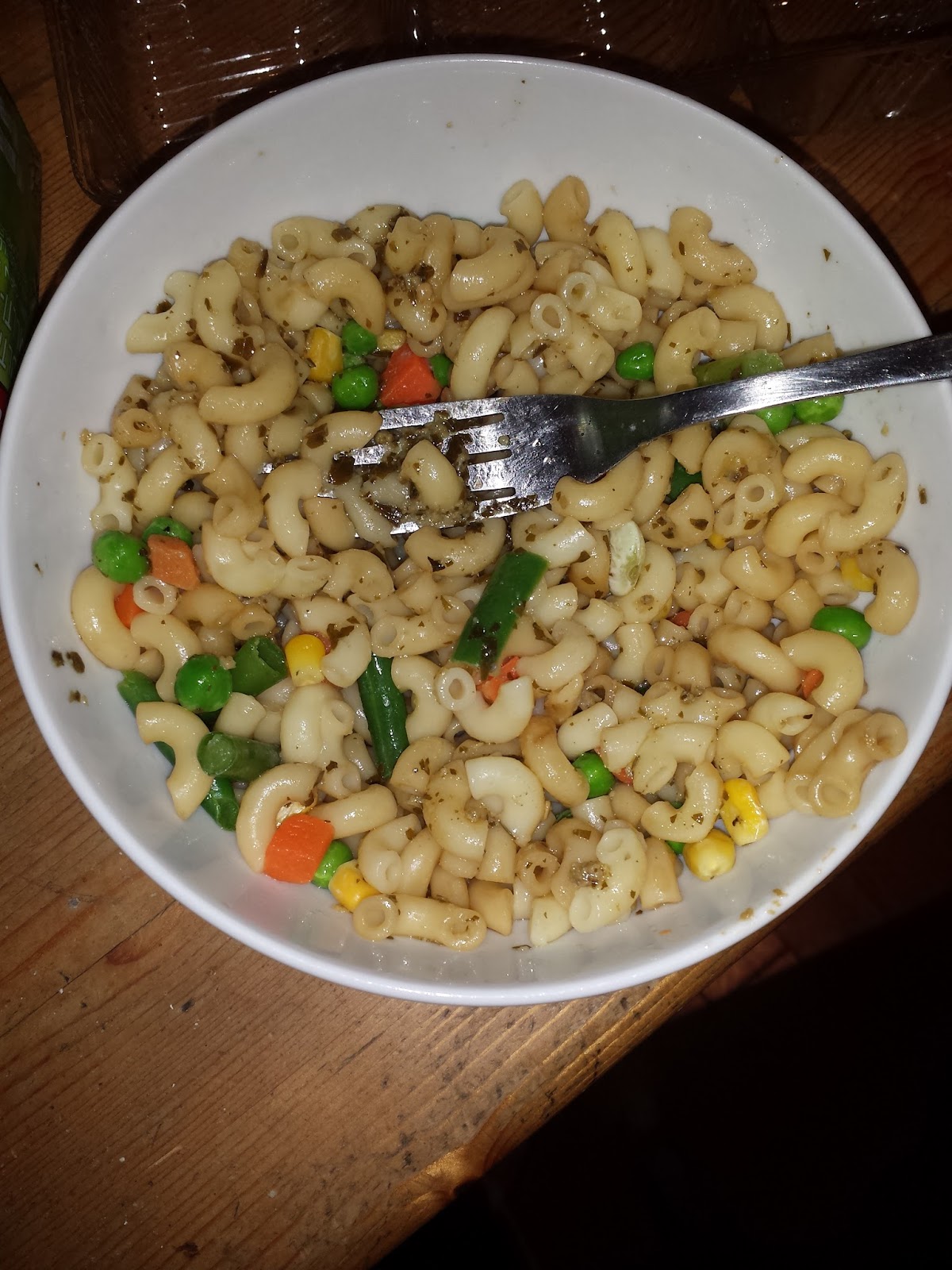
How different, then, was our trip last week. For one thing,  the flight took only an hour. For another, we brought no children, and no parents. Husband`s glasses remained intact. Even more momentous, during this trip, the eldest child, now age sixteen-and-a-half, stayed Home Alone in Toronto for the one night that husband and I were both absent. His younger siblings got farmed out to helpful friends (thank you, friends) but our first-born elected to hold the fort and care for the pets (cats and dog, no giraffes) on his own. He said he was ready; we fretted he would be lonely, maybe even scared. We gave him emergency phone numbers. I left him a frozen pizza for dinner but he did better, creating a beautiful pasta dish replete with colourful vegetables.He emailed me a photo.


20141205_210556.jpg

The conference involved panels, presentations, board meetings, discussions with editors, reunions with friends. Just like last time, just like all the other years. But husband and I also managed a romantic dinner a deux, and a visit to the wonderful Phillips Collection, where we got to appreciate the art rather than chase toddlers. (We tried that at another AAA meeting, in Chicago, while exploring the Art Institute. 'Uh-oh,' said the tot, aged 1.5 years, gazing at a Picasso. Then he threw a penny at it. He missed. Thank goodness.).

So different now. So quickly. Where has the time gone?

I did visit the zoo again. No toddlers, no buggies. Rather, I jogged through the grounds early in the morning before my session, encountering playful pandas and woeful elephants. The baby giraffe has grown up, and my baby sons are more than halfway there. As they say about raising children, the days may be long, but the years are short.  

Really, really short.

On my return, I asked eldest child how he enjoyed having the house to himself. ‘I loved it,’ he said.

Saturday, 15 November 2014

You can take the boy out of England, but...

I know that on some of these high-falutin, fancy-type blogs, 'guest bloggers' occasionally make an appearance. When opportunity knocked, I decided to take advantage and try some of that myself. My son Gabriel has agreed to share what he wrote for his grade 9 geography class, in which the pupils are studying environmental conservation. Gabriel decided to jazz up his contribution a little; I do hope his teacher appreciates the effort.

Water Usage:

-The average Canadian uses 10,000 litres of water each month (which is approximately 41,666.67 cups of tea).
-A ten minute shower can use up to 300 litres of water. A two minute shower, therefore, can use up to 60 litres (which is approximately 250 cups of tea)
-Up to 30% of water in pipes is lost from leakages (approximately 0% of that is tea).
-An average adult male needs to drink around 3 litres of water a day to be healthy, while an adult female needs around 2.2 litres a day. Most Canadians drink up to 5 litres a day (approximately 20.8 cups of tea)
-Canada ranks second among countries in the highest daily water usage per-capita, using about 149,600,000,000 litres a day, or 149 billion, 600 million litres (623 trillion, 333 million, 333 thousand, 333 cups of tea)
-Around 9% of Canada is water. Exactly 0% of Canada is tea.

Wednesday, 5 November 2014

Fright Night 2014, aka #USElections

Recently I had a conversation with another immigrant to Canada, a woman who has lived in both Vancouver and Toronto. I asked how life in the two cities compared. She told me that she prefers Toronto to Vancouver, but likes British Columbia much more than Ontario as a province. 'The beauty!' she said. 'Come on. My god!' I know what she means. I have seen some pleasant lakes and colourful woods in Ontario but nothing to make my heart go pit-a-pat. So, I made the flippant comment that the obvious solution is to move to California, where one could live in a dynamic city and on the spectacular West Coast, see the sun set (as it should) into the ocean, and without the incessant rain. But here my interlocutor disagreed, saying that life in the US is far too dangerous. Too many guns. She described a friend who, after travelling for some time in America, arrived in Canada having acquired a nervous distrust of strangers in the street.

This assertion ruffled my usually quiescent red, white, and blue feathers. I know there are too many guns in the US and I don't like them. I know there are rednecks and survivalists and conservatives and xenophobes and far too many people who are tired and poor.  The thing is, though, that such people exist in Canada as well; and that crime, violent crime, occurs with depressing frequency in Toronto (last week, in fact, in the next street over from ours). Nor do I feel that Canada, or at any rate Toronto, has solved the problems of deprivation and income inequality. Far from it.

(Anodyne platitude alert.). There are a lot of great people in Canada and I'm lucky to have some of them as friends. This doesn't stop me from appreciating the US as home to a vast number of brilliant, interesting, curmudgeonly, funny, cynical, liberal, bitchy, creative and dynamic folks in beautiful cities (I mean all the adjectives as compliments). It's my great good fortune that a few, a tiny proportion, of these people are my own family and friends. I can sympathize with someone who had a challenging journey from the New York islands to the redwood forests, but I find  myself wondering whether it's the travelling, the being a tourist, as much as being in the USA, that made the person jittery.

In other words, as is my occasional expatriate wont, I waxed patriotic.

However, today, I am duly chastened. The US is scaring me, too. Yesterday my compatriots (though I hope not my friends and family) voted into congressional office, into the US Senate in particular, a bunch of Republicans. From what I've read they are a divided group unlikely to cooperate enough successfully to press home their own multiple agendas, but  if they unite in anything, it will be in hobbling the executive branch for the rest of this term. Hang on to your Obamacare hats, everyone.

Very, very frightening.

Sunday, 26 October 2014

Ageing in place

I used to attend rock concerts. Now I attend --- concerts. Often these are symphony performances (the wonderful Toronto Symphony Orchestra, the 'TSO') and sometimes they are a bit more rock and roll. But only a bit. Husband and I looked back on our non-classical-music ticket purchases of the past couple of years and we have been to hear Leonard Cohen, Willie Nelson, and  Steve Martin (with the Steep Canyon Rangers). All figures who have moved from superstar to super-icon, really. We felt comfortable at these venues; we were with our peeps. We weren't old.

On Friday we changed it up a little and attended an event at the International Festival of Authors (#IFOA), an interview with Colm Toibin (please envision a ' over each 'i') and Marilynne Robinson, two amazing novelists, a Catholic and a Calvinist (the former lapsed, he says). Before heading out the door I checked with 11-year-old daughter about my outfit, because for the first time in days- possibly weeks- I wore something other than jeans.

"How does this look?" I asked her.

"Where are you going?" she enquired.

I told her it was to listen to a couple of authors.

"How old will the other people be there?"

Puzzled, I told her they'd be the same age as me.

"Well, then it's okay. You look fine."

I thanked her but wanted to know why the age of the other attendees mattered. Unfortunately, she explained it quite cogently.

"If they're old, they might be colour-blind, or have some other vision problems. So then it doesn't matter that your dress is dark grey and your boots are black."

That's me put in my place, just where I belong.

Thursday, 23 October 2014

'Quaint Canada'

As I've noted before (perhaps even droned on about), I listen to BBC radio most of the time. Radio 4, Radio 4 Extra, Radio 3. Every day I give mute thanks for our LogiTech internet radios, one upstairs, one down. On weekends I sometimes switch to NPR, especially for Car Talk and A Prairie Home Companion.

But I wake up to CBC One, the Metro Morning show hosted by Matt Galloway, and when my eyes open and my vision focuses, I check Twitter for local Toronto information. Is the subway running normally or should I warn my high-school kids to expect delays? Will there be a blizzard? Has the world ended? Today I learned that Malala Yousafzai, the young Pakistani Nobel Prize-winning girls' education rights activist, would appear at the high school around the corner from us as part of a program called 'Strong Girls'. Afterward, Malala would receive honorary Canadian citizenship from the prime minister at a swanky hotel downtown. My 11-year-old daughter is reading about Malala in her grade 6 class and I emailed the teacher to share my excitement about this very local event.

I also listen to CBC radio in the car, although in the usual course of things, we don't often use our car. Today was an exception; I drove elder son to a cross-country meet across town to save him an awkward trip on public transit. It is one of my non-work days so we brought the dog and arrived early; the weather was crisp but bright, the trees full of colour, and there was enough time for me to have a bit of a jog around the lake while son supervised dog. On my breathless return, they both greeted me, dog with yips and muddy paws, and son with the news that there had been a shooting outside the Parliament building in Ottawa. 'What?' I asked. 'When?'

He consulted his phone. Twenty-four minutes earlier, apparently. Like everyone else here, we're in disbelief. In the car on the way home I listened to CBC. I've had it on all day long (bar 15 minutes for The Archers). The announcers were flibbertigibbet, almost incoherent at times, during the first couple of hours. The US was offering sympathy and assistance. 'This isn't what we're used to,' said one broadcaster to another. 'We're used to it happening in their country. We're the ones who offer sympathy to them.'

It is indeed a tragedy. A young reservist enjoying the honour of guarding the Cenotaph on Parliament Hill has died of the gunshot wound inflicted by the perpetrator. He seems to have been the single father of a young son. It could have been even worse, apparently, in terms of numbers of victims, but for the quick action of the Sergeant-at-Arms inside the Parliament building, because he shot dead the (a?) gunman who marched in with a large firearm.

We do need sympathy. And more information.

On Twitter I read a comment from the leader of a German delegation of Christian Social Democrats who happen to be visiting Ottawa today:

"We are all concerned and surprised that in quaint Canada, this kind of thing could happen,”  he wrote. “Everybody expects Canada to be remote from all the troubles of the world, peaceful and quiet and now we have this situation.”

This evening I listened to a CBC broadcaster interviewing someone in the government. She asked him whether he thought this event would change the way Canada operates. 'I notice that when the guards today, the RCMP, wanted people to move away, they said "Please move back. Please move." I don't think you'd hear that in Washington, DC. Do you think that will change here?' she asked her respondent.

'Oh, don't even suggest it,' he said in alarm. 'We're Canadians!'

Malala's visit and her honorary citizenship ceremony: both cancelled. For today, anyway.


The Centennial Flame, also called the Eternal Flame, in front of Parliament. I took this picture when I attended a conference in Ottawa last November.


Monday, 13 October 2014

Always Look on the Dark Side of Life

Canadians are famous for being nice, and it's a pretty well-deserved reputation in my experience. I've run into a few rude Canadians of course, but infrequently enough that it surprises me. (I've noted two situational exceptions: 1) being on a bicycle-- something about two wheels brings out the worst in the Canadian, or perhaps Torontonian, temper; and 2) being on the soccer pitch. I have not been able to play much lately while I recover from a sprained knee, but when I could, gee willikers, some of the women on the teams we encountered could be harsh, as I'm sure those women would say --did say-- about my own team.)

However, those exceptions aside, courtesy does stand out for me as a predominant attribute in my new country. I have a theory that the Canadian propensity for niceness and tolerance is linked to another Canadian trait I notice, which is a Scots-like tendency to dourness, evident in a national commitment to vicarious suffering. Recently my son's friend told me how much she is enjoying one of her high-school classes called 'Crimes Against Humanity,' which  explores the subject of genocide in detail and depth. This class is not the whim of an individual teacher, but a registered, approved course on the Ontario high school curriculum. It is offered by the Toronto District School Board and several other boards in the province. For comparative purposes, I tried to find a similar one on the website of my own alma mater, the Los Angeles Unified School District. Nada.

I thought of this course when I listened last week to a radio talk show from the Canadian Broadcasting Corporation (CBC), called 'The Current'. The program covers timely topics each weekday morning at 8:30 am, but only timely topics that are also distressing and/or depressing. Recent episodes include the shutdown of a centre for disabled people in a remote northern town, mistreatment of elephants somewhere, freight train drivers falling asleep at the wheel, and the overprescription of opioids for chronic pain. At the show's core is the imperative to unfurl suffering and wave it in the face of listeners engaged in drinking their morning coffee or commuting to work. I try, I really do, to join in the rending of clothes and the daubing of ashes, but most mornings somewhere around 8:35 I give up and switch to BBC  (thank god for the internet). I feel sure that the Canadians, being a lot nicer than me, carry on listening and empathizing while they finish the last of their Tim Hortons (no apostrophe) double-double.

I cannot even bear to drink Tim Hortons no-apostrophe coffee. Sometimes I really worry that I may be unfit to become Canadian.


Sunday, 28 September 2014

The Prophet of Yorkville

After a relatively chilly summer, we’re having a gorgeous autumn in Toronto. For the past week the weather has been sunny and warm, blue and green with early hints of red and gold leafiness. On Wednesday I cycled through Yorkville, the posh neighbourhood of boutiques and banks (I was going to the bank). On a street corner decorated with manicured trees in brick planters, a man looking a tad ragged around the edges called out in a business-like, almost professorial manner:  'Everyone! Listen! Close the schools! Get out of the office! Be outside now! We're going to have a TERRIBLE winter!'   I heard him repeating the commandment as I pedalled down the block. Maybe he was God.

 Anyway, I listened. I kept the two younger kids out of school the next day (well, it was Rosh Hashanah) and have not been back to my windowless office since Tuesday. I spent half of today sitting outside watching younger son play in a soccer tournament, which, miracle of miracles, after 2.5 hours of football with no substitutes, his team won.  Hooray. The dog had a great time too, scrounging for discarded pizza crusts on the sidelines.

Ploughed through a sticky morass of traffic to get home, tired, sun-kissed, victorious, celebrating with takeaway Thai food, and feeling virtuous for heeding the prophecy of the Yorkville Yeller.  Son interrupted my self-gratulation: ‘Mom, I think I left my backpack at the park.’ What’s in it, I enquired. ‘My phone, my wallet, my metro pass, my house-key.’  Oh, is that all? The tournament organizer replied to my frantic messages: nope, not with her. We appealed for help to elder son’s friend, who lives near the park, and he came thrillingly to the rescue, galloping off to investigate. At Rennie Park, with the help of his phone’s flashlight app, he found a lone blue-and-white backpack, along with one of our expensive BPA-free water bottles (‘Oh, yes, I left that too’), all contents undisturbed. Our hero!


It’s a pretty good city that way.

Tuesday, 23 September 2014

The Tyranny of the School Gate: A Love/Hate Relationship

Almost every weekday at 3:00 my phone starts buzzing. Elementary school lets out at 3:30; from my office, by bike, it's a 10 minute journey. From home, no more than five. Plenty of time (and yet, I know I'll be late), so I push 'snooze' and at 3:09, the annoying thing buzzes again. Repeat. At 3:18 I groan, and finally drag myself away from whatever was absorbing me: three days in the week, that would be work; the other two, perhaps reading,writing, gardening, laundry. Drinking coffee, maybe with a friend. Whatever. It doesn't matter; even the most mundane activity has its own arc from start to conclusion. Required attendance at the school gate interrupts that, and I resent it.

In the past I have been extremely grateful to the school gate and its enforced routine. It has in fact been a mainstay of my existence for over twelve years; sixteen, if you count nursery. Schools provide about 200 days per year of instruction, so that's 2400 days, approximately, of school-gate-attendance. Give or take. In the beginning, the September when my eldest entered Reception class (aka kindergarten) in Durham, I became an uneasy new supplicant at the altar, staying obediently behind the low chain link fence in the play-yard at St. Oswald's C of E Infant School. In the sunshine, then as the year progressed, in the wind and rain and bitter cold and occasional snow, with a toddler in tow and later on a baby too, I waited, slowly making new friends of the other Reception mums. Eventually the crocodile of children would straggle out, and press their little faces against the wire diamonds, looking out for a grown-up to claim. Oh, the agony of being late, back then! We would often head en masse to the little park next door, and let the children play for awhile. It was quite an evangelical establishment, that school; come spring, the children happily acted out the Crucifixion under a tree with a couple of large branches. The other mothers smiled on, benignly. Beatifically, even. I did not really fit in that group.

Moving from Durham, in The North, to Brighton, in The South, set me adrift: I had no job, no community, no friends. They came, eventually, the latter two largely from my attendance at the gate of the tiny private school we selected for our elder two, having been foiled by the state sector and the timing of our move. The youngest grew old enough to join her brothers there. Our family friendships blended into the children's, all built within the school walls but perhaps even more importantly at that old school gate. This particular school, The Fold (which, sadly, folded after we left) in fact had no gate but a front door, as if to a house, which in fact this school had been. I spent many hours in the small front hallway, crowded with other parents, reclaiming our children. At the Fold School, children whose parents did not arrive on time simply skipped out to the backyard for supervised play, free for the first half-hour (or so), then morphing into after-school childcare. If I were going to be late, I simply phoned and said so.  Many times, I arrived relatively promptly, only to be instructed by my offspring to please just wait till the end of this game, or to go away and come back later.  

Moving from Brighton to Toronto was a bigger adjustment, more traumatic in several ways, and again, the school gate provided salvation. Friends, knowledge, engagement: not only in a new city but a new country to learn. Finding familiar faces, arranging social activities for the kids and for us, the parents, were largely negotiated while collecting the children. This school gate is something between the rigid barrier erected at St. Oswald's and the relaxed hominess of the Fold. Children in Grade 6, my daughter's age, are set free into the Big Field and allowed to entertain themselves until parents arrive, or they can walk home on their own. 

Grade 6 is the final year of elementary school. Middle school looms, and parents do not escort their offspring at that age. Middle school has no gate. In truth, this child is already old enough, and sensible enough, to walk herself between school and home. Sometimes she does make the journey home with a friend, just the two of them. She resists, though, leaving school alone. She wants me to meet her. Practically, she wants me on the spot so that she can negotiate after-school social life, to  invite friends over or be invited, but also because she wants to need me still, to be a little child a little longer. 

I, on the other hand, really feel that I am ready to move on. It's nice to see my own friends at the school, but they would still be my friends even if we did not meet there. I've got their numbers.  I like being home, waiting for my children to come to me. My high-schoolers tumble through the front door and chatter over each other telling me about their day while I make tea, or empty the dishwasher, or start dinner. I feel more like my own mother at those moments. My mom never had to go through this particular transition, because from the earliest schooldays, she ushered her three children out the front door at 8:30 a.m.and received us when we got home at 3:30, until we were old enough to have our own keys. What she did in between was anybody's guess. If my sisters and I had to lay bets, we would probably have said that she sat in her bathrobe, drank coffee, and did the crossword puzzle, scurrying into clothes moments before we returned. Because there she was, ready with milk and cookies and seeming eager to hear what had happened at school. We ourselves changed into 'play clothes', ate our snack, did our homework, and ran outside to ride or roller-skate or play handball against the garage door, or snatch pomegranates from the neighbours' trees. We had to be home by the time the streetlights came on. That's how I remember it, anyway.

My sister, whose own youngest child has just started at university, said to me recently when I complained about the school runs, "I truly miss those days." I thanked her for sharing that, and tried to argue myself into appreciating them, and to cherish living in the moment. Nonetheless. Monday through Friday, at 3:18, as I reluctantly close the computer, pack up my things at the office, put a bookmark in my book, or leave the dryer half-full, I feel annoyed, and harried, and late. 

Can I be a little bit, just a tad, glad that I have a date with the school gate, for one more school year? Maybe. A tad.  At least, until the first snow falls.

Monday, 8 September 2014

Lost in the woods; at home in the ‘hood


I’ve twice gotten lost in deep woods, both times in Canada. There’s that old saying: ‘Fooled me once, shame on you; fooled me twice, shame on me.’ Well, shame on me. The first time was decades ago, perhaps 1990, on an island in British Columbia. My friend John and I lived in Berkeley, California at the time, and were on an ill-planned holiday through the province, a place which neither of us had visited (yes, relationship story there). After finding a clean hostel in Tofino, a charming town perfectly situated at the tip of a peninsula on the west coast of Vancouver Island, we decided to do an organized rainforest tour the next morning. As neither of us had brought an alarm clock, however, we overslept the departure hour. No matter, we told ourselves, surely we could manage on our own.

Ah, youth. If only we had that as our excuse.

A friendly First Nations man in a small motorboat, whose command of English was adequate but not abundant, came to understand our request, and agreed to drop us at a rickety wooden wharf on the western edge of Meares Island, an enormous body of land, home to a primary-growth temperate rainforest and a First Nations village called Opitsat. Opitsat may have been on the island, but it was certainly nowhere near the splintered landing where we disembarked. We agreed, or believed we agreed, with our taxi-boat driver that he would return for us in three hours, clambered onto the dock, and waved farewell.

There was no one else around.

A wooden walkway led from the marshy water’s edge toward the forest, and then we were on a sort of trail, slippery with mud and moss. I can’t remember our footwear but it might well have been sandals. At most we wore tennis shoes with our shorts and tee-shirts. No hats, no food, no water. No one we knew had any idea where we were, or had any expectation of seeing us in the next few days. We had left our rental car parked at the hostel, from which we had already checked out. That was the extent of our planning.

After a quarter hour of walking along the trail, we had lost it. It wasn’t hard to lose; large trunks of fallen trees forced us either to clamber over them or walk around, then picking up a path that might or might not have been our original route.  “I think we’ve been here before,” I said to John, looking at one weirdly twisted hanging vine.   

He shook his head. “No, we’re fine,” he assured me. He was Canadian, although from Ontario, and had taken on the role of host during this journey.  I rapidly lost faith in his knowledge, however, and began to panic.

“Please, can we go back to the dock?” I asked, almost in tears. Well, okay, in tears.

He eventually agreed, and we set off to retrace our steps. Again, I was sure we were walking in circles, so John pulled out his handkerchief, perhaps the only useful object we had brought along, and began to shred it to make blazes. Our fifteen minutes of inward progress took us thirty to undo, but finally we saw the ocean, the unstable wharf, and in the distance, Vancouver Island. I had never experienced such relief.

Not for long though; as we sat on the wooden planks dangling our legs, looking idly for dolphins or whales, and for our taxi driver. What if he didn’t come? What if he hadn’t understood, and was waiting for us on the far side of the island? What if we rotted away and became mere slime on the trunks of the fallen trees? What if bears ate us? Actually, we hadn’t thought of bears yet; that came later.

After an hour, a man and woman emerged from the forest, singing. They carried stout, knobby sticks, and had thick rubber boots up to their knees. They both wore hiking vests with an average of a pocket every square inch. Wide-brimmed hats shaded their eyes, whistles hung from their necks, and heavy packs on their backs. In contrast, John and I looked naked, and the couple eyed us almost in pity. They lived in Vancouver, they explained, offering us a granola bar to share, and liked to get away for a couple of days of hiking and backpacking. The whistles? Oh, they were to scare away the bears.  John and I looked at each other. We were idiots.

A boat came to collect the Vancouver couple. I could hardly stand to watch them float away. “Could we come with you?” I asked, knowing the answer. Kind, but reasonable, they pointed out that our taxi was sure to return, and if the driver did not find us, he would be in a muddle. It was true. I told them we would call their hotel when we got back; if they didn’t hear from us, please could they send rescue? Of course, they agreed, but again, my trust was insecure. I did not believe. Sadness and fear overtook me as their wake faded.

Fortunately, our taxi turned up only minutes later. O frabjous day! That was it for me and forests, I vowed. Two days later we dropped off the rental car and boarded a ferry from Victoria to Port Angeles, Washington. A fleet of dolphins leaped and cavorted alongside us as we returned to the U.S. of A.  I haven't been to British Columbia since.

Fast forward to 2014, again in Canada, this time in middle Ontario, quite a bit north of Toronto, but far south of Hudson’s Bay, where the massive province actually ends. We are visiting friends at their gorgeous and lovely cottage on a lake, but today, our last of the visit, is rainy and chill. Perfect, we think, for a walk in the woods! The two mothers, three children, and two dogs set out for a bit of a ramble. I shoved my cellphone in my backpack because I wanted to be able to take photographs, and my elder son had his because he would as soon leave it behind as a limb. I did think to bring a bottle of water, because I do that to go anywhere, even the subway in Toronto (what if it gets stuck)?

Still. Fooled me twice.

Our cheerful hostess and guide asked whether we wanted a quick thirty-minute circuit, or if we could manage a longer walk? Maybe an hour? Oh, an hour is fine, we all said, even the littlest amongst us. Under the thick green canopy, the drizzle hardly mattered. We chattered and laughed, catching glimpses of the lake and then walking deeper into the woods, climbing hills and descending into valleys, passing brambles whose blackberries were nearly ripe. “This way,” my friend pointed. Then a note of puzzlement entered her tone. “I think maybe I missed the turning I wanted. But no matter, if we carry on along this trail, we will reach the road.” “Road” perhaps overstated the nature of the long, dirt-and-gravel lane that covered the 5 or 6 kilometers leading from the paved county road to our friends’ cottage (and “cottage” rather understated the nature of their domicile).

Another ten minutes of walking indeed led us to a road and we turned right to follow a little stream. The walking was easy now, but without shelter from the trees, we were soon sodden. At the bottom of the road, my friend stopped. “H’mmm,” she said.

In a yoga studio, ‘H’mmm“ might be mistaken for a mantra, and bring on a pleasing sense of tranquillity.  In the context of a crossroads in a woods, “h’mmm” is an oddly ominous sound. “We are on the wrong trail,” she said. A map of Algonquin Park on a rusted iron plaque attached to a wooden post let us know that we had definitely drifted off-course.

Shame on me. I surreptitiously checked my bag for food. Where had we seen those berry bushes?

“Never mind,” both of us moms chorused, self-consciously bright and cheery. “We’ll just retrace our steps!” And we did, this time building small cairns and making careful ‘X’es with fallen boughs. “Isn’t this fun?” we carolled.  “Gee, that hot tub will feel nice when we get back!” My son and I spotted a pile of poo, scat, spoor… surely deer? No, more like elk. Not bear. Definitely not. Elk. “Let’s all stay together,” I suggested, brightly. Shortly after, we passed a skeleton. Not human. Not even primate. And not elk.


 “Does this hill look familiar?” My friend mused. It looked familiar to me, but then all the trails looked both familiar and strange.

“Yes,” I tried.

“No,” she shook her head. “This isn't right. Let’s go back up.” We did, up and up, passing our cairns and crosses. At what seemed the highest point, my son pulled out his phone and announced, “This way is north.” Handy, but as we didn’t know which way was home, not helpful. I pulled out my own phone and sent an email, titled ‘little bit lost’. My friend typed in a description of the last point at which she knew for sure where we were, both of us thinking, but not saying, that if the message ever arrived, it would give them a head start looking for our remains. I mean, for us.

We waited a minute or two without getting a reply, though we had left said husbands happily attached to their computers. It transpired later that they had had other fish to fry: our eleven-year-old daughters, who had also stayed behind, decided to try some science experiments. One of these involved putting hand lotion in a frying pan and turning on the burner, which set off the smoke alarms throughout the house. The fathers ran to the kitchen and prevented it from going up in flames. (In retrospect, if it had, those of us lost in the forest would have had a nice column of smoke to aim for. And I must ask the girls sometime about their null hypothesis for the experiment.)

After a little more tramping, mein hostess said, with certainty, “Here it is. I’m sure,” and turned decisively right onto a narrow, wavering trail. We all wanted to believe. We did believe. We clicked our heels together, and lo! The trail led us home. A ray of sunshine pierced the grizzled gray clouds as we reached the welcoming front door, just under two hours after leaving it. And yea, the hot tub felt wonderful indeed, as did a quick swim in the lake with my younger son. My friend, apologetic (needlessly), whipped up a quick batch of chocolate chip cookies. All in all, a successful hike. How we laughed! 

And you know what? It really was one of the highlights of the summer. 

Back to the ‘hood, for the tag end of vacation.  It’s been a full year since we moved in to this house in Harbord Village. Today in fact is the annual Harbord Village Residents’ Association Fall Fair, held in the small park directly across the street from us. 


Last year, we wandered over, wandered through, uncertain but pleased to participate and buy a few raffle tickets, spying a few familiar faces, and trying to put names to them. This year, we were in the front lines. Husband volunteered on the Silent Auction table, and I helped out serving burgers, hot dogs, barbecued corn, and pop (‘Please may I have popcorn and a hot dog?’ a girl asked. ‘We don’t have popcorn,’ I told her. My customer looked puzzled. ‘No. Pop. Like, Coke. And some corn.’ Toronto is in the pop zone. Where I grew up, it would be ‘soda’.) My shift was noon til two pm, but at 2:00 no replacement had arrived.  At 2:30 I roped in my middle child and his friend, gave them a brief training session, and said sayonara. They did a stellar job and, according to reports, enjoyed themselves (not that they admitted it to me). They’ll get credit for volunteer hours too—kids in Ontario schools must do forty hours of volunteer work before they can be graduated from high school. Through my open window right now I can hear the band playing covers of rollicking rock music.

It’s nice, being home.