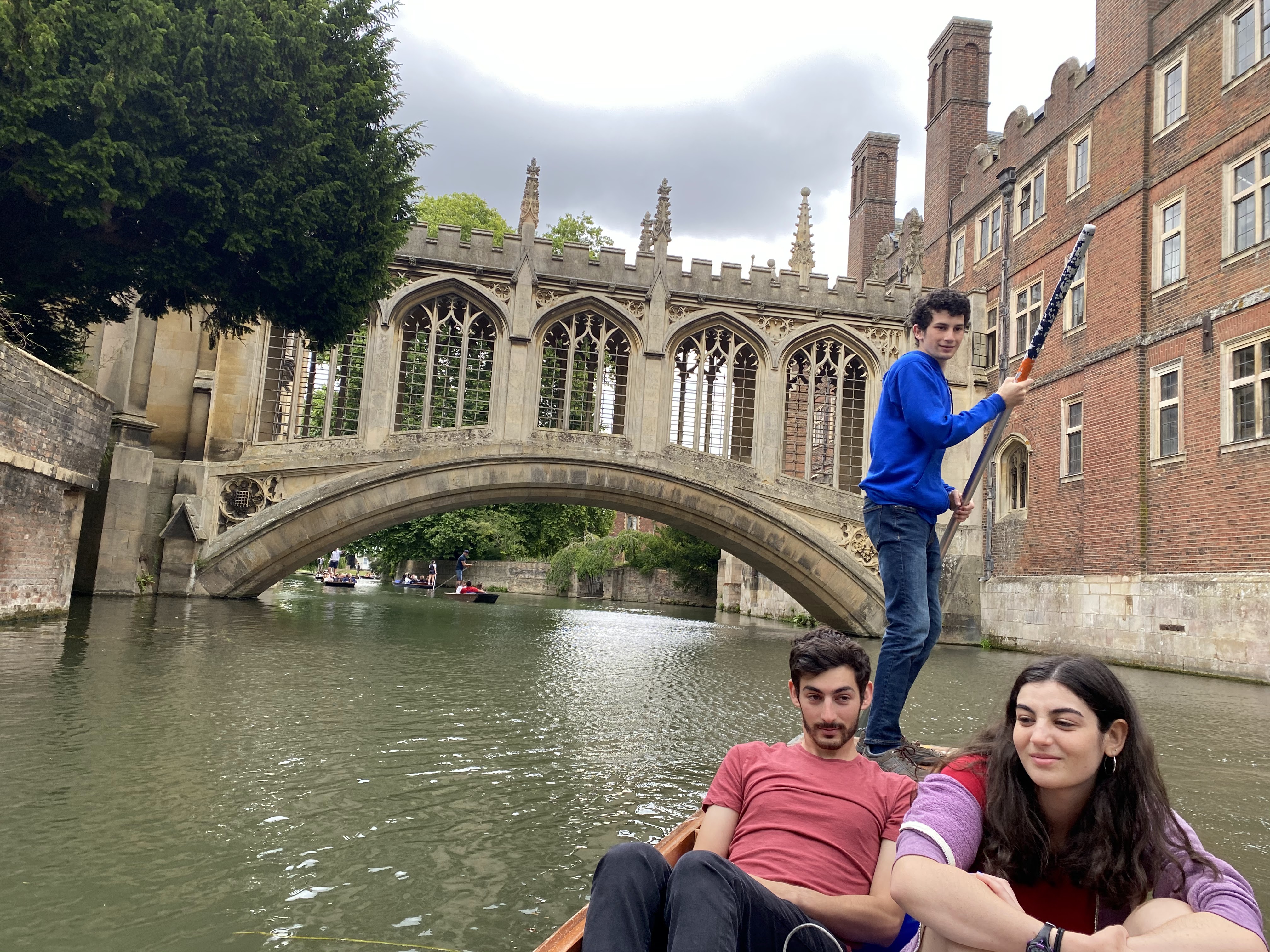
Friday, 14 July 2023

Laundry lore

We are back in Toronto, busy unpacking and setting our house to rights, a project that I fear may take us forever. We have too much stuff, a situation made clearer by our year of living sparely at Clare Hall. 

We managed perfectly well without the detritus that fills our space here at home. Clutter, I guess it could be called, or memorabilia. As we unpack and organize, I find myself tossing things out left, right, and center. Flip-flops bought in Tanzania now chewed by the dog? Cozy sweater from Edinburgh's Greenmarket pocked with intransigent stains? Harris Ranch mug with a chipped rim? Begone. 

The kids and the pets have made the cut. We're keeping them. It is very lovely having most of them close, and all of them nearer time-zone-wise (for the moment). And there are certainly some inanimate possessions with which we have had a happy reunion (books, art, coffee grinder, sofa). 

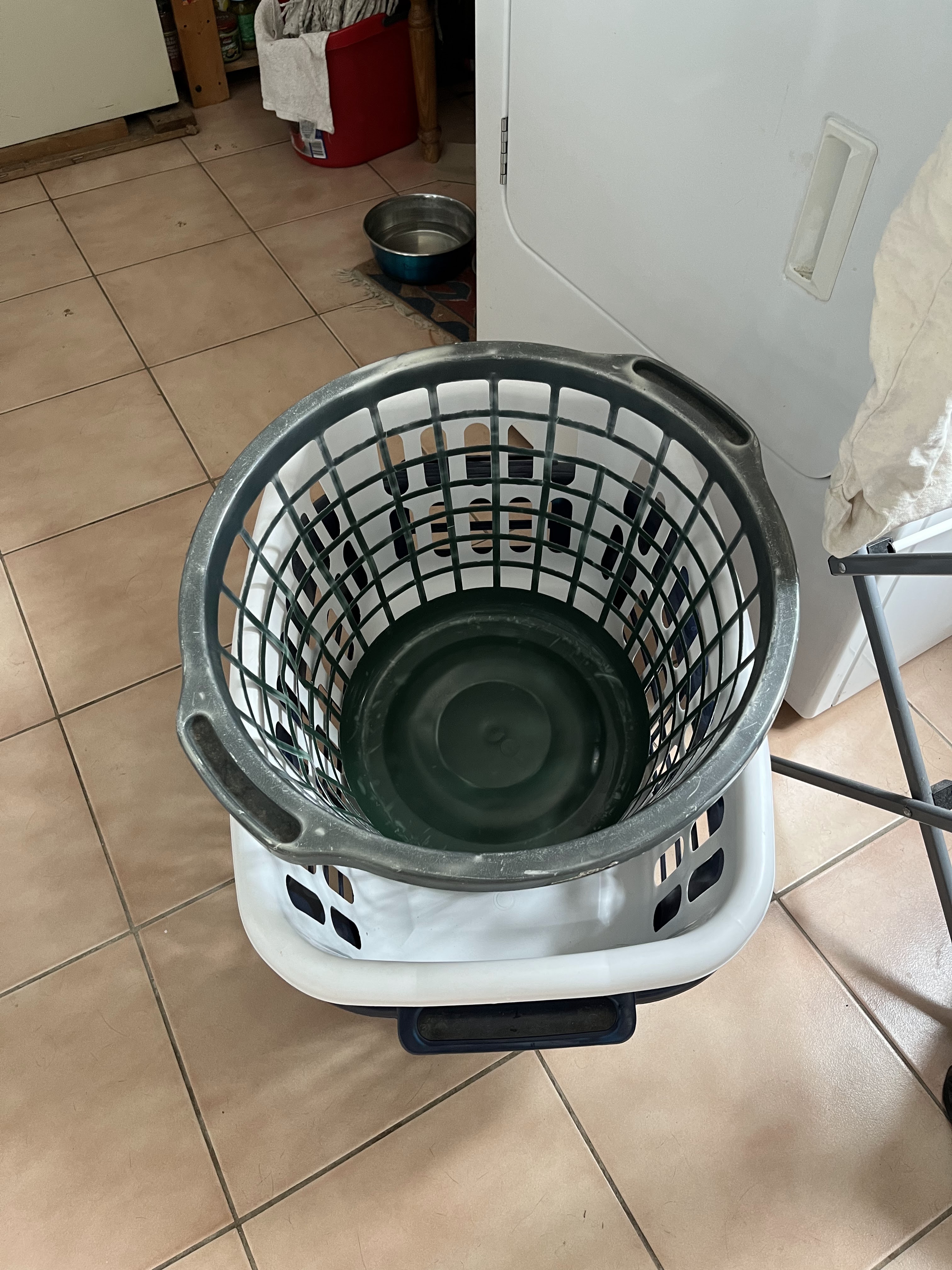
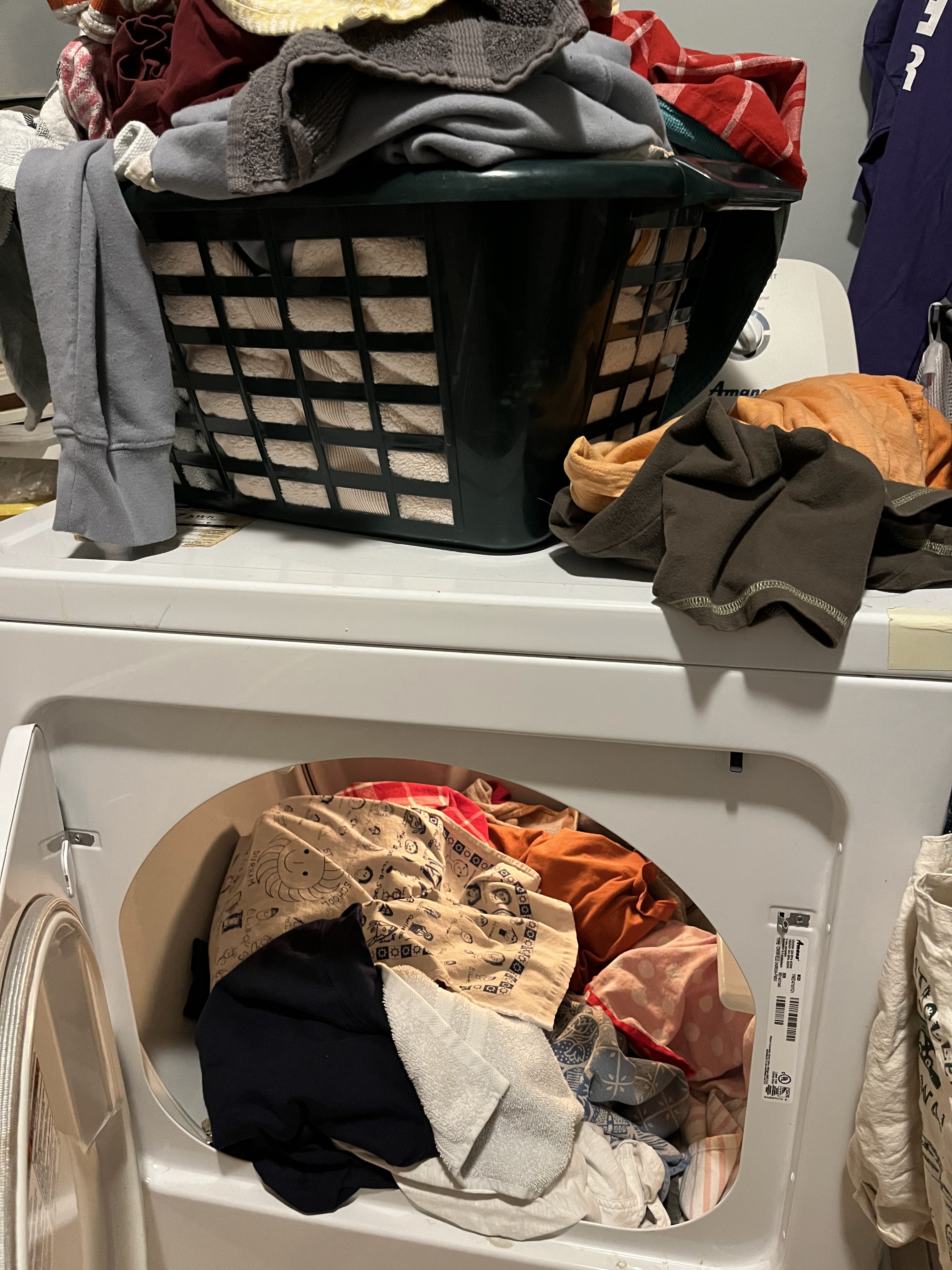
The  laundry room is one part of the house I am especially happy to return to-- in spite of the Everest-like pile of towels and linens. When I first learned that husband and I would be using a communal laundry facility for our year at Clare Hall, I quaked and hunted for laundry services in Cambridge that offered pick up and delivery. Impossible otherwise, I said to husband. I am way too old to put on shoes and coat and traipse through corridors in the cold and wet to wait my turn for a machine. 

Barefoot laundering

The reality, as so often, proved less daunting than I feared. Getting to the laundry room in Clare Hall did  not demand rain gear; the route was covered. We rarely waited for a machine. Even when we did, the experience was convivial; sharing facilities with people you know and like has its pleasures. Nonetheless, washing clothes involved planning and time management and being dressed. One delight of returning home is the ability to do laundry unshod and unclad at any time of day or night. 

But home laundry was not always so easy. When I first moved to England, way back when, I was shocked to discover that most washing machines lived in kitchens, under the counter, next to the tiny fridge, in exactly the spot where the (nonexistent) dishwasher should have lived. 

"Why is the washing machine in the kitchen?" I asked my friend and housemate, Kate. She was bemused by my question. 

"Where else would it go?" she shrugged.

Certainly not next to the dryer, which, like the dishwasher, did not exist in most houses (back then more so, but still even now). In Britain, I discovered, laundry is sent to try you. Convenience is less valued, to the extent that a desire for it is regarded with some suspicion. Laundry remains (in my experience) very much the province of the woman in the household, and cynically I cannot help but sense oppression. I may be wrong. (But I may not.) I also detect some brainwashing. My female friends often seemed to argue against their own best interests. 

'Clothes that dry in sunshine smell so much fresher,' I would hear other mums say. Sunshine? What sunshine, I wondered, as friends abandoned trolleys full of groceries at Sainsbury's in order to race home and remove bedsheets from the clothesline ahead of a downpour. Reliable sun is a rare commodity in that green land. And what about the excrement of passing birds? Plus it takes forever to peg clothes, linens, and towels to a washing-line, where they dry hard as boards, requiring aggressive ironing -- another favourite time-consuming British (women's) pastime in which I declined to partake.

The first household appliance my husband and I jointly purchased was a dryer, at my behest. However I consented to a condenser-dryer, a device I have only ever encountered in the UK, which rather than being vented to the outdoors, collects moisture in a plastic tank that needs to be removed and emptied every couple of cycles. Yes, yet more work. We kept ours in a tiny upstairs room while the washing machine (of course) lived in the kitchen, necessitating an awkward upward trek clutching a basket of heavy wet laundry. 

These condenser drying contraptions are only slightly less evil than the combination washer-dryers that satanic manufacturers foist on hopeful, unsuspecting consumers. Kate and I briefly shared one. It worked fine as long as you only washed one item at a time. I exaggerate, but not a lot.

My mother-in-law had a large house with plenty of unused space-- in fact there were whole rooms kept locked and untouched-- but still her washing machine (a washer-dryer) resided in the kitchen. She did own a separate full-sized dryer but it crouched at the farthest, darkest end of the detached and unheated garage. This placement necessitated toting a heavy basket of wet clothes from house to garage and then either slithering between the garage wall and the parked car, or first moving the car out to the driveway. It seemed to me that she had said yes to that dryer only grudgingly, while ensuring that doing laundry still constituted hard labour. The British way. Stiff upper lip and mustn't grumble-- which means there must be something about which not to grumble. 

I recalled this little laundry history because of a piece I read recently by Kirsten Bell, an American who has turned an ethnographic eye on UK laundry culture. Kudos to Kirsten. When I read her article I laughed until I cried. Yes, I thought. She has nailed it (or perhaps clothes-pinned it). After I closed the tab I stood and walked, unshod and pajama-clad, to my laundry room where I moved the wet towels from the washer into the dryer and filled the washing machine with sheets. 

Now to unpack one more box before bedtime...

They're multiplying


Getting there

 PS My research on laundry services in Cambridge did not go to waste; I shared it with a friend living in a different college, one with apparently very inferior laundry facilities. He was grateful.


Tuesday, 6 June 2023

Winding down and packing up: 'Farewell to England!'


Our Year of Living Academically is coming to an end. Next week we say goodbye to Cambridge and hello to Toronto (at least if our tickets are valid. We have doubts. But that's another story).

The boxes have arrived and the suitcases have been pulled from storage. Their mouths gape open, hungry for our possessions, which seem to have increased in orders of magnitude from the four pieces of checked luggage we brought from Canada. Books, boots, bits and bobs; it all adds up. Now we need to organize, pack, ship, and cry. I'm not quite as overwrought as Byron in his poem ("Heart-broken and lorn, I resign/ The joys and the hopes that thou gavest") but I certainly have emotional moments.


Byron in the Wren Library, Trinity College


As I pack, I run through a litany of memories and think of what I'll miss about living in Cambridge.


Clare Hall


Well, everything. 

  • Our home from home, flat 17, Clare Hall
  • Casual conversations daily in the dining hall on subjects ranging from Bach's obsession with numbers, to advances in material science around hip replacement, to views on brotherhood from the perspectives of anthropology and of classics, and so on--- all before dessert and coffee. 

  • The dining hall. Being cooked for by creative chefs. Mushroom stroganoff for lunch! Thai curry for dinner! Soup every day!
  • So many people at Clare Hall and beyond who have become friends and inspirations.
  • Proximity to old friends who knew me back when, who knew my children as babies, whose life histories are part of my own.
  • Weird though it may sound, the NHS, which served us very well when we needed it most.
  • Weird though it may sound, the climate. 
  • The dozens or hundreds of concerts and lectures and seminars (who knew historiography could be so intriguing?) advertised on laminated posters affixed to railings and posts: Cambridge's local internet is the inter-fence

  • The River Cam.


  • Riding bikes in a city where cycling infrastructure works. 


  • The people who stay here. 
Neighbours 

  • The people who visit.

  • The swimming pool.
  • Springtime in college gardens.

  • Location, location, location: an hour to London, two to Brighton, three to Durham (well, four with the ever-present roadworks)
  • East Anglia: north Norfolk--Walsingham! Cley!--and rural Suffolk, their coasts, pockets of Essex and Cambridgeshire. Sky and more sky.


Lavenham, Suffolk
Cley-next-the-Sea, Norfolk
  • Trains
  • Walks and runs along fields and paths, from right outside our door


  • Not living in a big city. Turns out I'm not a big-city person. It's taken me a while to realise.
  • Europe on the doorstep.
  • The timezone advantage that has let me write in the mornings and work in the afternoons.
  • The people. Again.
  • This year-long adventure à deux  ♡


On the other side of goodbyes, of course, will be the hellos. What I am looking forward to in Toronto:

  • Reunion with our kids (until they dissipate, leaving us in the empty nest--unlike this past year, when we left them)
  • Reunion with the dog and two cats (a very close second to seeing the kids. In fact... no, I won't go there)
  • Reading the paper in bed surrounded by the dog and two cats
  • Settling back into our galumphing old house 
  • Reclaiming my houseplants (thank you to everyone who kept them going)
  • Wrestling with the scraggly neglected garden (hint to husband: how about a new garden bench for our anniversary?)
  • Connecting with friends and neighbors and colleagues in real life (hey folks, please can we go for a coffee? An ice cream? A cocktail? Soon?)
  • Greater proximity to my North American family; seeing many of them next week for...
  • ...middle child's graduation ceremony!
  • Cooking meals (though not the associated washing up). So many new Nigel Slater recipes to try, plus the Alice B. Toklas cookbook.
  • Dining and drinking on restaurant patios unassailed by cigarette smoke.
  • Living on a continent with a Pacific coast. 


Bridge over the River Cam 
July 2022

This week the farewell gatherings come thick and fast, punctuating the packing up. There will be tears before leaving for sure, but also bright hope for return. In the meantime, I believe I've ordered enough Sainsbury's own-brand tea to see us through the transition to Toronto. 

Thank you, Clare Hall, for everything. À bientôt. 


Full moon from Flat 17 


Monday, 24 April 2023

One alarm, two birthdays, and three Seders

Our cooker here at Clare Hall looks benign, even encouraging. It has a shiny black glass surface and uses convective magic to make things in pots hot. The oven has several knobs with runic symbols. 

But looks are deceiving. 

A watched pot never boils, they say, but ours do in the split of an instant, followed by water spluttering over the sides and the whole stovetop shorting out. We have to switch it off at the wall, wait, wipe, and start again--that, or eat crunchy pasta. The oven, meanwhile, is good at making smoke. Yes we have cleaned it (although possibly not well). We could ask for repair or replacement and for sure the ever-ready Clare Hall maintenance staff would come to our assistance, but instead we have taken it as a further sign that we are not meant to cook this year. Luckily, we rarely have to; the buttery provides most of our meals and we forage for the rest in pubs, cafés, or Marks and Spencer.

However very occasionally we do buy some items that need heating up. Recently we visited the charming Suffolk town of Bury St. Edmunds on its market day. The market sold the usual suspects-- fruit and veg, bread--and also some non-traditional things: insurance, flooring, wild game. At the wild game stall husband and I sampled some boar sausages and venison burgers and decided to bring home a four-pack of the burgers. That night we made our best guess as to which symbol meant 'grill' and set the burgers beneath the element, carefully propping open the oven door. 


Bury St. Edmunds' Saturday market

Smoke came out. Lots of it. I put the extractor fan on high, threw wide the windows, opened doors. We knew that even a slice of burnt toast could trigger the smoke detector which then sets off the fire alarm for the whole complex of twenty-one flats. I rang the Porters Lodge and spoke to one of our favourite porters, Brent. "I think we might be about to set off the fire alarm, " I told him.  "It's pretty smoky in here."

Brent laughed genially and offered reassurance. Five minutes later when I retrieved the burgers, plumes of smoke issued forth and the shriek of the alarm filled the air. Fortunately it was still early-ish in the evening (sometimes we don't get around to cooking dinner until after most people have gone to bed). I called Brent. "Sorry, sorry."

"I'm already on my way," he said.

In the two minutes it took him to reach us, I stood on the balcony overlooking the courtyard, Juliet-like, and called to the assembled crowd, "Friends, neighbors, Clare Hallers! It's all good! No fire, just smoke!" Brent arrived, did his check, laughed again, and left us to eat slightly cool venison burgers. They were delicious. The teasing from our neighbors only lasted for a day or ten.

When Passover arrived early this month, we were lucky enough to have three Seder invitations. Given that in a typical year there are only two nights of Seder (in the Diaspora anyway), we felt ourselves blessed. Also cursed, because what could we contribute to the shared meals? We knew better than to attempt to cook for multitudes given our track record (and our cookware), so we provided charoset, the second most delicious Passover food (following matzo brei IMHO)-- made of apples and walnuts and sweet wine and cinnamon. No deciphering of runic symbols was required, nor any heat. 

Some of our fellow Clare Hall residents have successfully mastered their ovens. We benefit in the form of baked goods. Husband's birthday-- several days after mine, and a big one--brought us cake from kind neighbors including Abby Rasminsky's strawberry masterpiece and the Shmuelofs' delightful fairy cakes.


Cake

More cake

Surprise party. Happy birthday, husband


We have found such lovely friends here. Six more weeks in Cambridge. It will be very hard to leave. 


Wednesday, 22 March 2023

Snippets from Mothering Sunday


Mother's Day card auto-generated by florist who clearly does business in the 1950s


Last weekend in the UK we celebrated Mothering Sunday, which reminded me of the little things I've learned during my transatlantic travails. A few bullet points:

1) In the UK, dishwashers require dishwasher salt in order to clean properly. I have no idea why. No one I've asked has any idea why. There is a hole on the bottom of each machine into which one pours the salt crystals. Then you screw on the lid and hey presto, clean dishes. A couple months later the crockery starts emerging smeary and sticky and you realise it is time to add more salt. When we arrived at Clare Hall last summer we just thought it was a budget dishwasher and lowered our expectations. It took many weeks beforeI remembered the salt trick. 


Just add salt

2) Mother's Day in the UK used to be called Mothering Sunday though nowadays it seems to have capitulated to global Hallmark forces and switched to American nomenclature. However, it continues to be celebrated on the third Sunday in March, rather than the second Sunday in May as in North America. Yes, yes, it's a card-and-flower-selling made-up holiday, but ignore it at one's peril (I hope my children are reading this). After years of living in England, I finally learned to buy a Mother's Day card in March so I could send it to my mother, in California, in May. I pat myself on the back for remembering this year. (I hope my mother is not reading this so as not to spoil the surprise.)  

3) Twice each year daylight savings happens or un-happens. It does not happen or un-happen on the same date east and west of the Atlantic. For two weeks, or sometimes one week, the normal time difference is suspended. It is an hour less or an hour more. At the moment, for instance, only four hours--not five--separate me in Cambridge from my colleagues and two of my children in Toronto; there are seven hours rather than eight between me and my parents in Los Angeles and our eldest child in Vancouver. In the autumn the same thing occurred but in reverse. Springing forward is harder than falling back: I keep missing or nearly missing meetings or classes or conversations, whereas in the autumn, I was turning up an hour early. The problem is vastly exacerbated now compared to Back in the Day, because now there is Zoom. Many more opportunities to be late.

4) There are no electrical plugs in bathrooms here in the UK, bar funny little holes meant strictly for 'shavers'. Where to connect the electric toothbrush? The blow-dryer? I don't have a blow-dryer but I do indulge in dental hygiene. 

5) Interrupting while talking. People do that in America. Less so in Canada. I have mostly learned to control myself (my husband and children might disagree. To them I say: moo (family joke)). I have made a new American friend here and we recently went for a walk and a talk. She spoke, I interrupted; I spoke, she interrupted. The conversation progressed in this braided fashion that felt so normal and comfortable to me that I messaged her later to say thank you. I don't claim this style as purely or solely American, but it is definitely not British (or Canadian). Luckily I am bilingual and can manage both with consummate ease (to my family who are no doubt objecting: moo!).

6) Crucial: drive on the left here. Bike on the left here. Drive on the right there. Bike on the right there. Walking: no consensus. Anybody's guess. Prepare to say 'sorry' often.


Monday, 6 February 2023

Thank you, Tracy Ward

Cambridge in February

I had to go to Peterborough the other day. Nothing wrong with Peterborough (it has a lovely cathedral) but there are other places one might prefer to visit whilst living in Cambridgeshire. In this case I needed to go to Stuart House, a government services building where biometrics are done. My biometrics will form part of my request to the Home Office to allow me, I very much hope, to confirm my 'indefinite leave to remain' status in the UK. The lawyer thinks I'm in with a chance. I don't know. I just do what she says.

What I do know is that I have spent an inordinate amount of my life negotiating with immigration services in various countries, including Indonesia, Britain, Canada, and now, again, Britain. I have taken tests and provided fingerprints, been photographed, filled in forms, made spreadsheets, submitted documentation. It's a colossal pain. I understand the rationale; I just don't agree with it. I'm in favor of a border-free world. I know I'm in the minority, but I'm not alone. My thinking is not purely selfish, either; see the Free Migration Project and The Case for Open Borders.  

However. It is, as they say, what it is. If I hope to get my ILR re-instated, I must work within the machine. So off I trotted to Peterborough. Actually I drove; there was a train strike.

I arrived late. I left home later than I intended, because...well, I never know exactly why that happens. Because I got a confusing email just as I was about to depart and had to respond. Because I decided I needed to make tea for my travel mug. Because husband had parked the car far away and I failed to factor in time to find it. Then my phone-slash-GPS fell on the floor while I was driving and I had to pull over on the motorway in order to retrieve it. Basically, I was late because that's the way I roll.  

After three-quarters of an hour I reached Peterborough and jumped off the last roundabout. The clock read 12:29. My appointed time was 12:30. I knew there were car parks in the vicinity of Stuart House and assumed they would be signposted, as indeed they were. However, Peterborough's one-way system and turning signage prevented me from legally entering the one that was nearest my destination. I circled around and decided to risk street parking, which had a one-hour limit. I felt sure I would be at Stuart House longer than that, but needs must. Already three minutes late for my appointment, I flashed my credit card at the pay-and-display machine. It hummed and flickered and said 'declined'. I tried with my debit. Again, same result. I concluded that the thing was broken. I would get photographic proof before abandoning my attempts. Just then a woman rushed up behind me, eager to use the same machine.

"Sorry," I said. "It's not working for me. I'm just going to try this one last time and take a picture in case I have to argue a ticket." 

"Okay," she said dubiously. "My appointment's at half-past."

"Mine too," I said, and we laughed. "Why don't you try?"

Her card was also declined. I was fully ready to give up when she said "Let's use cash," and pulled out a handful of pound coins and 50p pieces. Miraculously, after we took turns pushing various random buttons on the machine, it accepted the silver and spit out a display slip. She handed it to me. "Go on," she said. "Have this one. No point in both of us missing our appointments. Just tell them Tracy Ward is on the way!"

"I'll wait," I said. "I can't leave you here." Not having any coins myself, I offered her a five-pound note to cover the cost of my parking; she said, "Don't be silly." I liked Tracy a lot. Tracy represents so much of what I love about England. Not just the generosity with money but the generosity in sharing experience. Mucking in together. 

Tracy tried again. No luck; the machine refused her coins and demanded a card. "Let's hit cancel," we decided, which reset the process. At last, at last, the thing consented to accept another one pound fifty and provided a second parking slip. At that point Tracy and I discovered that we were bound for different government offices within the same complex. "Good luck!" I shouted as I ran the other way. 

I went to the wrong door and got re-directed to the right one. It was nearly 12:40. Inside the second portal I found a vast, shiny, high-ceilinged lobby and a short, slim, silver-haired man in a jacket and tie, with a badge on a lanyard around his neck, waiting for me. "You're here for the biometrics, right?" he asked. I agreed.

"You've nearly missed your appointment," he scolded. "And we've got a packed schedule. Can you tell me why you're so late?" 

Uh oh. I was in trouble with the government. I thought fast. "Because I'm always late" did not seem like a good response. "It was the train strike," I began. Everyone has sympathy if it's about the train strike. "So I had to drive the car. And then the pay-and-display machine wouldn't accept my card. But a wonderful woman called Tracy Ward turned up with coins..." 

At that point, Mr. Government interrupted me. "Well, we'll try to fit you in. This way." I hoisted my backpack--which contained my laptop, since I had imagined waiting ages for my turn amongst these putative hordes of people--and followed him.

He escorted me to a small lift in which we traveled up two flights, along a length of utterly empty corridor, into a large white room with big windows and five industrial-style desks. At one of these perched a client like myself, there for biometrics, being served by a round red-faced man. I saw no crowds of milling people waiting to be fingerprinted. I saw no one else at all.

I seated myself at "PET05", as Mr. Government's station was labelled, and waited quietly, submissively, abjectly. It seemed to help. He took hold of my passport and my appointment letter and asked me to pose for a photo against a grey background. "Don't lean back," Mr. G warned. "It's only a screen." I stood very upright. "Now put your right fingers here," he motioned. "Like this." In about ten minutes the whole procedure was over. While he scanned my passport, I had time to read a sign taped to the wall, warning me against using my mobile phone 'in this area'. I saw another sign taped to the desk which said, 'Please use your mobile phone to scan this QR code and provide feedback on your appointment.' I decided to obey the first sign. And then I wrote my signature invisibly with an ink-less pen on a small black box and reclaimed my passport. Mr. Government was all smiles as he showed me out. I asked for the toilets, to which he directed me, and where I found to my delight that the sinks had mixer taps. Some things in Britain are definitely getting better (to wit: "Segregation in the UK").


Mixer tap at Stuart House!

I still had another half-hour left on the pay-and-display ticket, and wanted to honour Tracy's generosity, so I stopped for a sandwich and weak coffee in the 'co-working' space on the main floor. I even did a little co-working with my laptop. When I got back outside, I scanned the street for Tracy and her car, to no avail. I hope her appointment, whatever it was for, went well. I hope she explained to her Mr. or Ms. Government that she was late because of a hapless American woman who could not manage the pay-and-display. Hands across the water, etc. (Or maybe not so much, in these Brexity days?)

Co-working with ping-pong table

Snowdrops and aconites
Back home in Cambridge, I took myself for a sunset walk and admired bunches of white snowdrops and yellow aconites tumbling over themselves in the grounds of Newnham College. (In Toronto, meanwhile, a polar vortex meant it was -19C and snowy.) I very much hope that the good folks in the Home Office agree that I can return to this green and pleasant land again and again. For one thing, I need to look for Tracy. I want to buy her a cup of coffee. A good strong one. Tracy is a part of the Britain that needs no improvement.


Moon over Newnham College

Monday, 21 November 2022

Transatlantic public health

Ontario wrote to me in October to say I should schedule a covid booster vaccination, as it had been nearly six months since my last one. Conveniently, I had a brief trip to Toronto planned, so I booked an appointment. In fact, I made two appointments, the first with a small pharmacy near our house, my preferred purveyor of vaccines and other drugs. "You can have Wednesday at 3:45," said the woman on the phone, "but we won't know whether we have any supplies until Monday." So I also scheduled one with a large chain store, slightly further away, as a back-up, for 5:00 the same day. I expected to cancel it.  

"How long after having covid should I wait before getting my booster?" I asked a doctor friend who works for the NHS, a week before I flew from England to Canada.

"Twenty-eight days," she responded promptly. I counted. I may have used my fingers. 

"Good. I'm scheduled for thirty-six days after." I counted again and it was thirty-seven. In any case, there was margin. 

All of the five days I spent in Toronto were busy with appointments, meetings, and errands. On Wednesday morning I went to the dentist. From there I locked my bike outside my office and went in for the first time in 2.5 years. It was pretty exciting to walk through the corridors after working remotely for over two years (bar occasional outdoor meetings). My door-key worked, the lights turned on, and the kettle was still there.  There was a touch of the Miss Havisham about the place: the wall calendar tacked open to March 2020, a pile of papers and folders from my previous, long-completed project threatening to topple out of the in-tray, a thin forgotten cardigan draping itself over my desk chair. Exactly as I had left it. Thank goodness I had crept in late at night on March 12, 2020, to retrieve the potted plants. At that point we were anticipating an absence of several weeks. It's hard to remember how we thought then, how much we did not know, how much wiser we are now. Sort of. 

Frozen in time: March, 2020

I felt like a country bumpkin as I navigated my formerly familiar desktop computer with its two monitors. I noted the loss of the water cooler in the shared kitchen area and felt grateful for the colleague who keeps a bowl of candy handy (thank you, Sharon!). Only four or five people appeared, masked and wraith-like, in the corridors. My supervisor and I had a lovely face to face chat. 

I sat at my desk and did some work and made a vague attempt to tidy up the papers.  Then I headed for the local pharmacy. They had supplies of the bivalent booster. I had completed the screening questions online. No one else was in the shop when I arrived. "Left or right?" asked the pharmacist.  I bared my non-dominant arm. We commented on the sunny weather. I mentioned that I had recently had covid. 

"Oh," he said, pausing with thumb on syringe. "When?"

"It's fine," I reassured him. "More than 28 days ago."

He lowered the needle. "It's supposed to be six months, I think," he said. "Or is it three? Let me check." He pulled out his phone and used his plunging thumb to scroll instead of inject. "Three months," he reported, and showed me.

"In the UK, where I'm living at the moment, they say 28 days," I told him. "And this is the bivalent vaccine, so it ought to protect me against whatever variant I didn't have."

"I'm sorry," he shook his head. "That's probably right, but it's several levels above my pay grade to take the decision. I can't vaccinate you."

We looked at one another. "I shouldn't have said anything, I guess."

"Probably not," he agreed. 

"It's not one of your screening questions," I pointed out.

"I'll mention that to my boss." 

"So if I went somewhere else and didn't say anything..."

"That's certainly something that you might do," he said. "I mean I'm not advising you. I'm just talking to myself and you can hear me."

I checked the CDC website (US). "You may wish to delay your booster for three months after covid infection," it says, airily, not committing. 

A dilemma. There's value to having all my vaccinations in one jurisdiction (Ontario). There's value to getting boosted here and now, where I'm eligible. There's value to allowing the natural immunity conferred by infection to protect me for some amount of time that might be three months rather than five weeks. It reminded me of trying to follow pregnancy and baby-care rules, which differed between the US and the UK. "No peanut butter while pregnant," said the US. "And don't give the baby solid food until six months."

"No soft cheese while gestating," said the UK. "Start feeding the baby solid foods at four months." And so on. Since my babies were half-English and half-American, we started them on solids at five months. Halfway.

But I could not get half a vaccination.

Husband said just do it, and that sounded right to me. So off I cycled to the big chain drugstore, where I completed their paper form, which also had no screening question about past covid infection. I kept conversation to a minimum with the nice pharmacist. She put the needle in. Thus I am boosted. I hope the vaccine knows that it should work on me since I'm currently based in the UK and not in Canada. After all it has been thirty-six days. Or perhaps thirty-seven. 

Tuesday, 25 October 2022

Running with Dante

I've spent an enjoyable few months running with Dante. He and The Divine Comedy kept me company while jogging in four countries and three seasons. 

Dante's novel-in-rhyme features himself, the poet Virgil, and a woman named Beatrice, modeled upon a girl whom Dante Alighieri, the author, fixated as a young man. Today he would probably be called a stalker. Beatrice died young, poor thing, of unknown causes. (It is also unknown whether Dante had an alibi.)

For me it all started when I bought a recent novel called Dante's Indiana (which I enjoyed, and reviewed for Amazon if anyone is interested) written by a University of Toronto English prof, Randy Boyagoda, an acquaintance of my husband. The three of us happened to meet at an outdoor literary festival cutely called 'Word on the Street' last May. I asked him whether I should read his book first or Dante's. "Well, Dante's, of course," he said, generously. He told us that he himself reads a canto a day. I learned that cantos are the segments into which The Divine Comedy is divided. There are 34 for Inferno (hell) and 33 each for Purgatorio and Paradiso. (It's all very numerological, Dante's masterpiece.) Inferno gets an extra canto for an introduction, in which the author, Dante, finds himself confronting wild beasts on a mountainside and is rescued by the poet Virgil, an excellent example of the pen being mightier than the sword. 

I checked out the audio version of The Divine Comedy from the Toronto Public Library, plugged in my bluetooth earphones, pressed "play," and started running. It is a long story, and I do not run long distances, so it took some time to get through it. I began in late spring and finished early in autumn. I ran through Inferno in Toronto and on a visit to Los Angeles. I ran through Purgatory and some of Paradiso in Cambridge. I ran through more Paradiso in Copenhagen, where husband and I spent a happy long weekend. I ran past dogs and pheasants and rabbits and herons. I learned that I have the stamina to run approximately 4 or 5 cantos. I learned that poetic prose is a perfect accompaniment to running, combining as it does narrative and rhythm. 


Running in Toronto's laneways
Running in Woodland Hills, CA
  
Running near Clare Hall, Cambridge
Running on Amagerstrand, Copenhagen


Back in Cambridge a bout of covid caught me just as I was in the farthest reaches of Paradise, so as I recovered I demoted myself to walking (cautiously isolated, alone, across fields) for those last few cantos. 

I learned that while Hell--Inferno--was horrifying, Heaven--Paradise--was rather dull, even though the characters were zipping through outer space; too full of saintliness (and saints) and goodness. Give me Purgatory any day. The people there told tales of struggle and yet seemed to enjoy themselves. In fact, Purgatory was a lot like life. 

And like running. 


Husband on the run


Thursday, 15 September 2022

Ode to the Buttery

I love cooking. I love recipes. We collect cookbooks, husband and I. He likes cooking too, and baking, as do our children, often quite adventurously. During lockdown we established a rota whereby everyone in the household cooked at least once a week. Who did not cook, cleared up. Some of us cooks made more of a mess than others, but I shall not name names. (Okay, one was me.) 


Recipes galore

Now here we are in Cambridge, empty-nesting in our airy Clare Hall flat with its small but perfectly formed kitchen. The cookware is shiny and new, the stainless-steel serving spoons hang from a snazzy utensil tree, there is a dishwasher, a kettle, a French press and a teapot, we have six plates, four very large wineglasses, an oval dining table, and comfortable chairs. All the appurtenances required for the preparation and serving of delectable meals.

However, we don't. Not this year.

Part of the reason is practicality. The kitchen is, as mentioned, small. It is pleasant to look at and to make toast in, less so really to cook in. The largest saucepan holds enough pasta to serve one of us. "May we have a bigger pot?" I asked the people who provide such things, and a new one promptly arrived. Its sides were taller, but its base narrower than our current one, so that its capacity was exactly the same. (What would Piaget say?) If water splashes onto the swish glass cooktop, the electrics short out. Our fridge is old-style British, fitting under the counter, and not terribly cold; the milk keeps going off. The dishwasher does not quite live up to its name; it offers more of a strip-tease than the full monty of washing. We finish the job by hand, so to speak. Cooking and cleaning up are time-consuming activities, and both husband and I have a lot of work to do this year. We are eager to get on with it. 

I am not complaining, though. We have the Buttery.

It took us a couple of weeks to discover the Buttery, but once we did, we became converts. It is a marvel. Talented chefs prepare meals for us every weekday. Today for lunch I had minestrone soup, chipotle chicken with quinoa, and lemon poppy-seed cake for dessert. Yesterday the main was lamb pilaf with pearl barley, or a vegetarian option with butternut squash. Service is cafeteria-style, lunch and dinner, bar Wednesdays, when there is Formal Hall: a four-course evening meal with table service and wine. You have to dress up. So far husband and I have attended three of these events and I have now worn all my dresses.  


Lunch with a divinity scholar

The Buttery, with Richard presiding


The Buttery is as different from the dormitory dining hall of my undergraduate days as it is possible to get within the genre. The main difference, I suppose, is that not only students but staff eat here. The college president, who is a professor of architecture, attends meals most days. Other distinguished fellows (in the academic rather than the gender sense) from numerous departments dot the tables. You can't serve them the slop that I was given as a student back in the day at Berkeley. They would not return. And the college wants them to return, because its raison d'être is the intellectual richness created by the members' presence. In the past week we have dined with--to name only a few--an expert on the history of terrorism, a scholar of English and Roman law, a former director of the British Museum, an advisor to a previous Parliament on science and technology, a neuroscientist, an engineer-turned-venture capitalist (he was nice! really!), a materials scientist, and a groundskeeper. To call the conversations scintillating would be an understatement. And all I have to do to join them is a) not cook, and b) walk about fifty yards from my front door. That's the other and better reason to abandon recipes for a year. 

We dine at home occasionally, of course, especially at weekends, on cheese and crackers and sliced tomatoes, or a quick omelette and salad. Nothing that requires a cookbook or makes a big mess. Recently our delightful neighbors in the next flat expanded our horizons and took us to visit nearby Selwyn College. Another buttery! More choices! We continued our tour and eventually this evening settled on Darwin College, whose buttery served a lovely filet of trout smothered in a piquant tomato salsa. Darwin's dining hall also has the advantage of a distant river view (and stays open later than Clare Hall's).

But we did not know anyone there. Husband and I talked to each other (always a delight of course:)--and to daughter, who called us mid-meal--but we did not find our peeps. 

We are Clare Hallers now. 

I look forward to lunch tomorrow. Who knows what they'll serve or who we will meet. (Actually I can find out what they'll serve--there's a weekly menu posted online--but I prefer to be surprised.) 

I still love reading the recipe inserts that arrive with our Saturday Guardian and Sunday Observer (especially Nigel Slater). When I finish, I add them to the stack on the bookshelf, ready to bring back to Toronto, where I will use them---next year.  

Friday, 29 July 2022

Empty-nesting in reverse

Here I am, on the other side of the Atlantic. It's déjà vu all over again. This year, or much of it, husband and I will be based in Cambridge, England, at Clare Hall College, where husband has been awarded an international visiting fellowship, and I have been awarded 'partner' status (someday I want a tee-shirt depicting an ivy-covered wall that reads 'trailing spouse'). The college's motto is "a place to think". 

"I think we're mad," I said to husband as our preparations for departure ramped up. It was a lot of work. Saying goodbye to home, friends and neighbors, the garden, the pets--the dog and two cats--heart-rending. 


Clare Hall. Our flat is somewhere in the middle. 


At least we were spared saying farewell to our children as we left Toronto, because they had flown to London the week before, in order to spend several days with their grandfather. Among other activities he seems to have set his sights on teaching them the rules of cricket. As far as I can tell, he very nearly succeeded. Mercifully, just as they were on the verge of understanding such concepts as leg-before-wicket and 110-not-out and 7 ball over, and were consequently at risk of suffering the nefarious neurological changes such an inculcation might entail--the three kids took themselves off for a siblings' jaunt to Dublin for the rest of the week. They had a blast. Cricket must wait.
 
Meanwhile, Heathrow welcomed husband and me to the best of its 1950s brutalist ability. There have been upgrades. The automated passport control system worked well, and our luggage arrived promptly. In fact we spent more time in Toronto checking in the two massive suitcases than we did collecting them at the other end, because the conveyor belt at Toronto's Pearson Airport had broken down. Even that glitch offered a little serendipity: while we twiddled our thumbs waiting for the bag-drop to return to service, a friend and colleague whom I had not seen in person since pre-pandemic, and whom I had very much wanted to see before leaving, just happened by ( YouTube star Andrea Furlan, the pain doctor). We did a little reunion dance involving elbow bumps. It was the perfect send-off. 

Arriving in England after a two-and-a-half year absence has felt both momentous and ordinary. There have been moving moments: the covid-postponed stone-setting or unveiling ceremony for my mother-in-law, Rochelle, who died during the pandemic, the reunion with my father-in-law, my sister-and-brother-in-law and niece and nephew, as well as other family and friends. There have been wonderfully ordinary moments: shopping at Sainsbury's and popping a box of their own-brand Earl Grey tea into the trolley. Knowing that next week we can go back for more. 

Rochelle's beautiful gravesite

We crafted a mini-holiday for the five of us, fun family outings in Cambridge, in London, in Brighton and Lewes. Our children are sheer joy to travel with. What luck for us.

Punting on the Cam
 
Palace Pier, Brighton


Then, on a sunny Sunday, we drove them to Heathrow and said tearful goodbyes. Our three nestlings returned to Canada, the country their father and I chose to make their home twelve (12!) years ago. Back to their jobs, university, friends, pets. 

Heathrow farewell (followed by a parking ticket)

Husband and I stayed put here in England, sans enfants for the first time. We are empty-nesting in reverse. We will parent remotely. We will enjoy our adventure as a twosome. Letting go is meant to happen. We know that. And yet...

So far, I am loving Cambridge and our flat and college life and new friends. Clare Hall is indeed a good place to think, and I have much to think about: work, writing, reuniting with old friends. 

But when I pause to think about the ocean between me and my three children (and the pets), I confess I think about crying.   

Heigh-ho. We shall see how it goes.